
What's inside
As an Amazon Associate I earn from qualifying purchases. This post may contain affiliate links at no extra cost to you.
Best Budget Spindle Sanders for Woodworking
The best budget spindle sander for most small-shop woodworkers is a benchtop model with an oscillating spindle, at least four drum diameters, a cast-iron or rigid metal table, and a usable dust port. For a compact, low-cost option, compare the WEN 6510T; for a more substantial table and broader drum selection, consider the Rikon 50-300. The right choice depends less on the longest feature list than on whether its spindle sizes fit your curves and its table and dust collection suit your work.
Quick comparison
Specifications can vary by version and market. Check the manual for the exact model before buying, especially for throat capacity, included sleeves and dust-port dimensions.
As an Amazon Associate we earn from qualifying purchases at no extra cost to you.

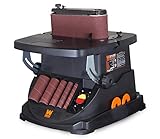
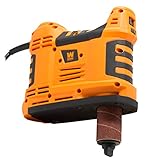

| Model | Motor | Spindle sizes | Oscillation | Table and dust details | Best fit |
|---|---|---|---|---|---|
| WEN 6510T | 3.5 A | 1/2, 3/4, 1, 1-1/2 and 2 in. | 5/8-in. stroke; 58 cycles/min. | 15 x 11-1/2-in. table; 1-1/2-in. dust port | First sander, tight budget, occasional shaping |
| Rikon 50-300 | 1/2 hp | 1/2, 3/4, 1, 1-1/2 and 2 in. | 1-1/2-in. stroke; 30 oscillations/min. | 14-1/2 x 14-1/2-in. cast-iron table; 2-in. dust port | More support for frequent small-shop work |
| Shop Fox W1831 | 1/2 hp | 1/2, 3/4, 1, 1-1/2 and 2 in. | 3/4-in. stroke; 58 oscillations/min. | 14-1/2 x 14-1/2-in. table; 2-1/2-in. dust port | Buyers prioritizing a larger dust connection |
These are three established benchtop options, but availability and specifications may change. The table compares published model specifications, not a guarantee that a particular dust collector will capture all sanding dust.
Choose by the work you actually do
| Your situation | What matters most | Practical choice |
|---|---|---|
| Very limited budget; occasional small parts | Compact footprint, common sleeves, easy setup | WEN 6510T |
| Weekly furniture or cabinet work | Stable table, sensible drum range, dust hookup | Rikon 50-300 or Shop Fox W1831 |
| Mostly broad, gentle curves | Larger drums and enough table area to control the work | Choose among these by table support and sleeve availability |
| Small, tight inside curves | Smallest spindle diameter and appropriate sleeve grit | Any model above with a 1/2-in. spindle; verify throat clearance |
| No room for a permanent bench machine | Weight, storage, and a secure way to clamp or bolt it down | Compact benchtop model; plan storage before purchase |
What separates a useful budget sander from a frustrating one?
Oscillation: coverage, not just a headline number
The drum rotates while moving up and down, spreading abrasion across more of the sleeve instead of wearing one narrow band. That can reduce localized heat and uneven sleeve wear. Stroke length and oscillation rate work together, so neither number alone tells you how quickly the machine will remove material. For delicate curves, use light pressure and let the abrasive do the work; pushing hard can slow the drum, burn the wood, or pull a small part out of your hands.
Spindle sizes: match the radius to the curve
Every model in the comparison includes five common drum diameters, from 1/2 to 2 inches. A smaller drum fits tighter concave curves; a larger one supports a broad radius and generally offers more contact area. A useful starting point is to choose a drum whose radius is no larger than the curve you need to sand. For example, a 1-in.-diameter drum has a 1/2-in. radius, so it can reach a tighter inside curve than a 2-in.-diameter drum, whose radius is 1 inch.
Check how many sleeves come with the machine and whether replacements are easy to find in the grits you use. Sleeves are consumables, and a low initial price is less attractive if replacement sizes are hard to source. Keep sleeves matched to their drums: a loose or incorrect fit can slip, wrinkle, or abrade unevenly.
Table support and footprint
A flat, rigid table helps keep an edge square while you guide a workpiece around the drum. The WEN’s 15 x 11-1/2-in. table is relatively compact; the Rikon and Shop Fox tables are about 14-1/2 inches square. A larger table can support wider pieces, but it also takes more bench space. Measure not only the machine’s base, but also the room needed to move a workpiece around it and connect a dust hose.
Cast iron adds mass that can help a machine feel planted, but any benchtop sander should be secured to a stable surface. If you need to store it between jobs, include lifting and clamping in your plan. A machine that is awkward to anchor is harder to use accurately and safely.
Dust collection: port diameter is only the starting point
The listed ports range from 1-1/2 to 2-1/2 inches. A larger opening may connect more easily to a shop-vac or collector hose, but capture also depends on airflow, hose routing, and how well the dust is drawn from the sanding area. Confirm the port size against your existing hose and adapters before purchase. Fine sanding dust can escape even with extraction, so wear suitable eye and respiratory protection and clean the machine and surrounding area regularly.
Setup and ownership tips that prevent avoidable wear
- Install the correct table insert and drum hardware. Use the insert that leaves only a small clearance around the spindle. This supports the work near the abrasive and reduces the chance of a thin edge catching in a large gap.
- Secure the machine before sanding. Bolt it down or clamp it firmly to a stable bench. The workpiece should be supported on the table, not balanced in your hands.
- Start with a scrap test. Check the spindle direction and how the piece feeds against the drum. Sand gradually to the layout line rather than trying to remove a large amount in one pass.
- Keep the sleeve moving along the curve. Holding one spot against the drum concentrates heat and wears a groove into the abrasive. Use steady, light pressure and keep fingers clear of the rotating sleeve.
- Clean before the dust builds up. Unplug the machine before changing sleeves or clearing debris. Dust packed around the spindle, table opening, or motor vents can interfere with operation and shorten service life.
- Replace worn sleeves promptly. A glazed or clogged sleeve cuts poorly, encouraging excess pressure and heat. Keep a small supply of the diameters and grits you use most.
In budget machines, sleeves and small accessories are the predictable ongoing costs. Dust buildup, loose workholding, and forcing the abrasive are common avoidable causes of poor results; bearings and switches are harder to assess before purchase. Check the warranty, parts availability, and manual support for your exact model, particularly if you expect frequent use.
Bottom line
For a first spindle sander and occasional curve work, the WEN 6510T offers a compact setup and five useful spindle sizes. If table stability and a larger dust connection matter more, compare the Rikon 50-300 and Shop Fox W1831 against your bench, hose, and local availability. Before deciding, measure your tightest curve, the parts you need to support, and your available space. Those three checks are more useful than choosing by motor rating alone.