
What's inside
As an Amazon Associate I earn from qualifying purchases. This post may contain affiliate links at no extra cost to you.
For most first-time buyers, the best scroll saw for beginners is a 16-inch variable-speed model with tool-free blade clamps, a quick-release tension lever, and a table that tilts for bevel cuts. The DEWALT DW788 is a strong choice if easy blade changes and smoother operation matter most; the WEN 3921 is a lower-cost pick with a useful two-direction blade setup. Choose by the kind of projects you plan to cut, not by throat size alone.
As an Amazon Associate we earn from qualifying purchases at no extra cost to you.
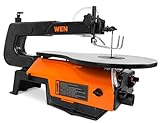


Beginner-friendly picks by situation
- Best for frequent interior cuts: DEWALT DW788. Its parallel-arm design, variable speed, and front-mounted controls make it easier to manage than many basic saws. The quick-release tension lever is especially useful when threading a blade through small openings repeatedly. It costs more than entry-level models and is still a substantial bench tool, so allow space for a stable stand or workbench.
- Best on a tight budget: WEN 3921. This 16-inch saw offers variable speed and accepts blades in two orientations, letting you feed workpieces from the front or side. That flexibility can help when a shape is awkward to rotate. Its clamp arrangement is less convenient than a fast-release system when a project calls for many interior cuts, so expect some adjustment time.
- Best for occasional, straightforward projects: a basic 16-inch variable-speed saw with a quick tension release. If you are making ornaments, signs, or simple toy parts, you may not need a premium mechanism. Before buying, check whether the clamps accept plain-end blades, pinned blades, or both; blade compatibility matters more than a long list of advertised features.
Compare the practical specifications
These figures describe the manufacturers’ published specifications for the named models; actual cutting results depend on blade selection, material, feed rate, and setup. “Throat depth” is the distance from the blade to the rear frame, not the maximum size of every possible project.
| Model | Throat depth | Maximum cutting depth | Speed range | Weight | Beginner-relevant detail |
|---|---|---|---|---|---|
| DEWALT DW788 | 20 in. | 2 in. | 400–1,750 strokes/min. | About 56 lb. | Quick-release tension lever; variable speed |
| WEN 3921 | 16 in. | 2 in. | 400–1,600 strokes/min. | About 27.5 lb. | Blade can be installed in two orientations |
Capacity figures are limits, not a promise that a saw will cut thick stock cleanly. A narrow blade can wander or overheat in dense material, and pushing faster to compensate can break it. For most beginner work, thin, stable stock is easier to control than material near the machine’s maximum cutting depth.
Match the saw to your projects
| Your situation | What to prioritize | Practical choice |
|---|---|---|
| First saw, limited budget, occasional use | Variable speed, accessible blade clamps, common replacement blades | Entry-level 16-inch variable-speed model; verify clamp style before purchase |
| Intricate patterns with many interior openings | Quick tension release and easy access to blade fasteners | DEWALT DW788 or another model with a genuinely quick-release mechanism |
| Small workshop or saw must be moved | Footprint, weight, and a secure mounting surface | Compare the assembled dimensions and mounting pattern; a lighter saw still needs a rigid bench |
| Mostly thicker or dense stock | Blade capacity, suitable blades, and stable feed rather than maximum speed | Choose a saw rated for the stock, then practice on thinner material first |
Scroll saws are best suited to curves, small parts, and interior cutouts in wood and similar sheet materials. Thin plywood, basswood, and other softwoods are forgiving starting materials. Hardwoods can also be cut when thickness, blade, and feed rate are appropriate, but they demand more patience. Plastic may melt or chip depending on its type and cutting conditions; test scraps first and follow the material maker’s guidance. A scroll saw is not a substitute for a bandsaw when removing substantial material from thick stock.
What quick blade changes really require
An interior cut means the blade must pass through a drilled hole in the workpiece. You then detach one end of the blade, thread it through the hole, and clamp it again. A quick-release tension lever helps, but it does not eliminate the need to loosen and secure the blade ends. Poorly seated ends can slip or break, so learn the clamp procedure before starting a detailed pattern.
A setup routine that prevents common problems
- Mount the saw securely. Bolt it to a rigid bench or stand. A saw that rocks or vibrates makes fine cuts harder and can loosen fasteners over time.
- Check the blade direction and teeth. Install the blade according to the manual, usually with teeth pointing down. Confirm that the blade is seated in both clamps before applying tension.
- Tension the blade to the machine’s guidance. Too little tension lets the blade deflect; too much increases breakage risk. Use the maker’s method rather than relying on a single universal “pluck” test.
- Set a moderate speed and test scrap. Start slowly, then raise speed only if the blade cuts cleanly without excessive vibration, burning, or loss of control.
- Feed gently and let the blade cut. Forcing a tight curve bends the blade sideways. Make relief cuts where helpful, and turn the workpiece gradually rather than twisting the blade.
Ownership costs and wear points
Budget for replacement blades, not just the saw. Blades are consumables: they dull, clog, and break, especially when tension is wrong, the stock is too thick, or the work is forced. Keep several blade sizes on hand, because a finer blade suits tight curves while a coarser one clears material faster. Check the manual for compatible blade types and clamp requirements; pinned and plain-end blades are not interchangeable on every machine.
Dust collection is another practical consideration. The built-in blower on many saws clears the cut line, but it does not capture all fine dust. Use suitable dust extraction and eye protection, and clean accumulated dust from the table, clamps, and moving areas with the machine unplugged. Periodically check blade alignment, fasteners, and the table insert. A stable mounting surface and routine cleaning often matter more to a beginner’s results than adding extra accessories.
Prices vary by retailer and region, but basic 16-inch saws generally occupy the lower part of the market, while premium models such as the DW788 cost substantially more. If you cut only a few projects a year, the extra spend is hard to justify unless quick interior cuts are central to your work. For regular fretwork or intricate patterns, easier tension release can save enough repeated setup effort to be worth paying for.
Bottom line
Choose the DEWALT DW788 if you expect frequent interior cuts and want blade tensioning to be less fiddly. Choose the WEN 3921 if you want variable speed and flexible blade orientation at a more accessible price, and can accept a less streamlined change routine. For either saw, prioritize secure mounting, correct blade installation, and practice on thin scrap. Those basics will do more for clean beginner cuts than chasing the largest capacity number.