
What's inside
- Craftsman Band Saw Lineup at a Glance
- How Throat Capacity and Resaw Height Decide Your Cut
- Blade Setup: What Actually Fits Each Craftsman Frame
- Space, Power, and Noise: What Each Model Needs in a Real Shop
- Decision Matrix: Which Craftsman Band Saw Matches Your Situation
- Durability and Ownership Realities
- Final Picks by Use Case
- Related Guides
As an Amazon Associate I earn from qualifying purchases. This post may contain affiliate links at no extra cost to you.
The best craftsman band saw for most small shops is the 10-inch benchtop for curves and light resawing, while the 14-inch floor-standing model is the right pick if you need 6+ inches of resaw height and a wider throat for ripping veneer or resawing hardwoods.
As an Amazon Associate we earn from qualifying purchases at no extra cost to you.
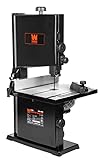
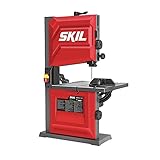
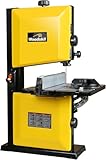

Craftsman Band Saw Lineup at a Glance
Craftsman keeps its band saw range simple in 2026: benchtop saws around 9 to 10 inches and full-size floor-standing saws at 14 inches. Both use a two-wheel design, accept standard carbon steel blades, and run on 120V household power, but they differ significantly in capacity, weight, and how much tuning they demand.
| Spec | Craftsman 9-Inch Benchtop | Craftsman 10-Inch Benchtop (CMEW213) | Craftsman 14-Inch Floor-Standing |
|---|---|---|---|
| Throat Capacity | 9 in | 10 in | 14 in |
| Max Resaw Height / Cutting Depth | 3.5 in | 6 in with included fence (5 in without riser) | 6 in standard, 12 in with optional riser block kit |
| Blade Length / Width Range | 59.5 in / 1/8 to 3/8 in | 70-3/4 in / 1/8 to 1/2 in | 93-1/2 in / 1/8 to 3/4 in |
| Blade Speed | Single speed, ~1,480 FPM | Single speed, ~1,723 FPM | Two speed, ~1,620 / 3,340 FPM via belt change |
| Motor | 2.5 Amp (1/3 HP) universal | 3.5 Amp (1/2 HP) induction | 6.5 to 9 Amp (1 HP) induction |
| Table Size / Tilt | 11-1/4 x 11-1/4 in / 0-45 degrees | 14-3/4 x 12-1/2 in / 0-45 degrees | 15-3/4 x 15-3/4 in cast iron / 0-45 degrees |
| Footprint with Stand | ~21 x 18 in (bench footprint) | ~24 x 22 in (bench footprint) | ~32 x 27 in floor standing |
| Weight | ~45 lbs | ~68 lbs | ~185-220 lbs with steel stand |
| Dust Port | 1-1/2 in + 2-1/2 in | 2-1/2 in | 4 in |
| Best For | Scroll work, small crafts, plastic and thin hardwood | General hobby use, curves, ripping up to 6 in | Furniture work, resawing, frequent ripping |
General market range as of 2026: 9-inch benchtop models typically sit in the $180-$280 range, 10-inch benchtop models in the $300-$450 range, and 14-inch floor-standing models in the $550-$850 range before riser kits, blades, and fences. Prices vary by retailer and whether a stand is included.
How Throat Capacity and Resaw Height Decide Your Cut
These two numbers define what fits, not just what cuts.
Throat capacity (distance from blade to frame)
A 9-inch throat lets you cut a curve in a 18-inch wide plaque by rotating the piece, but you cannot rip the middle out of a 12-inch wide board in one pass. A 10-inch throat adds just enough clearance for most cutting boards and drawer sides. A 14-inch throat is where you can comfortably handle cabinet sides, guitar bodies, and wide bowl blanks without repositioning.
Resaw height (vertical clearance under the guide)
This is the limiting factor for resawing. A 3.5-inch height on the 9-inch saw will not resaw a standard 2×6 (actual 5.5 in) or a 6-inch tall bookmatched panel. The 10-inch CMEW213 gives you a true 6 inches, which covers 4/4 and 6/4 lumber on edge for thin veneer. The 14-inch saw gives you the same 6 inches stock, but its cast-iron frame accepts a 6-inch riser block to reach 12 inches — the point where you can slice 10- to 11-inch wide veneer from a single board. If you plan to resaw 8-inch or taller hardwood regularly, the riser-capable 14-inch is the only Craftsman option that avoids maxing out the guides.
Blade Setup: What Actually Fits Each Craftsman Frame
Choosing the right blade width and tooth count matters more than horsepower for cut quality.
- 9-inch and 10-inch benchtop saws: Stick to 1/8-inch (6-10 TPI) for tight radius work under 1-inch, 1/4-inch (6 TPI) as the general-purpose blade, and 3/8-inch to 1/2-inch (3-4 TPI hook) for resawing. These frames cannot tension a 3/4-inch blade properly, so avoid it even if the length is correct.
- 14-inch floor-standing saw: Run 1/4-inch to 3/8-inch for curves and 1/2-inch to 3/4-inch (2-3 TPI hook or skip) for resawing. The larger wheels and stronger spring let you tension a 1/2-inch blade to the 15,000-20,000 PSI it needs to track straight. Under-tensioned wide blades will drift and create washboard surfaces.
Blade length must be exact: 59.5 inches for the 9-inch, 70-3/4 inches for the 10-inch, and 93-1/2 inches for the 14-inch. Using a 105-inch blade meant for another brand’s 14-inch saw will not tension on a Craftsman frame.
Step-by-Step Setup and Tuning With Reasons
Do this sequence every time you change a blade, not just on first assembly:
- 1. De-tension and release the guides. Back off both side guides and the thrust bearing so they do not steer the blade while you track it.
- 2. Set tracking with the wheel crown. Tension to the scale’s mark for your blade width, then spin the upper wheel by hand. The gullet (bottom of the teeth), not the blade center, should ride on the crown of the tire. This keeps teeth off the tire and prevents stripping.
- 3. Set guide gaps. Bring side guides to 0.004-0.008 in from the blade (about a sheet of copy paper) — close enough to prevent twisting, far enough to not generate heat. Set the rear thrust bearing to spin only when you push wood through, about 1/32 in behind the blade.
- 4. Square the table to the blade. Use a small square against the flat of the blade body, not the teeth. Lock the 90-degree stop, then check with a test cut; a blade that leans 0.5 degrees will show as drift on a 6-inch resaw.
- 5. Check fence for drift. Make a freehand cut following a pencil line until the cut tracks straight, lock the fence to that angle. Benchtop Craftsman fences rarely need more than 1-2 degrees of offset.
- 6. Tension for the cut, not the gauge. Pluck the blade — it should ring at a clear, high pitch, not thud. For resawing, add 1/4 turn past the marked tension and verify the blade does not flutter at full speed.
Space, Power, and Noise: What Each Model Needs in a Real Shop
Benchtop models live on a sturdy bench or mobile base. Allow 36 inches in front of the table for feeding long stock, 12 inches on the left for throat clearance, and 8 inches behind for blade changes. They run on a standard 15A circuit and create fine dust that a shop vacuum with a 2-1/2-inch hose can capture at 70-80% if you keep the lower door closed.
The 14-inch floor-standing saw needs a dedicated floor spot. Its footprint is about 32 x 27 inches, but you need 60 x 48 inches of working clearance to handle 4-foot boards. It benefits from a 20A circuit on startup and requires a dust collector or high-volume shop vacuum with a 4-inch adapter — a 1-1/2-inch hose will clog on resaw chips. Vibration is lower on the 14-inch due to cast-iron wheels, but the overall noise is higher at the high-speed pulley setting.
Decision Matrix: Which Craftsman Band Saw Matches Your Situation
| Your Situation | Pick This Craftsman Band Saw | Why |
|---|---|---|
| Apartment, garage corner, or shared space under 100 sq ft; cutting curves, toys, thin stock under 3 in | 9-inch Benchtop | Lowest weight and cost, single-speed simplicity, stores on a shelf |
| Hobbyist with a workbench, occasional resaw to 5-6 in, needs better fence and table | 10-inch Benchtop (CMEW213) | Best balance of capacity and space; handles 1/2-inch resaw blades without a floor stand |
| Furniture maker resawing 6-12 in hardwoods, ripping veneer, weekly use | 14-inch Floor-Standing | Cast-iron table, two speeds, accepts 3/4-inch blades and riser block for tall resaw |
| Beginner on a tight budget who wants to learn tuning | 10-inch Benchtop | Forgiving tension range and widely available 70-3/4-inch blades make setup cheaper to practice |
| Frequent user worried about dust and noise in a basement shop | 14-inch with dust collector | 4-inch port and induction motor run cleaner and quieter under load than universal motors |
Durability and Ownership Realities
Craftsman band saws are serviceable homeowner tools, not industrial machines. Knowing what wears helps you budget correctly.
- Tires wear first. Urethane tires on all three sizes harden after 2-4 years in unheated shops. If the blade slips or will not track, replace both tires as a set. Keep them free of pitch with isopropyl alcohol, not solvents that swell rubber.
- Guides and bearings. Benchtop models use cool blocks or plain guide blocks that groove quickly when cutting curves. Check them monthly and dress or replace when a groove exceeds 0.010 in. The 14-inch model’s ball-bearing guides last longer but need cleaning — sawdust packed behind the bearing freezes its spin and scores the blade.
- Blades are consumables. Expect 10-20 hours of cutting in hardwood from a carbon steel blade, less in abrasive woods like teak or MDF. Let the blade do the work; pushing hard overheats teeth and dulls them in minutes. For resawing, a 3 TPI hook tooth stays cooler than a 6 TPI.
- Table and fence. Cast aluminum tables on benchtop models nick easily. Wax the surface with paste wax to prevent rust and reduce feed friction. The stock aluminum fence on the 10-inch model flexes if overtightened — snug is enough, and verify square after each move.
- Common mistakes to avoid: Running without proper tension to “save the tires” causes blade cracks at the weld. Leaving tension on overnight flat-spots tires. Cutting wet or pressure-treated lumber corrodes the table and gums tires.
Simple Ownership Cost Calculation
To estimate cost per use, add consumables to the purchase price. Example for the 10-inch model: $375 saw + $60 for three blades per year + $25 for a spare tire set every three years. Over three years of weekend use (about 150 sessions), that is ($375 + $180 + $25) / 150 = $3.87 per session before electricity and dust collection. The 14-inch saw costs more upfront but uses longer-lasting blades and bearings, so heavy users often see a lower per-board-foot cost when resawing.
Final Picks by Use Case
Choose the 9-inch only if space and budget are absolute constraints and you will never resaw over 3.5 inches. Choose the 10-inch Craftsman band saw if you want one machine that handles curves, small boxes, and occasional 6-inch resawing without bolting a stand to the floor. Choose the 14-inch if resaw height, blade width, and long-term tuning stability matter more than portability — it is the only Craftsman band saw that stays accurate when tensioning a 1/2-inch or 3/4-inch blade for straight veneer cuts.
Whichever size you buy, budget for a quality 1/4-inch blade for curves, a 1/2-inch 3 TPI blade for resawing, and an hour to tune tracking and guides before your first project. That setup does more for cut quality than any extra horsepower.