
What's inside
As an Amazon Associate I earn from qualifying purchases. This post may contain affiliate links at no extra cost to you.
The best small band saw for most compact workshops is the RIKON 10-3061 with 10-inch throat and 5-inch resaw height, because it balances cutting capacity, widely available 70-1/2-inch blades, and a footprint under 2.5 square feet; budget shoppers are better served by the WEN 9-inch models, while those needing maximum resaw in a benchtop frame should look at the RIKON 10-326 or JET JWBS-10.
As an Amazon Associate we earn from qualifying purchases at no extra cost to you.
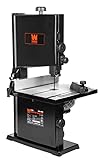
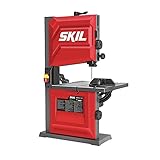


Best Small Band Saws Ranked for Compact Workshops
Compact band saws are defined by throat capacity, not just overall size. For small shops, the sweet spot is 9 to 10 inches – large enough to resaw small boards and cut curves, small enough to sit on a bench or rolling stand. Here is how the most common models compare on the dimensions that actually matter in a tight space.
| Model | Throat Capacity | Max Resaw / Cutting Height | Blade Length | Footprint (W x D) | Weight | Motor |
|---|---|---|---|---|---|---|
| WEN 3959T 9-Inch | 9 in | 3-5/8 in | 59-1/2 in | 20 x 16 in | 48 lbs | 2.8A (~1/3 HP) |
| Craftsman 9-Inch 21419 | 9 in | 3-1/2 in | 59-1/2 in | 21 x 17 in | 52 lbs | 2.5A |
| RIKON 10-305 10-Inch | 9-3/4 in | 4-5/8 in | 70-1/2 in | 23 x 18 in | 76 lbs | 1/3 HP |
| RIKON 10-3061 10-Inch Deluxe | 9-3/4 in | 5 in | 70-1/2 in | 23.5 x 19 in | 86 lbs | 1/2 HP |
| JET JWBS-10 10-Inch | 9-1/2 in | 4-5/8 in | 70-1/2 in | 24 x 19.5 in | 83 lbs | 1/2 HP |
| Grizzly G0948 10-Inch | 9-1/2 in | 4-5/8 in | 70-1/2 in | 23 x 18.5 in | 79 lbs | 1/2 HP |
| RIKON 10-326 10-Inch w/ Fence | 9-3/4 in | 5 in | 70-1/2 in | 24 x 20 in | 92 lbs | 3/4 HP |
All dimensions are manufacturer spec for the bench/stand footprint without material overhang. Add 8-12 inches of infeed and outfeed clearance to the depth for actual bench space required.
1. Best Overall for Small Shops: RIKON 10-3061
The 10-3061 is the most common recommendation for a small band saw that will actually stay in a compact workshop long-term. The 5-inch resaw height lets you slice a 4×4 or resaw 5-inch wide boards for box making, which 9-inch saws cannot do. The 70-1/2-inch blade is a standard size stocked by Olson, Timber Wolf, Starrett and most hardware suppliers in widths from 1/8 inch for tight curves to 1/2 inch for resawing. The tool-less blade guides and quick-release tension lever also make blade changes faster, which matters when you switch between a 3/16-inch detail blade and a 3/8-inch general purpose blade.
Trade-off: At 86 lbs it is not a lift-and-store saw. It needs a dedicated bench section or its optional stand. General market range is typically $400 to $550.
2. Best Budget Small Band Saw: WEN 3959T / WEN 3962
WEN’s 9-inch saws dominate the entry-level market because they are light, cheap, and use the same 59-1/2-inch blade as most other 9-inch saws. Cutting height is limited to about 3-5/8 inches, so resawing is for thin stock only, but for curves in 3/4-inch to 1-1/2-inch hardwood, pen blanks, and small scroll work, they are capable. The 2.8A motor will bog if you force a 1/2-inch wide blade through maple – use a sharp 1/4-inch 6 TPI blade instead.
Trade-off: Fence and miter gauge are light-duty, table is smaller at roughly 11-1/4 x 11-1/4 inches, and blade guides are basic blocks. Market range is typically $150 to $250.
3. Best 10-Inch for Tight Benches: RIKON 10-305
If you want 10-inch capacity but need to save weight and cost, the 10-305 uses the same frame as the 10-3061 but with a 1/3 HP motor, simpler fence, and no tool-less guides. Resaw is 4-5/8 inches instead of 5 inches. It still takes 70-1/2-inch blades and fits the same 23 x 18 inch footprint. Ideal if you already own a larger resaw saw elsewhere or only cut stock under 4 inches tall.
4. Best for Frequent Resawing in a Small Footprint: RIKON 10-326
The 10-326 adds a 3/4 HP motor and a better fence with micro-adjust to the 10-3061 platform. That extra power does not increase resaw height but prevents stalling when resawing 4-5 inch hard maple or walnut with a 1/2-inch 3 TPI hook blade. If your small band saw is also your only resaw saw, the motor upgrade is worth the extra 6 lbs and cost. Market range is typically $550 to $700.
5. Best Alternative 10-Inch Options: JET JWBS-10 and Grizzly G0948
Both are direct competitors to the RIKON 10-inch line with nearly identical throat and resaw numbers and the same 70-1/2-inch blade length. Choose between them based on local availability, fence design, and dust port location. JET uses a 2-1/2-inch dust port on the lower wheel housing; Grizzly and RIKON use a 2-1/2-inch rear port that is easier to hook to a shop vacuum in a bench setup.
How to Choose a Small Band Saw for Your Space
Do not shop by wheel diameter alone. A 9-inch and a 10-inch saw can have the same bench footprint but very different usable capacity.
- Throat capacity determines the width of a curve you can cut. A 9-inch throat clears about 8-3/4 inches to the blade after the guide post. For cutting bowl blanks or large templates, you need 9-3/4 inches. For pens, toys and fretwork, 9 inches is enough.
- Resaw height is the vertical clearance under the upper guide. Under 4 inches limits you to 1x material. At 4-5/8 to 5 inches you can resaw 4/4 lumber on edge, cut tenons, and slice veneer up to about 4 inches wide.
- Blade availability determines long-term cost. 59-1/2-inch and 70-1/2-inch are the two standard small saw lengths. Welded custom blades in odd lengths cost 30-50% more and take days to order. Avoid any small band saw that uses a proprietary length under 56 inches.
- Actual bench space includes the table plus hand clearance. A 23 x 19 inch saw needs a 30 x 24 inch bench area to allow you to rotate a 12-inch board. If you must store the saw, stay under 60 lbs or plan for a flip-top cart.
- Power and speed: Most 9-inch and 10-inch saws run a single speed around 1,500-2,800 FPM. You do not need two speeds unless you cut metal or plastic. For wood, prioritize motor amperage and blade sharpness over speed options.
Decision Matrix: Which Small Band Saw Fits Your Situation
| Your Situation | Recommended Type | Why |
|---|---|---|
| Tight bench against a wall, under $250, light use 1-2x per month | 9-inch (WEN 3959T class) | Lightest weight, smallest footprint, cheapest blades, easy to store vertically |
| One-car garage shop, build boxes, small furniture, cutting boards | 10-inch 1/2 HP (RIKON 10-3061 / JET JWBS-10) | 5-inch resaw handles real hardwood, 70-1/2-inch blades widely available, still fits 24-inch deep bench |
| Apartment balcony or shared shop, must carry and store after each use | 9-inch under 55 lbs | Can be lifted by one person; add a plywood base to improve stability |
| Need to resaw 4-5 inch figured wood for veneer or book-matching | 10-inch 3/4 HP (RIKON 10-326) | Extra torque prevents wandering and burning with a 1/2-inch 3 TPI blade |
| Already own a 14-inch band saw, need a small saw for curves only | 9-inch with 1/8-inch blade | Keep the big saw set up for resaw, keep the small band saw tuned for tight radius work |
Ownership Realities: What Wears First and How to Avoid It
A small band saw is not a scaled-down industrial tool – the wheels, guides and tires are lighter and need more frequent attention.
- Tires wear first. Urethane tires on 9 and 10-inch wheels harden and crack after 2-4 years in dry shops. Clean them with a dry rag after each use, avoid leaving tension on when stored, and keep blades from rubbing the wheel crown when tracking.
- Blade guides drift. Block-style guides on budget saws need re-adjustment every blade change. Set the guide blocks 0.004-0.006 inch from the blade (about a dollar bill thickness) and the thrust bearing just behind the blade so it only spins during the cut. Cool blocks or ceramic guides run quieter but still need this gap.
- Blades are consumables. Expect 8-15 hours of cutting life from a carbon steel blade in hardwood. Bi-metal blades last longer but cost more and are overkill for occasional use. Stock at least two sizes: a 1/4-inch 6 TPI for general curves and a 3/8-inch or 1/2-inch 3-4 TPI hook for resawing.
- Dust kills tracking. Small saws have small dust ports. Without a shop vacuum, sawdust packs under the lower wheel and pushes the blade off. Vacuum the lower cabinet and brush the tires weekly if you cut often.
- Common mistake: over-tensioning. Small frames flex. Tension to the saw’s scale or to blade deflection (about 1/4-inch side deflection with moderate finger pressure), not to guitar-string tight. Over-tensioning breaks blades and flats tires.
Quick Setup Checklist for a Small Band Saw
When you install a new blade on any small band saw, follow this order and you will cut straighter with less drift:
- Unplug the saw, release tension, and clean tires and guides with a dry brush.
- Track the blade by hand-spinning the upper wheel so the blade rides centered on the crown, not against the flange.
- Set guide post 1/4 inch above the workpiece, then set thrust bearings and side guides as described above.
- Tension until the blade rings with a low thud when plucked, then check square of table to blade with a small square and adjust the table trunnion.
- Make a test cut in 3/4-inch scrap and adjust fence angle to match drift, not the other way around.
Worked Example: How Much Bench Depth Do You Really Need
Take a RIKON 10-3061: housing depth is 19 inches. Add 4 inches behind for the dust hose bend, 8 inches in front for the table overhang and your hands, and 10 inches of infeed clearance for an 18-inch board rotating through a curve. Total bench depth required is about 41 inches during the cut. If your bench is only 24 inches deep, you can still use the saw by placing it so the table front overhangs the bench edge and you stand at the end, not the side – a common layout for compact workshops where the small band saw sits perpendicular to the bench.
FAQ
Is a 9-inch enough, or should I get a 10-inch small band saw?
If you only cut curves in stock under 3-1/2 inches tall, a 9-inch is enough and saves weight and cost. If you plan to resaw boards, cut bowl blanks, or keep the saw as your only band saw, the step to a 10-inch with 70-1/2-inch blades gives you 1 to 1-1/2 inches more cutting height and far better blade selection for about $150 more.
What blade size should I stock for a small band saw?
For a 9-inch saw using 59-1/2-inch blades, keep a 1/4-inch 6 TPI and a 3/8-inch 4 TPI. For a 10-inch saw using 70-1/2-inch blades, keep a 3/16 or 1/4-inch 6 TPI for curves and a 1/2-inch 3 TPI hook for resawing. Skip 3/4-inch blades on small frames – the wheels cannot tension them properly.
Can a small band saw resaw hardwood?
Yes, up to its rated height if you use a sharp, coarse hook blade and feed slowly. A 1/2 HP 10-inch saw can resaw 4-inch hard maple, but you must relieve tension on the guides, wax the table, and let the blade do the work. Forcing the cut causes burning and blade drift.