
What's inside
- Quick Picks by Boating Situation
- How Much Anchor Weight Does a Pontoon Boat Need?
- Anchor Types Compared Head-to-Head
- Decision Matrix: Match the Anchor to Your Priorities
- Rode, Chain, and Scope Matter as Much as the Anchor
- Storage and Handling Checks Before Buying
- Setup and Maintenance That Prevents Most Failures
- Final Recommendation
As an Amazon Associate I earn from qualifying purchases. This post may contain affiliate links at no extra cost to you.
The best anchor for a pontoon boat is usually a 15–25 lb fluke anchor for sand or mud, a 20–30 lb river anchor for current and rocky bottoms, or a 10–20 lb mushroom anchor for calm-water anchoring where easy retrieval matters more than maximum holding power.
As an Amazon Associate we earn from qualifying purchases at no extra cost to you.
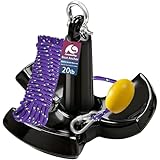


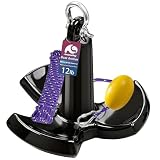
Quick Picks by Boating Situation
| Situation | Best anchor type | Typical weight for a pontoon | Why it fits | Main limitation |
|---|---|---|---|---|
| Calm lake, mud or soft silt | Mushroom | 10–20 lb | Compact, inexpensive, simple to retrieve | Can drag in wind or current |
| Sand, firm mud, or mixed lake bottom | Fluke/Danforth-style | 15–25 lb | Strong holding power for its weight | Flukes need room to set and may clog with weeds |
| River, tidal water, or noticeable current | River anchor | 20–30 lb | Heavy, compact, and resistant to sliding | Heavier to handle and less effective in loose mud |
| Rock, gravel, or snag-prone bottom | Grapnel | 8–15 lb | Hooks into irregular surfaces and folds for storage | Can become difficult to release from rocks |
| Temporary anchoring in shallow, calm water | Small grapnel or mushroom | 8–12 lb | Low storage demand and easy deployment | Not a substitute for a properly sized primary anchor |
How Much Anchor Weight Does a Pontoon Boat Need?
Anchor weight is only one part of holding power. Shape, bottom penetration, rode length, wind, current, and the boat’s exposed side area all affect whether a pontoon stays put. A large pontoon catches more wind than a narrow fishing boat, so choosing the smallest possible anchor is rarely a good strategy.
For many 18–22 ft pontoons used on inland lakes, a 15–20 lb fluke anchor is a sensible starting point in sand or firm mud. A 20–25 lb model gives more margin for a larger boat, stronger wind, or frequent overnight use. On rivers, a 20–30 lb river anchor is often more practical because its mass and shape resist sliding in current.
A secondary anchor can be smaller when it is used only to control the boat’s bow or stern. It should not be treated as equivalent to the primary anchor. If anchoring from both ends, use two suitable anchor systems and avoid creating a line arrangement that could leave the boat broadside to strong current or waves.
Anchor Types Compared Head-to-Head
Fluke or Danforth-Style Anchors
Fluke anchors use two broad, angled blades that dig into sand and mud. They provide excellent holding power relative to their weight and usually stow flatter than bulky river or mushroom designs. That makes them a strong all-around choice for a pontoon with a limited anchor locker.
They work best when pulled horizontally along the bottom until the flukes bury. They are less dependable on hard clay, dense weeds, solid rock, and very soft ooze where the blades may not develop a firm grip. A fluke anchor also benefits from a short length of galvanized chain between the anchor and rope. The chain helps keep the pull low and encourages the flukes to set.
River Anchors
River anchors are compact, heavy, and commonly shaped with ridges, ribs, or a pyramid-like profile. Their design favors weight and friction rather than long blades. They are a better match for current, gravel, hard bottoms, and situations where a fluke anchor repeatedly breaks loose.
The tradeoff is handling. A 25 lb river anchor takes more effort to lift over a pontoon’s bow rail, and its shape may occupy more usable locker space than a flat fluke anchor. Use gloves when handling rough galvanized surfaces, and secure the anchor so it cannot shift while the boat is underway.
Mushroom Anchors
Mushroom anchors are easy to use and often economical. Their rounded shape settles into soft mud and can provide adequate resistance for a pontoon sitting quietly in a sheltered cove. They are particularly convenient for anglers and casual boaters who anchor frequently in the same type of calm water.
They are not the best choice for exposed anchoring. Wind can pull a mushroom anchor across the bottom before it settles, and current can reduce its effectiveness further. If you regularly anchor for swimming, overnight stops, or meals in changing weather, a fluke or river design provides a larger safety margin.
Grapnel Anchors
Grapnel anchors have multiple folding or fixed arms that can catch on rock, gravel, timber, or other irregular surfaces. Folding versions are attractive for small storage compartments because they collapse into a relatively narrow package.
The same gripping ability creates a retrieval problem: a grapnel may snag permanently. Some models include a breakaway or reversible attachment arrangement intended to help pull the anchor free from a snag. Even then, inspect the connection regularly. Grapnels are better as a specialized anchor or backup than as the universal answer for a family pontoon.
Decision Matrix: Match the Anchor to Your Priorities
| Your priority | Recommended choice | Practical target |
|---|---|---|
| Lowest cost for occasional calm-water use | Mushroom | 10–15 lb, plus chain and adequate rode |
| One primary anchor for varied lake bottoms | Fluke | 15–25 lb, depending on boat length and wind exposure |
| Frequent river or tidal use | River anchor | 20–30 lb, with extra scope for current |
| Small locker or under-seat storage | Folding fluke or grapnel | Choose a folded length under the locker’s usable opening |
| Rocky, gravelly, or snag-filled water | Grapnel | 8–15 lb backup or specialized anchor |
| Overnight anchoring or exposed conditions | Heavier fluke or river anchor | Move up one weight class and inspect the whole system |
Rode, Chain, and Scope Matter as Much as the Anchor
Rode is the line connecting the anchor to the boat. For a typical pontoon, a practical setup includes a suitable diameter marine-grade rope, a galvanized chain section, and properly sized shackles. The chain protects the rope from abrasion on the bottom and helps keep the anchor’s pull near horizontal.
Scope is the ratio between the amount of rode deployed and the vertical distance from the bow roller or cleat to the bottom. For example, if the bow is 5 ft above the bottom and you deploy 25 ft of rode, the scope is 5:1. In calm conditions, 5:1 is a useful minimum target for many recreational setups; stronger wind or current may require more, such as 7:1 or greater.
A worked example shows why a small anchor can fail even when its advertised holding power looks impressive. Suppose a pontoon anchors in 6 ft of water and the bow hardware sits 3 ft above the surface. The total vertical distance is approximately 9 ft. At 5:1 scope, the boat needs about 45 ft of rode. At 7:1, it needs about 63 ft. Deploying only 20 ft leaves the pull too steep for many anchors to dig properly.
Storage and Handling Checks Before Buying
- Measure the locker opening, not just the locker’s interior volume. A wide fluke or bulky river anchor may not pass through the opening.
- Allow space for the chain, shackle, and wet rope. A nominally compact anchor can still make a locker difficult to close.
- Choose a secure anchor point rated for the expected load. Do not rely on a light accessory cleat or a railing attachment.
- Keep the anchor restrained while underway. A loose 25 lb anchor can damage fiberglass, decking, rails, or passengers.
- Use gloves when deploying and retrieving chain or rope, particularly around shackles and rough galvanized surfaces.
Setup and Maintenance That Prevents Most Failures
- Inspect the anchor, shackle, chain, rope, and attachment point before each outing. Replace rope with severe abrasion, flattened sections, chemical damage, or badly hardened fibers.
- Lower the anchor rather than throwing it. Pay out rode as the boat drifts back, keeping hands clear of coils and pinch points.
- When enough rode is out, apply gentle reverse power or allow the wind and current to load the system gradually. This helps the anchor set without violently dragging it.
- Check position after setting. Shoreline alignment, GPS position, or nearby fixed objects can reveal whether the pontoon is drifting.
- Retrieve by moving toward the anchor’s position, then pull vertically where possible. Do not use the boat’s engine to yank a stuck anchor at full throttle.
- Rinse salt, mud, and plant matter from the anchor and chain with fresh water. Let rope dry before storing it in a ventilated locker.
The parts that usually wear first are the rope near the bow fitting, the shackle pin, chain links, and any splice or eye connection. Galvanized steel can develop rust at scratches and crevices, while stainless hardware can suffer from galling if fasteners are overtightened or poorly maintained. Replace questionable hardware rather than compensating with a heavier anchor.
Final Recommendation
For most pontoon owners, the best starting point is a 15–25 lb fluke anchor paired with a chain leader and enough rope for at least 5:1 scope in the intended anchoring depths. Choose a 20–30 lb river anchor when current, gravel, or hard bottoms dominate your trips. Choose a 10–20 lb mushroom anchor only for sheltered, calm-water use where compact storage and easy retrieval are the priorities.
If your boating covers several bottom types, carrying a primary fluke anchor plus a smaller specialized grapnel or mushroom anchor is more useful than buying one oversized anchor and expecting it to work everywhere. The complete anchoring system—anchor shape, chain, rode, attachment point, scope, and routine inspection—is what keeps a pontoon stable.