
What's inside
As an Amazon Associate I earn from qualifying purchases. This post may contain affiliate links at no extra cost to you.
Guardian Power Drill Press: What to Check Before You Buy
Buy a Guardian power drill press only after confirming its actual swing, spindle travel, motor rating, speed range, table dimensions, and replacement-parts support—because those details determine whether it suits your work and remains maintainable. “Guardian” can refer to older or differently specified machines, so verify the model’s nameplate and manual rather than assuming every press carrying the name shares the same capacity.
Start with the work you need it to do
A drill press is a good fit for repeatable, perpendicular holes in wood, metal, or plastic when the material and bit are appropriate for the machine. For a Guardian model, look beyond the brand label: two presses that look similar may differ substantially in throat clearance, travel, speed control, and available replacement parts.
As an Amazon Associate we earn from qualifying purchases at no extra cost to you.
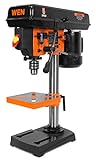

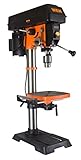
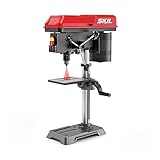
- Small parts and occasional projects: A compact bench press can save space and handle modest bits and stock. Check that its table can support your work without an awkward overhang.
- Furniture parts or wider panels: Prioritize swing and table area. A larger table or auxiliary support may matter more than a higher motor rating.
- Frequent drilling or larger bits: Look for adequate spindle travel, a stable column and head, and a speed range suited to the materials you drill.
- Used or discontinued model: Make parts availability and condition part of the purchase decision, not an afterthought.
How to read the specifications
Use the following figures as a sizing guide, not as specifications for any particular Guardian model. They illustrate common drill-press classes; confirm the exact values on the machine, manual, or manufacturer documentation before buying.
| Typical class | Nominal swing | Spindle travel | Motor range | Typical table size | Best suited to |
|---|---|---|---|---|---|
| Compact bench | 8–10 in. | 1½–2 in. | ⅓–½ hp | About 6–8 in. square | Small parts, light-duty work, limited shop space |
| Mid-size bench | 12–15 in. | 2–3 in. | ½–¾ hp | About 8–11 in. square | General woodworking and occasional metalwork |
| Floor model | 16–20 in. | 3–4 in. | ¾–1 hp or more | About 11–14 in. square | Larger stock, deeper holes, and regular use |
Swing and workpiece clearance
Swing is twice the distance from the spindle center to the column. A 12-inch-swing press can generally reach the center of a workpiece up to 12 inches wide when the work is positioned across the table. It does not mean the machine can drill through material 12 inches thick. For broad panels or assembled parts, also consider whether the work can rotate and fit around the column.
Spindle travel and hole depth
Spindle travel is the maximum distance the spindle can move downward in one stroke. If a hole is deeper than that travel, you may need to reposition the work or drill in stages. Check the depth stop, too: a repeatable stop is useful for batches of parts, but it does not increase the machine’s travel.
Motor power and speed control
Motor horsepower is only one part of drilling capacity. A stiff column, solid head casting, secure quill, and suitable speed range all contribute to controlled drilling. Wood generally tolerates higher speeds than large-diameter bits in metal; the correct speed depends on bit diameter, material, and cutter type. Compare the press’s speed range with the tasks you actually do.
Some presses change speed by moving a belt across stepped pulleys; others offer mechanical or electronic adjustment. Belt changes take more time but have a relatively simple mechanism. Convenient speed control is useful when switching between bit sizes and materials, but inspect the control, display, and drive components carefully on a used machine. Follow the manual’s instructions and disconnect power before opening a belt cover or adjusting belts.
Table size and support
A larger table supports wider stock and gives more room for clamps, fences, or a sacrificial board. Check how the table tilts and locks, whether it rotates around the column, and whether its height adjustment works smoothly. A table that is difficult to lock can shift under load, so test the locking mechanism rather than judging by dimensions alone.
Choose by shop, workload, and ownership risk
| Your situation | Practical direction | What to prioritize |
|---|---|---|
| Limited bench space; occasional small projects | Compact bench model | Stable mounting, usable table, common chuck and belt sizes |
| Regular furniture or cabinet work | Mid-size bench model, if capacity is sufficient | At least the needed swing and travel, reliable depth stop, easy speed changes |
| Wide stock or frequent deep drilling | Larger bench or floor model | Table support, column rigidity, spindle travel, space for long workpieces |
| Buying an older Guardian press | Proceed only after inspection and parts checks | Quill play, bearings, switch, pulley condition, manual and parts documentation |
Inspect a used Guardian before committing
Older equipment can be a sensible purchase when the price reflects its condition and the machine’s wear parts can be sourced. Ask for the exact model number and a clear photo of the nameplate. Then check the following:
- Quill and spindle: With the machine unplugged, move the quill through its travel and check for roughness or noticeable side play. Excess movement can affect hole accuracy and may point to worn components.
- Chuck and runout: Look for a damaged chuck, bent spindle, or visible wobble. If possible, have a qualified seller demonstrate the machine safely with an appropriate bit and workpiece secured.
- Table and column: Check for cracks, stripped locks, heavy corrosion, and a table that slips after tightening.
- Drive system and controls: Inspect belts for cracking and pulleys for damage. Confirm the switch and any speed controls operate as intended. Do not run a machine with an open guard.
- Documentation and parts: Search by the exact model number for a manual, belt dimensions, chuck specification, and parts diagrams. Common consumables such as belts or a compatible chuck may be easier to replace than proprietary castings, gears, or control assemblies.
Ask what repairs have been made and whether any parts are missing. If the seller cannot identify the model, treat claims about capacity or compatibility as unverified. A low purchase price can be outweighed by a hard-to-source spindle or a repair requiring extensive disassembly.
Plan for setup and long-term care
Mount a bench press securely to a stable surface or floor, following the manual and keeping enough clearance to raise the quill and swing the work. Align and lock the table before drilling; clamp the work instead of holding small pieces by hand. Use a sharp bit suited to the material, and set a speed appropriate to the cutter and workpiece.
Keep the table clean, remove dust and chips from moving areas, and inspect belts and fasteners periodically. In woodworking shops, fine dust can collect around the motor and pulleys; clean according to the manual, with the machine disconnected from power. Avoid forcing a bit, which can overheat the cutter and stress the drive. For metal, use suitable cutting practice and lubricant where appropriate, following the tool and material guidance.
Bottom line
The best Guardian power drill press is the smallest, simplest model that safely handles your largest routine workpiece—with enough swing, travel, table area, and speed range to avoid workarounds. For a current or used machine, verify the model-specific specifications and the availability of essential parts before paying. Capacity on paper is useful; a stable table, sound spindle, functioning controls, and a realistic repair path are what make the press a practical long-term purchase.