What's inside
As an Amazon Associate I earn from qualifying purchases. This post may contain affiliate links at no extra cost to you.
Blast gates let you direct a dust collector’s airflow to the tool you’re using instead of pulling from every open branch at once. The two common choices are manual gates, which slide or pivot open by hand, and magnetic gates, which use magnets to hold the gate in position. Both can work well. The better buy depends on how often you change tools, where the gate sits, and whether you value convenience enough to pay for it.
As an Amazon Associate we earn from qualifying purchases at no extra cost to you.


How the two types work
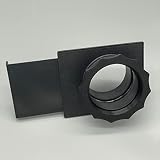
A manual blast gate has a plate or damper that moves across the duct opening. You open it by pulling the plate out, then close it by pushing it back in. Most are made from plastic or metal and fit a particular duct size. A magnetic gate also has a movable damper, but magnets help secure it in the open or closed position. Some designs allow quick one-handed operation; others use magnets mainly to keep the gate from shifting with vibration.
Neither type increases the dust collector’s capacity. A gate only changes where the available airflow goes. For a single-tool setup, it may not be necessary at all. Gates become useful when several machines share a collector and you want to limit airflow losses through unused branches.
Manual vs magnetic blast gates
| Factor | Manual gate | Magnetic gate |
|---|---|---|
| Purchase price | Usually the lower-cost option | Often costs more per gate |
| Operation | Requires pulling or pushing the damper | May be quicker to move and easier to keep in position |
| Best location | Easy-to-reach duct runs | Frequently changed gates or awkward positions |
| Common trouble | Dust buildup can make the plate bind | Magnets can collect metal debris or lose their grip if poorly seated |
| Value | Good for basic, low-frequency use | Worth considering when convenience affects whether you close unused branches |
These are general differences, not guarantees: gate construction varies. Check the actual dimensions and damper design before buying. A magnetic closure does not automatically mean a more airtight gate, and a well-made manual gate can outlast a flimsy magnetic one.
When a manual gate is the sensible buy
Choose manual gates when they are within easy reach and you change tools only a few times per session. They are also a reasonable choice for a small shop with a tight budget. If a manual gate costs several dollars less and you need eight of them, the savings can go toward a better hose, fittings, or a collector filter.
The main annoyance is friction. Fine dust and chips can pack into the slot, making the damper hard to move or preventing it from closing fully. Leave a little room to reach the gate, and inspect it periodically. If a plate starts sticking, remove the gate and clear the slot rather than forcing it; a bent plate can scrape, bind, or leave a persistent gap.
For a basic system with common duct sizes, compare manual dust-collection blast gates with the fittings already in your shop. Nominal sizes are not always enough to ensure a snug fit, especially when connecting different brands of hose and pipe.
When magnetic gates earn their extra cost
Magnetic gates make more sense when you switch between machines often, or when a gate sits behind a bench or above shoulder height. A gate that takes a second to operate is more likely to get used than one that is awkward to reach. That matters because leaving several branches open can reduce the airflow available at the tool in use.
Magnets have their own limitations. Steel dust can cling to them, and vibration or a poor fit can still let a damper shift. Magnets do not compensate for a gate that is too small, warped, or installed with a leaky connection. Check that the damper moves smoothly and stays where you put it before installing a batch of gates. If you work with metal, inspect magnetic parts more often for filings.
If frequent switching is the problem, browse magnetic dust-collection blast gates and compare the mechanism, not just the product name. Some gates described as magnetic use magnets to hold a removable piece; others use them to position a sliding damper. Those designs are not interchangeable in use.
Sizing, placement, and installation
Match the gate to the duct diameter and the collector’s branch layout. A 4-inch gate is not a fix for a 2½-inch tool port, and adding a reducer does not remove the airflow restriction of the smaller opening. Avoid stacking several abrupt reducers close together if a gradual transition will fit. Keep duct runs as short and smooth as practical, and use sealed connections so air is drawn through the tool hood rather than through gaps.
Place gates where you can reach them without moving stock or leaning across a running machine. Mark each branch with the tool name. Before a cutting session, open the gate for the active machine and close unused branches; after a few uses, that simple routine is easier to maintain than trying to correct poor collection with a more expensive gate.
A practical buying decision
For most small workshops, there is no need to buy every gate in the same style. Use manual gates on reachable branches that rarely change and spend more on a magnetic gate where a hard-to-reach or frequently used branch would otherwise be left open. Before ordering several, buy one, test its fit and movement, and check whether dust buildup is easy to clean out.
Whichever type you choose, a gate is only one part of dust control. Make sure the hood captures dust at the source, keep filters maintained, and use suitable respiratory protection when cleanup or sanding leaves fine dust in the air. A convenient gate helps manage airflow; it cannot make an undersized collector or poorly designed duct system perform like a larger one.