
Our Top Picks
What's inside
- Bar clamp or panel clamp: what these listings actually are
- The eight listings in one table
- Listing by listing
- How we picked these
- Clamp-count worksheet for three real projects
- Glue-up technique that matters more than the clamp
- Safety around clamps and glue
- Mistakes that ruin glue-ups
- Verdict
- Frequently asked questions
As an Amazon Associate I earn from qualifying purchases. This post may contain affiliate links at no extra cost to you.
The best bar clamps for panel glue-ups are parallel-jaw bar clamps long enough to span your widest panel with room to spare, and in this set the two Jorgensen pairs, 24 and 36 inches, are the only listings that are bar clamps in the traditional sense. The other six are 4-way panel clamp systems from Woodpeckers, Rockler and a brand called wait wit; they exist to keep panels aligned and flat, not to replace bar clamps. If your glue-ups are tabletops or cabinet door panels you may want both, which is what this page helps you plan.
A word on the prices: the Woodpeckers packs run in a very different range from everything else, and we call that out in the “Price tier” column rather than printing numbers. All product facts come from listing titles; anything else is marked “check the listing”.
Bar clamp or panel clamp: what these listings actually are

24 In Panel Clamps 2 Pack, 4-Way Pressure Steel Parallel Clamps | For Woodworking, Adjustable Heavy Duty Wood Panel Glue Up Clamps, For Tabletops, Cutting Boards & Cabinet Doors


As an Amazon Associate we earn from qualifying purchases. Product prices and availability are accurate as of the date/time indicated.

Rockler Mini Deluxe Panel Clamps (2-Pack) Four-Way Pressure Clamp Set | Panel Clamps – Flat Panel Glue-Ups – Mini Panel Clamps – Four-Way Pressure – 2-Pack Set


As an Amazon Associate we earn from qualifying purchases. Product prices and availability are accurate as of the date/time indicated.
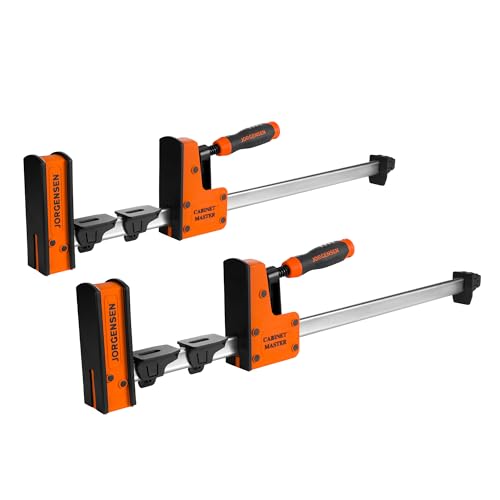
JORGENSEN 24-Inch Parallel Clamps, 2-Pack Bar Clamps, 2200 lbs Load Limit | Heavy-Duty Wood Clamps, Cabinet Master Bar Clamps for Woodworking Glue-Up, Quick Release, Spreader Function


As an Amazon Associate we earn from qualifying purchases. Product prices and availability are accurate as of the date/time indicated.

JORGENSEN 36-Inch Parallel Bar Clamps Set, 2200 lbs Load Limit, 2-Pack | Heavy-Duty Wood Clamps, Cabinet Master Bar Clamps for Woodworking Glue-Up, Quick Release, Spreader Function


As an Amazon Associate we earn from qualifying purchases. Product prices and availability are accurate as of the date/time indicated.

Woodpeckers Clampzilla 3.0, 38 Inch (4 Pack), 4-Way Panel Clamps for Glue-Ups on Cabinet Door Panels, Table Tops & Wood Panels, USA Made


As an Amazon Associate we earn from qualifying purchases. Product prices and availability are accurate as of the date/time indicated.

Woodpeckers Clampzilla 3.0, 50 Inch (1-Pack), 4-Way Panel Clamp for Glue-Ups on Cabinet Door Panels, Table Tops & Wood Panels, USA Made
As an Amazon Associate we earn from qualifying purchases. Product prices and availability are accurate as of the date/time indicated.

Woodpeckers Clampzilla 3.0, 18 Inch (4 Pack), 4-Way Panel Clamps for Glue-Ups on Cabinet Doors, Table Tops & Wood Panels, USA Made
As an Amazon Associate we earn from qualifying purchases. Product prices and availability are accurate as of the date/time indicated.
The keyword says bar clamps, but the results mix two tools. Naming them clearly avoids ordering the wrong thing.
| Type | What it does | Listings here |
|---|---|---|
| Parallel bar clamp | Pulls boards together edge to edge from the sides, with jaw faces kept square to the bar | Jorgensen 24 inch, Jorgensen 36 inch |
| 4-way panel clamp | Applies pressure in several directions at once to help keep a glued-up panel flat and aligned | Woodpeckers Clampzilla (18, 38, 50 inch), wait wit 24 inch, Rockler Mini Deluxe |
Some woodworkers use panel clamps in addition to bar clamps rather than instead of them. A 4-way system can help register boards in plane, while bar clamps supply the main squeeze across the joint. Whether a given 4-way set can generate enough pressure by itself for hardwoods is a question for the manufacturer’s documentation, not for this page.
The eight listings in one table
Price tier is relative inside this set: Budget covers the three lowest, Mid-range the next two, Premium the three highest. Key specs come from titles only.
| Model | Key spec (from title) | Price tier | Best for |
|---|---|---|---|
| JORGENSEN 24-Inch Parallel, 2-Pack | 2200 lbs load limit, quick release, spreader function | Budget | Cutting boards, narrow panels |
| JORGENSEN 36-Inch Parallel, 2-Pack | 2200 lbs load limit, quick release, spreader function | Budget | Wider tops and doors |
| wait wit 24 In Panel Clamps, 2-Pack | 4-way pressure, steel, parallel clamps | Budget | Trying 4-way pressure cheaply |
| Rockler Mini Deluxe Panel Clamps, 2-Pack | Four-way pressure, mini panel clamps | Mid-range | Small flat panels |
| Woodpeckers Clampzilla 3.0, 50 Inch, 1-Pack | 4-way, USA made | Mid-range | Testing a single Clampzilla |
| Woodpeckers Clampzilla 3.0, 18 Inch, 4-Pack | 4-way, USA made | Premium | Small panels, many at once |
| Woodpeckers Clampzilla 3.0, 38 Inch, 4-Pack | 4-way, USA made | Premium | Cabinet door panels |
| Woodpeckers Clampzilla 3.0, 50 Inch, 4-Pack | 4-way, USA made | Premium | Large tabletops |
Listing by listing
JORGENSEN 36-Inch Parallel Bar Clamps, 2-Pack
This is one of only two true bar clamps in the set. The title says Jorgensen, 36 inch, parallel bar clamps, a 2200 lbs load limit per the title, quick release, a spreader function and the Cabinet Master name, aimed at woodworking glue-ups. The load limit is a manufacturer figure and the title does not say what test it rests on; treat it as a ceiling, not as a pressure you should apply. Panel glue-ups need steady, even pressure, not maximum force.
Thirty-six inches is a useful length for tabletops up to roughly the low thirties in width once you account for jaw thickness and cauls, and for cabinet door panels. Quick release matters when glue is open: being able to back off a clamp or slide it along the bar saves seconds that decide whether you can reposition boards. The spreader function lets you reverse the head to push apart, which helps in other jobs like adjusting a frame, though you should check the manual for how to configure it.
The title does not state weight, jaw depth, the bar’s cross-section or handle type, so check the listing for those. A two-pack will not cover a full tabletop alone; see the worksheet below. It sits in the Budget tier, which makes it the sensible core of a clamp rack.
Protect the bars from glue squeeze-out with painter’s tape or wax paper where the bar touches the panel. Dried glue on a bar causes stains on future workpieces and makes the jaw slide stiffly, and it is far easier to prevent than to scrape off later.
Pros
- True parallel bar clamps in a 36-inch length
- Quick release and spreader function in the title
- Budget tier; buy more packs as needed
Cons
- Only two clamps per pack, so a full tabletop needs several packs
- Weight, jaw depth and handle details are not in the title
- Does not itself flatten a panel; cauls are still wise
Who it’s for: woodworkers building tabletops, doors and wider boards who want the standard bar-clamp workhorse.
JORGENSEN 24-Inch Parallel Clamps, 2-Pack
The 24-inch sibling shares the title features: parallel clamps, a 2200 lbs load limit, heavy-duty wood clamps, Cabinet Master name, quick release and spreader function. It is the lowest-priced listing in the set. The difference is length, and length decides what you can glue. A 24-inch bar spans a cutting board comfortably and narrow panels such as a small cabinet door, but it will not clamp a 30-inch tabletop edge joint.
A good habit is to measure the widest panel you expect to build in the next year, add the thickness of both jaws, the space for any cauls and a few inches for wiggle room, and choose clamp length from that. If the widest project is a 14-inch cutting board, a 24-inch bar has plenty of margin; if you are making a 36-inch dining table, you will want longer clamps. Buying all your clamps in one length is simple but not always efficient; many shops keep a mix.
The title does not give the jaw depth or the clamp’s weight. Deeper jaws reach farther in from the board edge, which matters for wide boards, so check the listing. Because the pack has just two clamps, a cutting-board glue-up will usually need a second pack, or a mix with other clamps.
Because the price is the lowest here, this pair is also the natural spares pack: keep it for quick fixes, small repairs, and holding jigs in place, while your longer clamps stay on the main glue-up. Small clamps earn their keep constantly in a shop.
Pros
- Lowest price in the set
- Parallel design with quick release and spreader function
- Right size for cutting boards and small panels
Cons
- 24 inches limits panel width
- Two-pack count is small for a glue-up
- Jaw depth and weight not in the title
Who it’s for: hobbyists making cutting boards, small boxes and narrow panels who want an inexpensive start.
wait wit 24 In Panel Clamps, 2-Pack, 4-Way Pressure Steel Parallel Clamps
The title describes 24-inch panel clamps in a 2-pack with 4-way pressure, steel parallel clamps, for woodworking and wood panel glue-ups, tabletops, cutting boards and cabinet doors. It is not a conventional bar clamp even though the word parallel appears. Four-way pressure systems are designed to apply pressure along more than one axis, helping keep the glued boards aligned and flat, and “parallel” refers to the clamping faces.
It sits in the Budget tier, though near the top of that bracket, and it is the lowest-priced 4-way system here. That makes it the cheapest way to find out whether 4-way pressure suits your glue-ups. The title gives no information on how many contact points each clamp applies, what steel it is, what finish it has, how it is adjusted or how much pressure it can apply. The brand name is “wait wit”, which has no track record in the title; look for a stated warranty and for buyer reviews before deciding.
Be realistic about the “24 In”. Does it describe the clamp’s maximum panel width or the length of the bar? The title does not say. Look at the listing images for a dimension diagram. A 24-inch capacity would suit a cutting board or a narrow panel, not a full tabletop. Check how the clamp closes onto a panel of a specific thickness and what thickness range it accepts.
If you buy this set, plan a trial glue-up on scrap boards of the same thickness before committing a good piece of wood. Look at how the clamp seats, whether it leaves marks on the board faces, and whether it holds the boards aligned as the title implies.
Pros
- Lowest-priced 4-way system in the set
- Steel construction mentioned in the title
- Aimed at cutting boards, door panels and tabletops
Cons
- Brand has no track record in the title; check support and reviews
- What the 24 inch measures is not clear from the title
- Pressure and capacity limits are not stated
Who it’s for: someone curious about 4-way panel clamping at the lowest price, willing to verify specs on the listing.
Rockler Mini Deluxe Panel Clamps, 2-Pack, Four-Way Pressure
Rockler’s title calls these Mini Deluxe Panel Clamps, a two-pack four-way pressure set for flat panel glue-ups. The word Mini is the clue: this is a compact version, so it is aimed at smaller panels such as cutting boards, small tabletops or cabinet inserts, not at large dining tables. The title does not give dimensions, so the listing is where to find the maximum panel width and thickness.
It lands in the Mid-range tier, higher than the budget 4-way clamps, and the price premium presumably reflects the brand and the Deluxe label rather than a feature the title explains. Check the manual and warranty on the listing. The title says nothing about clamping force or the type of steel or alloy.
The value question is practical: if your projects are mostly small panels, a Mini set could be all you ever need. If you build wide tabletops, you would outgrow it quickly. A set of two also limits how many joints you can clamp at once. For a long panel you may need the two clamps plus bar clamps to hold the full length.
Whatever you choose, dry-fit first and mark the board orientation so the grain pattern matches after glue-up.
Before ordering, compare the listing’s stated panel thickness range with the stock you use. Small panel clamps are often designed around a particular range, and a mismatch makes them awkward or ineffective on thicker boards. A quick call or message to the seller can settle this.
Also decide how the Mini set fits with clamps you already own. If you have a couple of bar clamps, adding a pair of compact panel clamps to hold alignment can improve small glue-ups without a large spend, and it keeps the rest of your budget free for wider bars later.
Pros
- Four-way pressure in a compact format
- Mid-range price for a branded set
- Suits small panels and boards
Cons
- Mini size will not suit wide tabletops
- Capacity and force are not stated in the title
- Only two clamps per pack
Who it’s for: builders of small panels, boxes and cutting boards who want 4-way alignment help.
Woodpeckers Clampzilla 3.0, 50 Inch, 1-Pack
Here the title is a single 50-inch 4-way panel clamp for glue-ups on cabinet door panels, table tops and wood panels, USA made. As a single clamp, it is the cheapest way into the Clampzilla line, placed in the Mid-range tier by price. It is also a near-duplicate of the 4-pack 50-inch listing, differing only in count, so buy this one as a test only if you are sure a single unit makes sense for your work.
One clamp does not cover a glue-up by itself unless your panels are small enough to be clamped at one point, which is rare for a 50-inch product. Many woodworkers use panel clamps in sets, spaced along the panel. Buying a single one helps you check whether the system fits your workflow and your shop, and then you can add more. That said, buying one now and three later may cost more than buying a pack, depending on how the seller prices them.
The title does not explain the “3.0” revision, the maximum capacity, the weight or the material. Check the listing for how the clamp is set on the panel, what thickness range it handles, and what accessories it needs. The “USA made” claim is the seller’s; confirm it on the listing if it matters to you.
Be careful lifting large steel or aluminum clamps and keep them off toes when moving them around the shop.
Before you buy a single unit, check whether the seller offers the four-pack at a lower cost per clamp, and whether single units are restocked reliably. Missing one clamp from a matched set is annoying if the line changes.
Pros
- Single-unit entry to the Clampzilla line
- 50-inch size for large panels
- USA made per the title
Cons
- One clamp is rarely enough for a glue-up
- Per-clamp cost may be higher than in a pack
- Capacity and material not stated in the title
Who it’s for: a cautious buyer who wants to try one Clampzilla before committing to a set.
Woodpeckers Clampzilla 3.0, 18 Inch, 4-Pack
The 18-inch four-pack is the smallest and cheapest of the three Clampzilla multi-packs, though still in the Premium tier. The title lists 4-way panel clamps for glue-ups on cabinet doors, table tops and wood panels, USA made. At 18 inches it points toward narrower panels such as cabinet doors, face frames, small tables and cutting boards, assuming the number describes panel capacity, which the title does not confirm.
A four-pack lets you clamp at several points at once, which is how panel clamps are usually used. For a project with multiple panels at once, such as a set of cabinet doors, four clamps can speed up the work, since you can glue one panel while another cures. The premium for that convenience is substantial compared with bar clamps. Run the numbers on what you build: if you make cabinet doors in batches, the time saved may justify the spend; if you make a few small boards a year, it will not.
The title does not state weight, maximum thickness or whether the clamps need accessories. Check the listing carefully. Compare against the Rockler Mini and the wait wit, which target similar panel sizes at lower prices, and decide whether the Woodpeckers name and construction justify the extra money in your shop.
For a batch of cabinet doors, plan the workflow: dry-fit all stiles and panels, glue them in rotation, and leave each assembly clamped for the time the glue label specifies. Four clamps can hold two small panels at once, which is where the pack earns its cost in a production-minded shop.
Remember to wipe squeeze-out and keep the clamp faces clean, since dried glue on a clamp will transfer to the next panel or leave dents.
Pros
- Four clamps in a pack for multiple points or batch work
- Smaller size suits cabinet doors and narrow panels
- USA made per the title
Cons
- Premium tier cost
- Panel capacity of the 18 inch is not defined in the title
- Cheaper 4-way alternatives exist for small panels
Who it’s for: cabinet makers who glue many small panels and value a four-clamp set.
Woodpeckers Clampzilla 3.0, 38 Inch, 4-Pack
The 38-inch four-pack steps up in size from the 18 inch and sits in the Premium tier, second highest. The title repeats the line: 4-way panel clamps for glue-ups on cabinet door panels, table tops and wood panels, USA made. Thirty-eight inches points to mid-size panels such as larger cabinet doors, narrow tables and desk tops, again assuming the number refers to capacity.
It is the middle option of the multi-packs, which usually makes it the sensible one for a shop that builds a mix of door panels and small tops. Four units mean you can hold a panel across its width at multiple points, which is how long panels are controlled. For panels that go beyond that, such as a long dining table, you would combine them with bar clamps or step up to the 50 inch.
The title does not mention what each clamp weighs; a set of four large clamps can be heavy to store and move. Think about where they will live, and plan storage before you buy. Our guides to storing clamps on a mobile workshop cart and building a vertical storage rack can help.
The choice between this and the 50-inch version comes down to your largest regular panel. Do not buy long if you rarely need it.
One way to judge whether this size is right is to list the five widest panels you built last year. If four of them would fit within 38 inches with room to spare, this pack is probably the sensible middle. If most were bigger, look at the 50-inch version; if most were smaller, the 18-inch pack costs less.
Keep a note of what each clamp does well so you know when to reach for it.
Pros
- Middle size suits many door and tabletop panels
- Four clamps in the pack
- USA made per the title
Cons
- High price and storage footprint
- Weight and exact capacity not in the title
- Large panels may still need bar clamps
Who it’s for: woodworkers who regularly build mid-sized panels and want a four-clamp set.
Woodpeckers Clampzilla 3.0, 50 Inch, 4-Pack
The most expensive listing in the set is the 50-inch four-pack, in the top of the Premium tier. It carries the same description as its siblings, 4-way panel clamps for glue-ups on cabinet door panels, table tops and wood panels, USA made, in the largest size. It is the version for builders who make large tabletops, bench tops or long panels, again assuming the number denotes capacity.
At this cost, the decision is about frequency and scale. A shop that glues up dining tables or workbench tops regularly will use four large panel clamps and benefit from the repeatability, while a hobbyist who builds one table every couple of years is better served by borrowing, renting or buying bar clamps. Compare the cost to a set of parallel bars long enough for the same width, plus cauls. The panel clamps’ advantage is panel flatness, a value that depends on how fussy your work is and how much sanding time you want to save.
The title says nothing about weight, which could be considerable at this size, nor how the clamps register to the panel or what accessories might be needed. Check the listing for dimension drawings. Plan the glue-up carefully because longer panels have more edge to manage in the glue’s open time. Have helpers or pre-positioned clamps ready, rehearse the sequence dry, and keep your hands and feet clear of heavy clamps while moving them.
If you are tempted by this pack, compare it to a mixed approach: a few long parallel bar clamps plus cauls, which many woodworkers use for large tops. Panel clamps help flatness, but good technique, flat stock and cauls also deliver flat panels. The Premium cost should buy time savings or a result you cannot get otherwise.
Pros
- Largest size, four clamps in the pack
- Same 4-way system as the smaller sets
- USA made per the title
Cons
- Highest price in the set
- Likely heavy and bulky to store; confirm on the listing
- Overkill unless you regularly glue large panels
Who it’s for: builders of large tabletops and workbench tops who glue wide panels often.
How we picked these
This page is written by the Editorial team. Nobody on the team used or measured these units. The testbench is published specifications, manufacturer documentation and buyer reviews, so everything above rests on listing titles. No one clamped a panel, measured clamping force or checked flatness.
We started with listings that name panel glue-ups or parallel bar clamps in the title, then sorted them into the two tool types so the keyword’s “bar clamps” and the market’s “panel clamps” are not confused. We kept a spread of sizes, pack counts and price tiers, and included near-duplicates (the 50-inch single and four-pack) because shoppers will meet them in search results.
The order follows how clearly each title describes a tool for panel glue-ups, not performance. If you only need one pick, go to the verdict; if you are planning a clamp collection, use the worksheet.
Clamp-count worksheet for three real projects
These are estimates built on a common rule of thumb: roughly one clamp every 8 to 12 inches along the joint, alternating above and below the panel. Adjust for your wood, glue and joint, and dry-fit first. The numbers are planning figures, not guarantees.
| Project | Dimensions | Joint length to clamp | Clamps at about 10 inch spacing | Minimum bar length |
|---|---|---|---|---|
| Edge-grain cutting board | 12 by 18 inches, strips running 18 inches | 18 inches per joint, clamps across the 12 inch width | 2 to 3 | Over 12 inches plus jaw room, so 24 inch bars suit |
| Cabinet door panel | 14 by 30 inches, boards running 30 inches | 30 inches | 3 to 4 | Over 14 inches, so 24 inch bars suit |
| Dining tabletop | 36 by 60 inches, boards running 60 inches | 60 inches | 6 to 7 | Over 36 inches plus cauls, so 48 inch bars are more comfortable than 36 |
What this means for buying: a single pair of 24-inch parallel clamps is short on count even for the cutting board, because you want clamps on both faces. Two packs of 24-inch Jorgensens give four clamps, enough for the cabinet door. The dining top needs six or seven clamps longer than the 36-inch pair can handle once cauls are included, so you would look at longer bars or panel clamps. Four Clampzilla units cover only part of a 60-inch joint at 10-inch spacing, which is why many shops combine panel clamps with bars or use cauls.
The worksheet assumes the number in each title is a size designation; always confirm what it measures. For wide panels, a seller’s stated capacity matters more than the label.
Glue-up technique that matters more than the clamp
Dry-fit everything. Mark board order, make sure the joints close without gaps, and rehearse the clamp sequence. Spread glue evenly, bring the boards together and apply light pressure first. Alternate clamps above and below so the panel does not bow, and keep clamp heads centered on the board edge. Tighten gradually until you see a thin bead of squeeze-out. Use cauls, which are stiff strips clamped across the faces, to keep the panel flat. Wipe or scrape squeeze-out according to your glue’s directions. Check flatness with a straightedge while the glue is still workable.
The surface you clamp on matters too. A flat, protected bench stops the panel from twisting and keeps glue off the bench. Our pages on workbench surfaces for glue-ups and finishing prep and surfaces that clean up easily cover this, and storing wood glue and adhesives will help you keep your glue usable.
Safety around clamps and glue
Heavy steel clamps are a foot hazard; carry them carefully and store them on a rack, not stacked loosely. Clamps have pinch points at the jaws and handles, so keep fingers clear while tightening. Never use a clamp beyond the manufacturer’s stated limits or for lifting. Wear eye protection when scraping glue or sanding afterward, and use dust protection when sanding. Read the glue label for ventilation and skin guidance, and keep adhesives away from children and pets. If a clamp bends, cracks or the screw strips, stop using it.
Mistakes that ruin glue-ups
Skipping the dry run is the biggest; discovering a gap with glue already spread is stressful. Over-tightening comes second: it squeezes out glue and bows boards. Using clamps only on one side makes panels cup. Choosing clamps too short forces awkward angles. Ignoring the glue’s open time means boards start to set before pressure is applied. Buying a pricey panel-clamp system for small projects and never using it is another. Finally, forgetting to protect clamp bars from glue leads to stains and rust on bars; wax paper or tape on bars helps.
Verdict
If you buy one thing, buy parallel bar clamps: the Jorgensen 36-inch pair is the most broadly useful, with the 24-inch pair for small work, both in the Budget tier. Add 4-way panel clamps if you regularly glue wide panels and care about flatness: the wait wit is the cheap trial, the Rockler Mini suits small panels, and the Woodpeckers Clampzilla sets are the Premium choice for people who build panels all the time. Treat the single 50-inch as a sampler. Before you spend, size the clamps to your widest project using the worksheet.
Frequently asked questions
How many clamps do I need for a panel glue-up?
A common rule of thumb is one clamp roughly every 8 to 12 inches along the joint, alternating above and below the panel so the boards do not bow. A 48-inch tabletop edge joint therefore needs about five clamps across it, plus a few for cauls if you use them. The exact spacing depends on board thickness and glue instructions, so treat these numbers as a starting point and dry-fit before spreading any glue.
What is the difference between a bar clamp and a panel clamp?
A bar clamp is a long bar with a fixed head and a sliding jaw that pulls two boards together from the sides. Parallel-jaw bar clamps keep the jaw faces square to the bar. Panel clamps, such as the 4-way systems in this guide, are made to apply pressure from several directions at once, which helps keep a glued panel flat. Some buyers use both together on large tabletops, and the titles here include both types.
Do parallel clamps stop panels from bowing?
They help but do not guarantee a flat panel. Bowing comes from clamp pressure being applied off-center, from uneven board thickness, and from tightening too hard. Alternate clamps above and below the panel, center the pressure on the board edges, tighten snugly rather than aggressively, and use cauls across the face if needed. A 4-way system adds pressure from other directions to help keep boards aligned in the panel plane.
Are 4-pack panel clamps worth it for a hobbyist?
It depends on how often you glue wide panels. A 4-pack of large panel clamps is a significant investment compared with a pair of parallel bar clamps, and you may not need them for small projects like cutting boards. If you build tabletops, cabinet doors or panels regularly, the repeatability can pay off. Otherwise, consider a smaller set, borrowing or renting, or buying a few good bar clamps first and adding panel clamps later.
How tight should I clamp a glue joint?
Snug enough to close the joint and produce a thin, even bead of squeeze-out, but not so tight that you starve the joint of glue or distort the panel. Over-tightening can push most of the glue out and bow boards. Follow the glue manufacturer’s open time and clamp time, check alignment quickly, and wipe squeeze-out according to your glue’s instructions. If the joint gaps open, loosen, reposition and retry rather than cranking harder.