What's inside
As an Amazon Associate I earn from qualifying purchases. This post may contain affiliate links at no extra cost to you.
In a compact shop, the choice between wall-mounted cabinets and open shelving comes down to what needs protection and what needs to stay easy to reach. Cabinets contain dust and hide clutter, but cost more and take longer to fit out. Shelves are cheaper, flexible and quick to use, but exposed tools collect dust and can get knocked off. Many small shops work best with a mix.
As an Amazon Associate we earn from qualifying purchases at no extra cost to you.


Start with wall space and access
Measure the wall, then account for doors, windows, electrical panels, dust-collection ductwork and the space needed to move long stock. A cabinet that projects 12 inches from the wall can be awkward above a narrow bench; deep shelves can be worse. Keep the area over a bench shallow enough that you can work without hitting your head or blocking task lighting.
Think about reach, too. Store frequently used hand tools between shoulder and waist height. Reserve higher shelves for light, infrequently used items, not a heavy drill case or a stack of lumber. A cabinet door needs room to swing, while open shelves need enough clearance to pull out a bin without catching its neighbors.
Cabinets and shelves compared
| Factor | Wall-mounted cabinet | Open shelving |
|---|---|---|
| Dust protection | Good when doors close and gaps are modest | Low; contents need regular cleaning |
| Access | Slower if tools are stacked or doors block the bench | Fast visibility and one-hand access |
| Cost | Usually higher, especially for metal units | Low with basic brackets and plywood |
| Flexibility | Fixed layout; interior hooks and bins can help | Easy to adjust, add or repurpose |
| Best for | Small parts, measuring tools, finishes and items that need protection | Everyday tools, bins and bulky items used often |
When a cabinet earns its space
Cabinets make sense for tools that are sensitive to shop dust or easy to lose: calipers, layout tools, router bits, sanding accessories and small hardware. They also keep solvents and finishes out of direct light and away from airborne debris, though flammable liquids still need storage appropriate to the product and local fire rules. A closed door is not a substitute for safe chemical storage.
Cabinets reduce dust, but they are not airtight. Fine dust can get through gaps, and a dusty shop will still need routine cleaning. If you build a cabinet, use a door stop or magnetic catch so it stays shut, and avoid packing it so tightly that tools scrape against one another. A wall-mounted unit also concentrates weight: fasten it into studs or suitable masonry anchors, not drywall alone. Check the cabinet’s stated load limit and the fastener rating, and leave a margin rather than loading to the maximum.
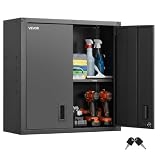
For a ready-made option, compare wall-mounted storage cabinets by depth, door clearance and mounting method, not just advertised capacity. A shallow unit may be more useful over a bench than a larger cabinet that blocks the work area.
When open shelving is the better buy
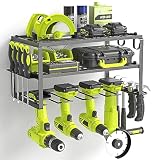
Shelves are a sensible choice for shop towels, sanding discs, glue bottles in active use, tool cases and labeled bins. They are also easy to alter as your setup changes. A basic plywood shelf on sturdy brackets can be inexpensive, and you can cut it to fit an awkward stretch of wall rather than buying a fixed-size cabinet.
The main failure modes are sagging and items falling. Use brackets rated for the load, mount them into framing, and support long spans rather than relying on thin plywood across a wide gap. As a practical starting point, keep shelf spans around 24 to 32 inches for typical shop storage; heavier loads or thinner material may need closer supports. Put a small lip on shelves holding round or loose items, and use bins for screws, collets and other small parts. Open shelving is not ideal for items that must stay clean or for objects that could cause injury if they fall.
If you want to add capacity without building a full cabinet, heavy-duty shelf brackets can support a custom shelf, but check the bracket’s load rating and install instructions. Ratings may assume particular fasteners and wall materials; they do not automatically apply to any screw driven into any wall.
A practical mixed layout
For many compact shops, put open storage near the workbench for tools used every session, and use a cabinet for small, clean or less frequently handled items. Keep the bench’s immediate backsplash area clear enough for work and task lighting. A shallow shelf above the bench can hold a few active tools, while a cabinet farther to the side keeps spare blades and measuring gear out of the dust stream.
Do not store tools where a dust collector, hose or machine door has to move through them. Keep heavy items low, and avoid placing sharp tools over a walking route. If a cabinet is mounted above a bench, confirm that its doors can open fully without striking a light, clamp rack or your head.
Buy and install for the actual load
Before choosing either system, sort your tools into three groups: used daily, used occasionally and seldom used. Measure the cases and bins in the first two groups; guessing often leads to shelves that are too shallow or cabinet doors that will not close. Leave some spare capacity so the storage works after the next tool purchase.
For a simple shelf, the cheaper option is fine if it is properly supported and the contents are not sensitive to dust. Spend more on a cabinet when protecting small, expensive or precision tools matters enough to justify the cost and reduced access speed. Whichever you choose, anchor it securely, keep heavy loads low, and check the fasteners after the first few weeks of use. A tidy wall is useful only if the storage stays put and the tools remain easy to reach.