Key takeaways
- Choose a miter saw by matching three things to your work: the widest board you cut (which decides sliding versus non-sliding).
What's inside
As an Amazon Associate I earn from qualifying purchases. This post may contain affiliate links at no extra cost to you.
Choose a miter saw by matching three things to your work: the widest board you cut (which decides sliding versus non-sliding), how often you cut bevels and crown molding (which decides single versus dual bevel), and how much shop space and budget you have for blade size and stand. If most of your cuts are trim, framing, and small furniture parts, a 10 inch single bevel is usually enough; wider boards and molding push you toward a sliding, dual bevel saw.
A miter saw makes angled and straight crosscuts faster and more accurate than a handsaw or a circular saw, but the three main designs solve different problems. This guide breaks down what separates them, which numbers on the spec sheet matter, and which features are worth paying for in 2026.
The Three Main Designs
Single bevel, non-sliding
This is the simplest design. The blade pivots left and right for miters and tilts one direction for bevels. It is compact, usually the lightest and least expensive, and perfectly good for trim, picture frames, deck boards, and general crosscutting. Its limit is width: the blade only drops straight down, so wider boards need to be flipped or cut in two passes.
Dual bevel
A dual bevel saw tilts the blade both left and right. That saves you from flipping the workpiece when cutting matching bevels, which is especially handy for crown molding and compound cuts that repeat on both ends of a board. Dual bevel can be non-sliding or sliding, so the term describes tilt, not capacity.
Sliding
A sliding saw mounts the blade on rails so it can pull forward through the board. That extends crosscut capacity far beyond what a fixed head can reach, making it the choice for wide shelving, stair treads, and thick stock. The trade-off is a bigger footprint, more weight, and a need for clearance behind the saw for the rails to move.
Blade Size and Cutting Capacity
Most buyers choose between 10 inch and 12 inch blades. A larger blade cuts thicker and wider stock in one pass, but the saw is heavier and the blades cost more. A smaller blade is lighter and easier to move, and it can be fine for trim and standard dimensional lumber.
Do not shop by blade size alone. Read the stated capacity for crosscut width at 90 degrees, at 45 degrees, and the maximum height of cut against the fence. Those three numbers tell you what the saw can handle, and they differ between models with the same blade diameter. If you plan to cut crown molding vertically against the fence, check the stated crown capacity as well.
Features That Matter and Features That Do Not
Worth paying for
Accurate detents at common angles, a fence that stays flat and square, a smooth bevel lock, and effective dust collection do more for results than extra gadgets. A clear blade guard and a solid base also help you work safely and accurately.
Nice to have
LED or laser cut lines can speed setup if they are adjustable and easy to calibrate. Cordless models give freedom on job sites, though battery size and runtime depend on the platform. Stand mounts, extension supports, and clamps are practical extras.
Often not worth it
Features that duplicate good technique rarely repay their cost. A fancy laser is no substitute for a checked, square fence, and a long list of accessories matters less than stable support for the workpiece.
Single vs Dual Bevel vs Sliding at a Glance
| Type | Best for | Main trade-off |
|---|---|---|
| Single bevel, non-sliding | Trim, framing, small projects | Limited width, flip the workpiece for opposite bevels |
| Dual bevel, non-sliding | Crown molding and repeat bevels | Still limited in crosscut width |
| Single bevel, sliding | Wide boards and shelving | Larger footprint, more weight |
| Dual bevel, sliding | Mixed professional work | Highest cost and size |
Space, Power, and Setup
Measure the bench or stand area before you commit. Sliding saws need room behind them, and some designs need extra clearance to the wall. A stable stand or a bench at the right height matters as much as the saw itself, since a saw that rocks produces inaccurate cuts. If you work in a garage or a shared space, think about whether the saw will live on the bench or travel to the job, because a heavy sliding saw that must be lifted every day quickly becomes a chore.
Corded saws deliver steady power and suit a fixed shop. Cordless saws offer portability, but you will want to check how many cuts a battery can handle and whether the battery works with tools you already own. Also look at the power requirement, since a saw on a shared circuit with other tools can trip a breaker mid-cut. Always plan for dust: a dust bag works in a pinch, but a shop vacuum port keeps your workspace cleaner and your lungs happier.
Matching a Saw to Common Projects
Thinking in projects often settles the choice faster than comparing specs. Picture the next five things you plan to build and see which design shows up most.
- Baseboard, door casing, and picture frames: a single bevel, non-sliding saw handles almost all of it.
- Crown molding in several rooms: a dual bevel saw saves repeated flips and speeds up matching corners.
- Deck framing and fence boards: capacity and portability matter, so consider a larger blade or a sliding model if you cut wide stock.
- Bookshelves and wide shelving: a sliding saw avoids awkward two-pass cuts that rarely line up.
- Small hobby builds: a compact 10 inch saw is easy to store and cheap to feed with blades.
Blades, Accuracy, and Safety Basics
The blade often matters more than the motor. A higher tooth count gives smoother crosscuts in trim and plywood, while fewer teeth cut faster through rough lumber. If the saw ships with a general-purpose blade, plan on upgrading to match your main material once you know what you cut most.
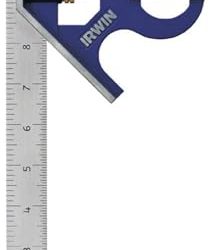
Accuracy starts with a square fence and a calibrated miter scale. Check both with a reliable square before the first project, and recheck after moving the saw. For safety, clamp or hold the workpiece firmly, keep hands well clear of the blade path, let the blade reach full speed before cutting, and wait for it to stop before lifting the head. Wear eye and hearing protection every time, and use a dust-collection setup so fine dust does not hang in the air.
Finally, support long boards at the same height as the saw table. An unsupported board tilts, pinches the blade, and ruins both the cut and your confidence. A pair of stands or an extension table solves most of it, and a simple stop block clamped to the fence makes repeat cuts the same length every time.
Before You Buy
- Measure the widest board you expect to cut.
- List whether you will cut crown molding or compound angles.
- Decide between 10 inch and 12 inch based on stock thickness and storage.
- Check crosscut capacity at 90 and 45 degrees.
- Plan the stand, bench, and dust-collection setup.
- Budget for a good blade, safety glasses, and hearing protection.
Related guides
- How To Sharpen Chisels And Plane Irons With Whetstones
- Random Orbital Sanders For Furniture Finishing
- How To Tune A Band Saw To Stop Blade Drift
Frequently Asked Questions
Do I need a sliding miter saw?
Only if you cut boards wider than a fixed saw can handle. For trim and narrow stock, a non-sliding saw is lighter, cheaper, and takes less space.
Is dual bevel worth the extra money?
It is worth it if you cut crown molding or many compound angles, because you avoid flipping the workpiece. If you mostly make straight crosscuts and a few miters, single bevel works fine. You can always cut opposite bevels by flipping the board, which costs a little time rather than any accuracy.
Is a 12 inch saw better than a 10 inch?
It cuts thicker and wider stock in one pass, but it is heavier and costs more to run. A 10 inch saw is often the better fit for general shop and trim work, especially if you move the saw between rooms or storage spots.
Can I use a miter saw for ripping?
No. A miter saw is designed for crosscuts and angled cuts. Ripping along the grain is a job for a table saw or a circular saw guided by a straightedge.
Related guides
More from Amazon
Programs that pair well with the guide above. Offers and eligibility are set by Amazon and may change.
A free business account with business pricing and bulk-buying tools for work, shop or home office.
Create a business accountFree shipping on eligible items, Prime Video and more. Eligible new members can start with a free trial.
Start a Prime free trialAudiobooks and podcasts to listen to on the go. Eligible new members can start with a free trial.
Try Audible freeAd-free music streaming. Eligible new subscribers can start with a free trial.
Try Music Unlimited freeAs an Amazon Associate we earn from qualifying purchases.