Key takeaways
- Compare the best tenon saws for tenon cheeks, shoulders and joinery crosscuts, with blade lengths, tooth counts and back types explained for every pick.
What's inside
As an Amazon Associate I earn from qualifying purchases. This post may contain affiliate links at no extra cost to you.
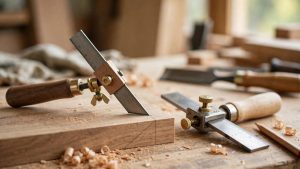
A tenon saw is the mid-sized member of the backsaw family: a short, fine-toothed blade stiffened by a brass or steel spine along its top edge. That spine keeps the thin plate from flexing mid-stroke, which is what lets the saw track a knife line through tenon cheeks and stop cleanly on shoulder lines. Blade lengths usually run from 10 to 14 inches, with tooth counts coarse enough to clear waste quickly yet fine enough to leave a surface that needs little paring.
The right pick depends on the joinery you cut most. Rip-filed teeth suit cheeks cut along the grain, crosscut teeth leave cleaner shoulders across it, and hardpoint saws trade resharpening for a long-lasting factory edge. The five saws below cover the main approaches: two traditional Spear & Jackson patterns, a modern hardpoint Irwin, a Japanese pull-cut dozuki sold for tenon work, and a back saw and mitre box set for guided cuts.
As an Amazon Associate, we earn from qualifying purchases.
Quick picks
- Best traditional all-rounder: Spear & Jackson 5410Y Professional Tenon Saw — a 10 inch brass-back saw with a beech handle and resharpenable crosscut teeth.
- Best value hardpoint: Spear & Jackson B9812 Predator Tenon Saw — a 12 inch blade at 15 points per inch with a moulded grip and an edge that needs no maintenance.
- Best modern grip: IRWIN Jack Tenon Saw 10503534 — a 12 inch alloy steel blade with a soft grip handle and a 12 TPI, 13 PPI tooth pattern.
- Best pull-cut option: SUIZAN Dozuki 9.5 Inch Crosscut — a Japanese steel back saw with 25 TPI teeth and a replaceable blade for very fine shoulder cuts.
- Best guided starter set: GreatNeck BSB14 Mitre Box and Saw Set — a 14 inch back saw paired with a 12 inch mitre box for repeatable angled cuts.
1. Spear & Jackson 5410Y Professional Tenon Saw
The 5410Y follows the classic Sheffield pattern: a solid brass back, a beech handle and a blade you can sharpen yourself for decades. It is the saw on this list that most closely matches what traditional tenon saws have looked like for generations.
Specs
- Blade length: 10 inches
- Tooth count: 13 points per inch
- Tooth pattern: crosscut
- Back: solid brass
- Blade material: hardened and tempered carbon steel
- Handle: beech wood, secured with three brass nuts, one carrying the SJ crown medallion
Who it suits: Woodworkers who cut tenon shoulders by hand and want a saw that can be re-filed rather than replaced. The crosscut filing is aimed squarely at clean shoulder lines across the grain, and the brass back adds the weight that helps a short saw settle into the cut.
Limitations: At 10 inches it is the shortest Western saw here, so long tenon cheeks on wide stock take more strokes. Crosscut teeth rip more slowly along the grain than a rip-filed saw, and the teeth arrive ready to use but will eventually need a saw file and some sharpening skill to maintain.
2. Spear & Jackson B9812 Predator Tenon Saw
The B9812 takes the opposite approach to the 5410Y: a hardpoint tooth line in a longer 12 inch blade, with a moulded plastic handle instead of timber. It is built to be picked up and used with no setup and no sharpening kit.
Specs
- Blade length: 12 inches (305 mm)
- Tooth count: 15 points per inch
- Tooth type: Predator hardpoint
- Handle: moulded plastic with a soft-feel grip
- Weight: 465 g
- Model number: B9812
Who it suits: Anyone who wants a low-maintenance tenon saw for occasional joinery, carcasses and general bench work. The 12 inch plate covers most furniture-scale tenons, and 15 points per inch leaves a tidy finish on shoulders while still cutting at a reasonable pace.
Limitations: Hardpoint teeth cannot be resharpened with a standard saw file, so when the edge finally dulls the whole saw is the consumable. The fine tooth count is slower in thick stock than a coarser rip saw, and the plastic handle lacks the warmth and repairability of a wooden one.
3. IRWIN Jack Tenon Saw 10503534
The IRWIN Jack tenon saw (model XP3055-300) is a jobsite-flavoured take on the pattern, pairing an alloy steel blade with a soft grip handle shaped for use with or without gloves. Its tooth geometry sits between the two Spear & Jackson saws.
Specs
- Blade length: 12 inches
- Tooth configuration: 12 teeth per inch, 13 points per inch
- Blade material: alloy steel
- Handle: soft grip
- Weight: 0.33 kg
- Model number: 10503534
Who it suits: Woodworkers who split time between the bench and site work and want one saw for tenons, trim and small crosscuts. The slightly coarser tooth count than the Predator clears waste faster in thicker material, and the soft grip stays comfortable through long cutting sessions.
Limitations: The listing describes a general-purpose specialty saw rather than a dedicated joinery tool, so the finish it leaves on shoulders may need a touch more paring than the finer-toothed picks. Like most hardpoint-style saws at this level, plan on replacement rather than resharpening once the edge goes.
4. SUIZAN Dozuki 9.5 Inch Crosscut (D-001)
The dozuki is the Japanese answer to the backsaw: a very thin blade with a steel spine that cuts on the pull stroke. SUIZAN sells this 9.5 inch model for dovetail and tenon work, and its 25 TPI crosscut teeth are the finest in this roundup by a wide margin.
Specs
- Blade length: 9.5 inches (240 mm)
- Tooth count: 25 TPI, crosscut
- Blade material: Japanese steel, 0.012 inch plate with a 0.02 inch kerf
- Back: steel spine
- Blade: replaceable
- Part number: D-001; weight 6.7 ounces; made in Japan
Who it suits: Woodworkers cutting small to medium tenons who prize a crisp shoulder line over raw speed. The thin plate and narrow kerf let you split a knife line, and because the saw cuts on the pull, the thin blade stays in tension and is less likely to buckle for beginners.
Limitations: The spine limits depth of cut to the height of the blade under the back, so deep tenon cheeks on thick stock are out of reach. The fine teeth are slow in wide boards and fragile if twisted or forced, and when they dull you replace the blade rather than sharpen it.
5. GreatNeck BSB14 Mitre Box and Saw Set
The GreatNeck set bundles a 14 inch back saw with a 12 inch mitre box, giving you a guided way to cut shoulders and mitres at preset angles. The saw itself is a full-size backsaw of the same family as a tenon saw, with a 3 inch depth of cut.
Specs
- Saw blade length: 14 inches
- Tooth count: 12 teeth per inch
- Depth of cut: 3 inches
- Blade material: stainless steel, per the listing
- Included: 12 inch high-impact mitre box
- Model number: BSB14
Who it suits: Beginners and occasional users who want the box to hold the work and guide the blade while they learn to saw to a line. It also earns its keep for trim, moulding and picture-frame work where the preset angles do most of the thinking.
Limitations: A mitre box guides crosscuts and mitres, but tenon cheeks are ripped freehand, so the box adds little for half the tenon joint. The 12 TPI tooth line is a general-purpose grind rather than a joinery filing, and the set format means the saw is not sold as a standalone bench tool.
How to choose a tenon saw
Blade length and depth. Tenon saws run from about 10 to 14 inches. Shorter saws are easier to control on small joints; longer saws take fewer strokes on wide cheeks. Check the depth under the back as well, because that figure, not the blade length, decides the deepest tenon cheek you can rip in one pass.
Tooth count and filing. Points per inch between 12 and 15 cover most Western tenon saws. Finer teeth leave cleaner shoulders but cut slowly; coarser teeth clear waste faster. Rip filing suits cheeks cut along the grain, crosscut filing suits shoulders, and many general saws use a compromise pattern that does both acceptably.
Hardpoint or resharpenable. Hardpoint teeth are induction hardened, stay sharp a long time and cannot be re-filed with ordinary saw files. Traditional carbon steel teeth dull sooner but can be sharpened again and again, which suits woodworkers who already own a saw file and a saw set.
Back material. A brass back is heavier and helps the saw feed itself into the cut; a steel back is lighter and often found on less expensive saws. Both stiffen the plate, so handle comfort and balance usually matter more than the metal itself.
Push or pull. Western tenon saws cut on the push stroke and use thicker plates. Japanese dozuki saws cut on the pull with much thinner plates and finer teeth, leaving a narrower kerf. The technique differs, so pick the style that matches how you already work, or the one you are willing to practise.
FAQ
What size tenon saw should a beginner start with?
A 12 inch saw with teeth around 13 to 15 points per inch is the usual starting point. It is long enough for furniture-scale tenons, fine enough for clean shoulders, and easier to keep on a line than a very short saw.
Can a tenon saw cut dovetails as well?
It can, especially on larger dovetails in thick stock, but a dedicated dovetail saw has a shorter blade and finer teeth that suit small pins and tails better. Many woodworkers use the tenon saw for the biggest joints and a dovetail saw for the rest.
How deep can a tenon saw cut?
Only as deep as the distance from the tooth line to the underside of the back. On the saws here that is roughly 3 inches for the GreatNeck, and the blade depth under the spine governs the dozuki in the same way. Deeper cheeks are finished by flipping the work or switching to an open hand saw.
Do hardpoint tenon saws need sharpening?
No, and they cannot be sharpened with a normal saw file because the teeth are hardened. Their advantage is a long-lasting factory edge with zero maintenance; the trade-off is that the saw is replaced once that edge eventually wears out.
Final verdict
For a traditional, repairable saw, the Spear & Jackson 5410Y is the standout: brass back, beech handle and teeth you can sharpen for years. If you would rather skip sharpening altogether, the same maker’s B9812 Predator gives you a longer blade and a maintenance-free hardpoint edge, with the IRWIN Jack close behind for its comfortable grip and faster tooth pattern. Choose the SUIZAN Dozuki if your tenons are small and your priority is the cleanest possible shoulder line, and reach for the GreatNeck set if a mitre box guide will help you learn. Match the saw to the size of joint you cut most, and any of the five will saw honest tenons.
Related guides
More from Amazon
Programs that pair well with the guide above. Offers and eligibility are set by Amazon and may change.
A free business account with business pricing and bulk-buying tools for work, shop or home office.
Create a business accountFree shipping on eligible items, Prime Video and more. Eligible new members can start with a free trial.
Start a Prime free trialAudiobooks and podcasts to listen to on the go. Eligible new members can start with a free trial.
Try Audible freeAd-free music streaming. Eligible new subscribers can start with a free trial.
Try Music Unlimited freeAs an Amazon Associate we earn from qualifying purchases.