Key takeaways
- Compare the best smoothing planes for furniture making: a premium Sweetheart No. 4, a Bailey No. 4, a compact No. 3 and two budget picks, with key specs.
What's inside
- Quick Answer
- Table of Contents
- Stanley Sweetheart No. 4 Smoothing Bench Plane (12-136)
- Stanley Bailey No. 4 Smoothing Plane (1-12-004)
- Stanley No. 3 Smooth Plane (1-12-033)
- Stanley No. 4 Adjustable Bench Plane (12-404)
- Faithfull No. 4 and No. 60-1/2 Plane Set (FAIPLANE4AVB)
- How to Choose
- Who Should Skip
- FAQ
- Final Verdict
As an Amazon Associate I earn from qualifying purchases. This post may contain affiliate links at no extra cost to you.
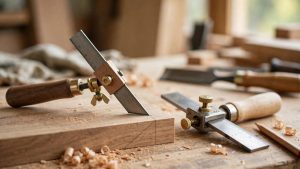
A smoothing plane is the last tool to touch most furniture parts before finish goes on, and it earns that place by leaving a surface that sanding alone rarely matches: flat, crisp at the edges, and free of the torn grain that shows through a clear coat. For tabletops, drawer fronts, cabinet doors, and case sides, the right smoother set for a fine cut turns final surfacing from a chore into a short, quiet step.
The five planes below are all current metal-bodied smoothers sized for furniture work, from a premium No. 4 with a thick A2 iron down to a budget two-plane starter set. Each is a genuine smoothing plane rather than a jack or block plane pressed into service, and each is described from published specifications only.
As an Amazon Associate, we earn from qualifying purchases.
Quick Answer
For most furniture work, the Stanley Sweetheart No. 4 is the strongest all-around smoother here, with a thick A2 iron and a one-piece base and frog. The Stanley Bailey No. 4 covers the mid-range, the No. 3 suits small parts, and the Stanley 12-404 and Faithfull set serve budget benches.
Table of Contents
- Stanley Sweetheart No. 4 Smoothing Bench Plane (12-136)
- Stanley Bailey No. 4 Smoothing Plane (1-12-004)
- Stanley No. 3 Smooth Plane (1-12-033)
- Stanley No. 4 Adjustable Bench Plane (12-404)
- Faithfull No. 4 and No. 60-1/2 Plane Set (FAIPLANE4AVB)
- How to Choose
- Who Should Skip
- FAQ
- Final Verdict
Stanley Sweetheart No. 4 Smoothing Bench Plane (12-136)
The Sweetheart No. 4 is the premium pick in this group and the one aimed squarely at fine furniture finishing. Its iron is A2 steel at a full 1/8 inch thick, roughly half again as thick as a standard bench plane iron, and that extra mass is what helps it push through reversing grain on a tabletop without chattering. The base and frog are cast as one piece, a design Stanley publishes as virtually eliminating chatter, and the tote and knob are cherry wood rather than molded plastic.
At 10-5/8 inches long with a 2-inch cutter, it sits at the larger end of the No. 4 class, suiting it to broad furniture surfaces such as case tops and door panels where a longer sole bridges small hollows. It is also the plane on this list that asks the least fettling before it takes a fine shaving.
Specs
- Model: Stanley 12-136
- Plane size: No. 4 bench plane
- Cutter width: 2 inches
- Overall width: 2-1/2 inches
- Length: 10-5/8 inches
- Iron: A2 steel, 1/8 inch thick
- Construction: one-piece base and frog
- Handle and knob: cherry wood
- Tier: premium
Stanley Bailey No. 4 Smoothing Plane (1-12-004)
The Bailey No. 4 is the classic mid-range smoother: a 245 mm cast iron body, a 2-inch chrome carbon steel cutter that is hardened and tempered to hold a keen edge, and the familiar Bailey depth and lateral adjustment layout that most woodworkers already know. Stanley describes the base as precision cast fine grey iron, which gives the plane the stability and wear resistance a daily bench smoother needs.
A rapid fine adjustment mechanism speeds up the small depth changes that furniture smoothing constantly calls for, moving between a whisper-thin finishing cut on a door panel and a slightly heavier pass on a case side. At standard No. 4 dimensions it handles the full run of furniture parts, from aprons and rails to mid-size tabletops, making it the natural middle of this list.
Specs
- Model: Stanley 1-12-004
- Plane size: No. 4 smoothing plane
- Length: 245 mm
- Cutter width: 50 mm (2 inches)
- Cutter: chrome carbon steel, hardened and tempered
- Body: cast iron (fine grey iron base)
- Adjustment: fully adjustable, rapid fine adjustment mechanism
- Tier: mid-range
Stanley No. 3 Smooth Plane (1-12-033)
Not every furniture part wants a full-size smoother. Drawer sides, small box lids, stool seats, and the narrow rails of a side table are easier to control with a compact plane, and that is the role of the No. 3. At 8 inches long with a 1-3/4-inch iron, the Stanley No. 3 is a true smoothing plane in a smaller frame, light enough at about 3-1/8 pounds for one-handed passes along short grain runs.
The narrower iron also concentrates effort on small tear-out patches instead of the whole board width, which makes the No. 3 a useful second smoother alongside a No. 4 rather than a replacement for one. If most of your furniture work is small-scale, this size can serve as a main smoother; for wide tabletops it works best as a companion plane.
Specs
- Model: Stanley 1-12-033
- Plane size: No. 3 smooth plane
- Length: 8 inches
- Cutter width: 1-3/4 inches
- Weight: about 3-1/8 pounds
- Pattern: Bailey-style bench plane
- Tier: mid-range
Stanley No. 4 Adjustable Bench Plane (12-404)
The 12-404 is the budget route into a standard No. 4 smoother. Its gray cast-iron base has precision-ground sides and a bottom machined smooth and true, and the 2-inch cutter is the standard Stanley 12-313 pattern, so replacement irons are easy to source. The body carries an epoxy coating, the cutter is hardened and tempered steel, and the contoured handles are high-impact polymer.
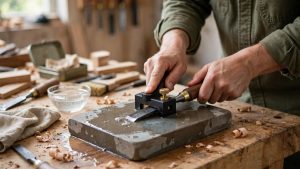
Published specifications put the weight at 2.75 pounds, noticeably lighter than the premium pick, which some users prefer for long sessions on vertical work such as door edges. Budget planes in this class generally benefit from a careful first setup: flattening checks, a freshly honed iron, and a tightened cap iron are part of the deal at this tier. For a first dedicated smoother for furniture projects, it covers the essentials without the premium outlay.
Specs
- Model: Stanley 12-404
- Plane size: No. 4 bench plane
- Cutter width: 2 inches (Stanley 12-313 cutter)
- Base: gray cast iron, precision-ground sides and bottom
- Body finish: epoxy coating
- Cutter: hardened, tempered steel
- Handles: high-impact polymer, contoured
- Weight: 2.75 pounds
- Tier: budget
Faithfull No. 4 and No. 60-1/2 Plane Set (FAIPLANE4AVB)
Faithfull sells its No. 4 smoother as part of a two-plane set that pairs it with a No. 60-1/2 block plane, both supplied in canvas carry bags. The No. 4 follows the classic pattern: a grey cast iron body precision machined to tight tolerances, with machined base and faces and a 2-inch blade suited to surface finishing, cabinet work, and general carpentry. For furniture making, that means the smoothing half of the set handles faces and panels while the low-angle block plane half trims end grain on drawer parts and fits tenon shoulders.
A set like this suits a new furniture workshop that needs both tools at once rather than a smoother alone, covering final surfacing and end-grain trimming in a single purchase at the budget end of the market. Experienced makers who already own a good block plane will get less from the bundle and should look at the single planes above instead.
Specs
- Model: Faithfull FAIPLANE4AVB
- Set contents: No. 4 smoothing plane and No. 60-1/2 block plane
- No. 4 body: grey cast iron, precision machined
- No. 4 blade width: 2 inches (50 mm)
- Storage: canvas carry bags included
- Intended work: surface finishing, cabinet work, general carpentry
- Tier: budget
How to Choose
Start with size. A No. 4 is the default furniture smoother because its sole is long enough to level small undulations on panels yet short enough to follow the slight curves of a hand-finished top. Choose the No. 3 instead when most parts are small, or as a second plane for spot work on rails, drawer parts, and box lids.
Next, look at the iron. Thicker irons, like the 1/8-inch A2 blade in the Sweetheart, resist chatter on figured and reversing grain, which is where furniture woods such as curly maple and ribbon mahogany cause trouble. Standard-thickness hardened carbon steel irons sharpen faster and cost less to replace, a fair trade for straight-grained work.
Then weigh construction and adjustment. A one-piece base and frog or a precision cast grey iron base both aim at a rigid platform that holds its setting. Fine, rapid depth adjustment matters more than it sounds, because furniture smoothing lives in the narrow band between a shaving that polishes and one that tears. Finally, match the tier to your bench: premium for daily fine finishing, mid-range for a dependable all-rounder, budget when you accept more initial fettling.
Who Should Skip
Skip this entire category if your furniture workflow is fully machine-based and surfaces already come off a wide-belt or drum sander ready for finish; a smoothing plane adds little there. Skip the compact No. 3 as your only smoother if you mainly build wide tabletops and large casework, since its short sole rides into hollows instead of bridging them. Skip the budget picks if you are unwilling to spend setup time flattening, honing, and adjusting, because planes at that tier are published as adjustable tools, not ready-to-use instruments. And skip a two-plane set when you already own a serviceable block plane; a single mid-range or premium No. 4 is the better spend.
FAQ
What size smoothing plane is best for furniture work?
The No. 4 is the standard answer, since its roughly 9- to 10-inch sole balances leveling ability with control on panels, doors, and case parts. A No. 3 is the better fit for small parts and as a second plane. Very wide or long surfaces are usually handled by a jack plane first, with the smoother reserved for final passes.
Does iron thickness really matter on a smoothing plane?
Published specifications show a real spread, from standard irons to the 1/8-inch A2 iron on the Sweetheart No. 4. A thicker iron adds stiffness at the cutting edge, which helps resist chatter on figured grain. On straight-grained furniture woods, a standard iron that is kept sharp performs the same task with easier honing.
How much setup does a new smoothing plane need?
Every plane on this list is an adjustable tool that benefits from a first setup: check the sole, hone the iron, seat the cap iron close to the edge, and set a fine cut. Premium models generally need the least work out of the box, while budget models reward the most fettling. None of the makers publish a ready-to-use guarantee.
Can a smoothing plane replace sanding on furniture?
For flat faces and panels, a well-tuned smoother leaves a surface that many makers take straight to finish, and it avoids rounding over crisp edges the way sanding can. Contoured parts, inside curves, and repairs still call for abrasives. Most furniture benches end up using the plane for broad surfaces and sandpaper for everything else.
Final Verdict
For a single smoother that will finish furniture surfaces day in and day out, the Stanley Sweetheart No. 4 is the pick, on the strength of its thick A2 iron and one-piece base and frog. The Bailey No. 4 is the dependable mid-range alternative, the No. 3 covers small parts and smaller hands, and the 12-404 and the Faithfull set open the category to budget benches. Match the size to your parts and the tier to how much setup time you accept, and any of the five will leave furniture surfaces ready for finish.
Related guides
More from Amazon
Programs that pair well with the guide above. Offers and eligibility are set by Amazon and may change.
A free business account with business pricing and bulk-buying tools for work, shop or home office.
Create a business accountFree shipping on eligible items, Prime Video and more. Eligible new members can start with a free trial.
Start a Prime free trialAudiobooks and podcasts to listen to on the go. Eligible new members can start with a free trial.
Try Audible freeAd-free music streaming. Eligible new subscribers can start with a free trial.
Try Music Unlimited freeAs an Amazon Associate we earn from qualifying purchases.