What's inside
As an Amazon Associate I earn from qualifying purchases. This post may contain affiliate links at no extra cost to you.
An oscillating spindle sander makes a lot of fine dust, and its built-in port does not always capture it all. A downdraft table can catch dust that misses the port, but it takes floor or bench space and needs enough airflow to work. For most shops, the right choice depends on the sander’s port, your dust collector, and the kind of work you do—not on which option sounds more complete.
As an Amazon Associate we earn from qualifying purchases at no extra cost to you.


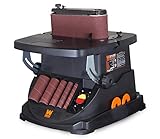
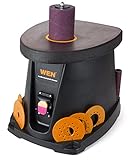
What the spindle port catches
The sander’s dust port is positioned to collect dust as the drum removes material. When the port and collector are compatible, this is the most direct way to capture dust at the source. It also takes no extra bench space and keeps the work area relatively clear.
But the port can miss dust thrown out from the workpiece, especially when sanding narrow curves or holding a piece at an angle. Some machines have small ports that restrict airflow; adapters and long, ribbed hoses can add more resistance. A shop vacuum may fit the connection but still provide poor collection if the hose is too long, the filter is clogged, or the sander’s port is poorly designed.
Check the port diameter before buying adapters, and compare it with your collector’s hose. Many benchtop sanders use a 2- to 2½-inch connection, but sizes vary. A reduction in diameter can make a connection possible while limiting airflow. Keep the hose short and avoid sharp bends where you can.
What a downdraft table adds
A downdraft table pulls air through a perforated surface, drawing dust downward when it lands on the table. It can collect some of the fine dust that escapes the sander’s port and is useful for hand sanding, detail work, or other tasks that do not have a convenient dust port.
It is not a substitute for a well-connected spindle-sander port. The table has to pull air across the surface and through its openings; a small or underpowered collector may not create enough airflow to capture dust effectively. Large openings can also pull small parts against the surface, while a workpiece can block holes and reduce suction in the area around it. A simple shop-made box with a perforated top may be inexpensive, but its performance depends on the collector, plenum design, and open area—not just the number of holes.
For occasional sanding, a commercial benchtop downdraft sanding table can be a convenient secondary surface. Before buying, check its port size, table dimensions, and whether your collector can handle the airflow it needs.
Which setup fits your shop?
| Setup | Best for | Main limitation | Cost and space |
|---|---|---|---|
| Sander port only | Routine spindle sanding with a compatible collector | May miss dust thrown beyond the port | Lowest added cost; no extra work surface |
| Downdraft table only | Hand sanding and work without an effective tool port | Often cannot capture dust as well as collection at the sander | Needs a table and enough collector capacity |
| Port plus downdraft table | Frequent sanding or a shop handling several dusty tasks | More hoses, setup, and airflow demand | Highest cost and space requirement |
If the port already collects most of the dust and you sand only now and then, spend first on a proper hose, a clean filter, and a sound connection. A dust-collection hose adapter kit can help when the diameters differ, but avoid stacking several reducers if one correctly sized adapter will do.
Check airflow before buying
Dust collectors are commonly rated in cubic feet per minute (CFM), but a published maximum does not guarantee that airflow at the tool. Hose length, bends, small fittings, filters, and leaks all reduce what reaches the port. A collector may claim 600 CFM at its inlet and deliver substantially less through a restrictive setup. Look for the collector’s airflow information under static pressure, if available, and follow the sander manufacturer’s recommendations.
Use the shortest practical hose, seal loose connections, and clean the filter or bag as directed. If you have an air-quality meter, compare readings during sanding with the collector on and off; a visible cloud or lingering dust is a clear sign that collection needs attention. Do not treat the absence of visible dust as proof that the air is clean. A properly fitted NIOSH-approved particulate respirator is sensible when sanding, particularly while you assess or improve collection.
Common failures and fixes
A common mistake is adding a downdraft table to a collector that already struggles with the sander. If the table and tool share a small collector, opening another branch can reduce suction at the sander. Use a blast gate so you can direct airflow to one machine at a time, unless the collector is sized to serve both simultaneously.
Another problem is expecting a table to pull dust through a solid or obstructed workpiece. Keep openings clear, and use a removable sacrificial surface if small parts are being pulled down. Do not cover most of the table with a large panel and expect the remaining holes to maintain the same collection.
For a small shop with one spindle sander, start with the machine’s port connected to an adequately sized collector. Test the setup on your usual work, checking for dust around the operator and on nearby surfaces. Add a downdraft table if you also hand-sand regularly or still see significant escape despite fixing the tool-side connection. That approach avoids buying a second capture surface before you know it solves a real problem.