What's inside
As an Amazon Associate I earn from qualifying purchases. This post may contain affiliate links at no extra cost to you.
End-of-day cleanup is not one job. A broom is best for chips, offcuts and grit across an open floor. A dust extractor is better for fine dust at the tool and for cleaning surfaces without putting particles back into the air. Most workshops need both, but the right balance depends on the work you do, the floor area and how much airborne dust you can tolerate.
As an Amazon Associate we earn from qualifying purchases at no extra cost to you.


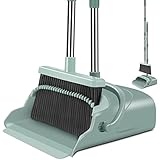

The real difference between sweeping and extracting
A broom moves debris. It does not remove it from the workshop until you collect the pile and carry it away. As the bristles drag across concrete or plywood, they also disturb fine dust. Some of that dust becomes airborne again, especially when the floor is dry.
A dust extractor captures material at the hose. With a suitable filter and a good seal, it removes fine particles instead of redistributing them. This matters most with sanding dust, MDF, drywall compound and other powdery waste. A broom is usually adequate for wood chunks, sawdust piles and general dirt, but it is a poor substitute for extraction at a table saw, router or sander.
For a basic shop, a sturdy push broom and a wet/dry vacuum fitted with a proper cartridge filter may be enough. If you regularly sand indoors or use tools that create fine dust, look at a woodworking dust extractor with tool-triggered switching and a filter-cleaning system.
Which cleanup job suits which tool?
| Cleanup task | Workshop broom | Dust extractor |
|---|---|---|
| Large wood offcuts and chips | Fast and inexpensive | Slow unless using a wide floor tool |
| Fine sanding dust | Disturbs dust and leaves residue | Best choice, particularly at the source |
| Dust on a workbench | Awkward and likely to spread dust | Good with a brush nozzle |
| Concrete or packed-earth floor | Works well for coarse debris | Works, but filters may load quickly |
| Wet spills | Not suitable | Only if the vacuum is rated for wet pickup |
| Cost and maintenance | Low cost and minimal maintenance | Higher purchase cost; filters and bags need attention |
When a broom is the sensible choice
A broom is the cheaper option when your main waste is coarse. Framing, rough carpentry and occasional repair work often produce shavings, cutoffs and dirt that can be swept in minutes. A 16- to 24-inch push broom covers a small garage shop quickly, while a dustpan or floor scraper handles the pile.
Use a broom after cutting large stock, but do not sweep immediately if the air is visibly dusty. Give the dust several minutes to settle, or run the extractor first. A stiff broom cleans textured concrete better than soft indoor bristles, but it can scratch finished floors and scatter light chips. Keep separate brooms if you work with metal filings, oily debris or abrasive masonry dust.
The failure mode is assuming “swept clean” means “dust free.” Dust can remain on ledges, light fixtures, tool tables and storage shelves. It can also be carried into the house on shoes. If you use a broom, finish with a vacuum on benches and around the tool bases, particularly after sanding MDF or treated materials.
When a dust extractor earns its space
Extraction pays when fine dust is produced daily or when respiratory protection alone is not a practical control. Connect the hose while cutting or sanding rather than waiting until the end of the day. Source capture is more effective than trying to clean a cloud after it has spread through the room.
A general-purpose shop vacuum can handle cleanup, but check its filter arrangement. A paper or fleece collection bag helps keep the main cartridge filter from loading quickly. Without a bag, fine dust can clog the filter, reduce airflow and eventually pass through the exhaust. A vacuum that sounds normal may still be performing poorly if the hose is blocked or the filter is packed.
For powered tools, choose a hose that fits without a loose adapter. A 27- to 36-millimeter hose is common for portable sanders and routers; larger machines may need a wider connection and more airflow. A narrow hose can plug with chips, while an oversized hose may be hard to connect and awkward around a bench. A cyclone separator for a shop vacuum is useful when the extractor fills quickly with chips, because it catches much of the coarse waste before it reaches the filter.
A better end-of-day routine
Start at the tools and work outward. Turn on extraction and vacuum benches, tool tables and guards with a soft brush attachment. Clear the floor around the table saw, planer and workbench before sweeping, since those areas collect dust in corners and under casters.
Next, remove large offcuts by hand. This prevents a vacuum hose from swallowing a sharp piece or filling a small canister unnecessarily. Sweep coarse debris toward one collection point, then vacuum the remaining line of fine dust. If you have a smooth sealed floor, a wide floor nozzle is faster than a narrow tool nozzle. Keep the hose short enough that it does not snag on bench legs.
Do not use compressed air to “clean” the shop at the end of the day. It blows settled dust onto shelves, clothing and your breathing zone. It also sends particles into light fixtures and motor vents. Use low-pressure air only for specific equipment where the manufacturer permits it, and wear eye protection.
Buying and storing the equipment
Prioritize a reliable filter, an easy-to-empty container and a hose that reaches every work area. Automatic filter cleaning is convenient, but it does not compensate for a badly sealed lid, a clogged hose or an undersized extractor. If noise is a concern, compare the extractor’s rated sound level and use it during planned cleanup rather than leaving it running all day.
Store the broom with its bristles off the floor so they do not curl. Keep the extractor hose hung in a large loop; tight bends cause cracks and make blockages harder to clear. A wall-mounted workshop vacuum hose reel can help in a larger shop, but a simple hook is fine for a short hose.
If fine dust is a recurring problem, add an air cleaner or ceiling-mounted filtration unit after improving tool extraction. It is not a replacement for collecting dust at the cutter or sanding pad. For a small hobby shop that mainly produces chips, buy the good broom first and add a vacuum for benches and corners. For a shop that sands, cuts sheet goods or runs machines every day, use extraction during the work and keep the broom for the coarse cleanup that a vacuum handles slowly.