What's inside
As an Amazon Associate I earn from qualifying purchases. This post may contain affiliate links at no extra cost to you.
Fine dust gets everywhere: inside drawer slides, around switch contacts, under tool batteries, and into the grease on saw guides. A cabinet will not replace dust collection, but the right one can keep cleaned tools usable between jobs and reduce the time spent blowing grit out of your equipment.
The best choice depends on what you are storing. A sealed cabinet protects better than an open shelf, while a drawer cabinet is faster to use but usually has more gaps. Heavy steel construction helps with security and durability, but it does not automatically make a cabinet dustproof. Look for tight-fitting doors, covered drawer gaps, and a layout that lets you keep the most dust-sensitive tools away from sanding and cutting areas.
As an Amazon Associate we earn from qualifying purchases at no extra cost to you.


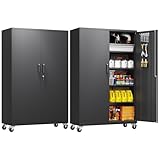

What Makes a Cabinet Dust-Resistant?
Fine dust protection comes mostly from enclosure design, not the thickness of the metal. Hinged doors with an overlapping lip and a compressible gasket block dust more effectively than a simple flat door. A cabinet with ventilation slots, exposed drawer slides, or large gaps around the base will collect dust inside even if it looks rugged.
For general workshop storage, a cabinet with a full-height door and a door gasket is the safest choice. If you need drawers, choose a unit with enclosed drawer cases and reasonably tight clearances. Ball-bearing slides are smoother and more durable, but their exposed tracks can become abrasive when packed with MDF or drywall dust. Wipe the slides periodically rather than flooding them with oil, which can turn dust into grinding paste.
Fine dust is also a reason to avoid storing tools directly on the floor. Keep the cabinet base at least a few inches above the slab, or use a sealed plinth. This reduces contact with dampness and makes it easier to sweep or vacuum underneath.
Cabinet Types Compared
| Cabinet type | Dust protection | Best use | Main compromise |
|---|---|---|---|
| Enclosed steel cupboard | Very good with a gasketed door | Power tools, measuring gear, finishes, and boxed accessories | Tools are slower to see and reach |
| Drawer cabinet | Good to fair | Hand tools, hardware, blades, and small parts | Drawer gaps admit more dust than a sealed door |
| Modular plastic cabinet | Fair to good | Light-duty storage and battery accessories | Less rigid; shelves and latches may flex |
| Open steel shelving | Poor | Clean, low-dust areas and bulky items | Tools are exposed to airborne dust |
Best Choice for Most Shops
For a mixed woodworking or DIY shop, start with an enclosed steel storage cabinet rather than a large drawer bank. A cabinet roughly 36 to 48 inches wide and 72 inches tall provides useful capacity without taking an entire wall. Adjustable shelves let you store cases, sanders, routers, and consumables without wasting vertical space.
Search for a lockable steel garage storage cabinet with gasketed doors if dust sealing is a priority. Check the product photos carefully. Some cabinets described as “dustproof” only have doors that overlap slightly; that is better than open shelving, but it is not a sealed enclosure.
A lock is useful even if theft is not a concern. It keeps drawers closed when the cabinet is moved and prevents children from accessing blades, solvents, or nail-gun supplies. Avoid putting heavy tools in high shelves. Keep the heaviest items below waist height, and anchor a tall cabinet to a wall so an open door cannot make it unstable.
When Drawers Are Worth It
Drawers win when you use many small tools every day. A shallow drawer can hold hex keys, driver bits, calipers, and layout tools without the digging required in a cupboard. For this job, a steel tool cabinet with ball-bearing drawers is usually a better buy than a cheap cabinet with thin stamped slides.
Do not fill every drawer to its advertised capacity. A drawer rated for 100 pounds may operate poorly when loaded with dense sockets and fasteners, especially if the cabinet is on casters. Leave some margin and distribute weight across the cabinet. A five-drawer unit with 50-pound-rated slides can be more practical than a taller unit with overloaded narrow drawers.
For dust control, use removable drawer liners and fitted plastic organizers. They stop small debris from migrating under dividers and make cleanup faster. If your shop produces large amounts of sanding dust, keep the drawer cabinet outside the immediate sanding zone or cover it with a fitted dust cover when not in use.
Materials and Features to Check
Steel is generally the best material for a permanent workshop cabinet. Look for reinforced doors, welded corners, and shelves rated for at least 100 pounds if you will store benchtop machines or cast-iron accessories. Thin sheet metal can still work for hand tools, but doors may twist and latches may stop aligning after repeated use.
Plastic cabinets are reasonable in a damp garage because they will not rust. They are also fine for lightweight supplies, corded-tool cases, and cleaning products. Choose one with a positive latch and a door that overlaps the frame. Avoid relying on a plastic cabinet for heavy batteries, metal stock, or security; the hinges and panels are usually the weak points.
Casters improve flexibility but reduce stability and can create a dust gap underneath. Locking wheels are essential, and at least two should swivel and lock. A stationary cabinet is usually the better choice for tall storage or a narrow shop aisle.
Placement and Maintenance
Put the cabinet away from the direct discharge of a table saw, miter saw, or sander. Dust collection should capture most airborne debris at the source, but even a well-tuned system will leave a fine cloud after filter cleaning or bag changes. Keep the cabinet door closed during dusty work, and wait a few minutes after stopping a machine before opening it.
Vacuum the cabinet exterior and door seals instead of blowing them clean. Compressed air simply redistributes fine particles and can drive them into switches and bearings. Inspect the gasket every few months. Replace it if it is flattened, torn, or no longer contacts the frame continuously. Clean drawer slides with a vacuum and dry cloth; use only the lubricant recommended by the cabinet manufacturer.
Store batteries in a dry, moderate-temperature cabinet rather than beside a heater or in a damp unheated shed. Do not store oily rags, solvents, or flammable finishes in an ordinary tool cabinet unless the cabinet is specifically rated and your local fire rules allow it. Dust protection is useful, but it does not turn a standard storage cabinet into a fire-safe container.
A Practical Buying Rule
Buy the cheapest cabinet that has the enclosure, load rating, and layout your shop actually needs. Open shelving is fine for shop towels, empty cases, and bulky items that are cleaned before use. Spend more on a gasketed door or enclosed drawer case for routers, precision measuring tools, batteries, and tools with exposed switches or cooling vents. The cabinet works best as the final layer after source capture, a suitable shop vacuum or extractor, and regular floor cleanup.