Key takeaways
- Cyclone dust collection for renovation projects compared, with verified separators and collectors that keep suction steady through dusty on-site work.
As an Amazon Associate I earn from qualifying purchases. This post may contain affiliate links at no extra cost to you.
As an Amazon Associate, we earn from qualifying purchases made through links on this page.
Renovation work punishes dust equipment in a specific way: volume changes by the hour. A morning of cutting trim makes fine dust; an afternoon of planing reclaimed lumber or breaking down sheet goods makes chips by the bucket. Cyclone separation suits that swing because the cyclone, not the filter, takes the volume — debris drops into a drum, the filter sees only fines, and suction at the tool stays where it was at the start of the day.
As with most cyclone setups, the verified products here are systems and components: a full-size cyclone separator that pairs with a collector, a vacuum-scale separator for the extractor side of the job, and a canister collector with cone-assisted separation that can anchor the setup. This guide is explicit about what each piece does so a renovation kit is assembled correctly.
What to Look For
- Separate the two dust streams. Renovation generates tool dust (at the saw, planer, and sander) and ambient dust. Cyclones handle the tool stream; containment and air scrubbing handle the rest. Budget for both layers.
- Drum emptying on site. The cyclone’s drum is what you will empty daily. Choose a drum size you can carry through a client’s house or down site stairs when full, and keep spare liners or lids on hand.
- Filter protection during sanding phases. Drywall-adjacent sanding and MDF work load filters fast. The cyclone’s pre-separation is what keeps a collector pulling through a full sanding day.
- Portability between rooms and sites. Separators and drums break down for transport; a collector on casters rolls. If the kit moves sites weekly, weigh the breakdown routine as heavily as the specs.
- Hose and port compatibility. Match separator ports to the collector and tools you already own — 6-inch for collector systems, 2.5-inch for vacuum systems — and stock the adapters on the truck, not at the shop.
- Fine dust honesty. Cyclones capture the bulk, not the last fine fraction. Respiratory protection and room containment remain part of the renovation system regardless of collector choice.
The Picks
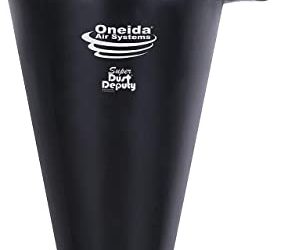
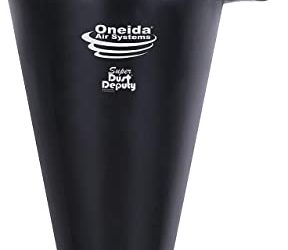
Oneida Air Systems Super Dust Deputy XL DIY Cyclone Separator
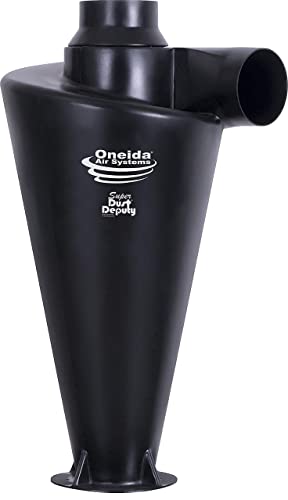
The Super Dust Deputy XL is the component that turns a single-stage collector into a two-stage system. Mounted on a drum between the tools and the collector, its cyclone spins the airstream so chips and the bulk of the dust fall into the drum; only the fine remainder reaches the collector’s filter. The 6-inch ports match the inlets on common 1-1/2 to 3 HP collectors, and the payoff is practical: filters stay cleaner far longer, airflow stays consistent, and emptying a drum is faster than wrestling a collector bag.
The Super Dust Deputy XL anchors the stationary side of a renovation setup: mounted on a drum beside the collector at the cutting station, it swallows planer and saw volume while the filter stays clean through the job.
Key features and specifications (manufacturer):
- Type: cyclone separator only — pairs with an existing collector or vacuum blower
- Ports: 6-inch inlet and outlet for dust collector systems
- Separation: cyclonic action drops chips and most dust into your drum before the filter
- Construction: anti-static resin
- You supply: collection drum and the blower or collector it attaches to
Best for: Renovation shops running a fixed cutting station with a 1-1/2 HP or larger collector.
Limitations to know: It is a separator, not a collector — it needs a blower or dust collector and a suitable drum to work, and it adds height and a hose bend to the layout that must be planned.
Oneida Air Systems Dust Deputy 2.5 DIY Cyclone Separator

The Dust Deputy 2.5 applies the same two-stage idea at vacuum scale. Connected between a tool and a shop vacuum, the cyclone drops chips and dust into a bucket so the vacuum’s filter and bag see only a fraction of the load. For renovation-style work and cabinet shops alike, it is the standard way to keep a vacuum pulling strongly through a long sanding or routing session, and to make emptying a simple bucket swap instead of a filter cleaning.
The Dust Deputy 2.5 covers the mobile side — paired with a vacuum, it follows the work room to room for sanders, routers, and track saws without clogging the vacuum’s filter mid-task.
Key features and specifications (manufacturer):
- Type: cyclone separator only — pairs with a shop vacuum or small extractor
- Ports: 2.5-inch connections for vacuum hoses
- Separation: cyclonic pre-separation protects vacuum filters and bags
- Construction: anti-static resin
- You supply: a bucket or drum and the vacuum
Best for: Renovation crews whose fine-dust tools run on vacuums and extractors.
Limitations to know: Vacuum-scale airflow suits handheld tools and small benchtop machines; it cannot replace a true dust collector on a planer, jointer, or table saw, which need far higher CFM.
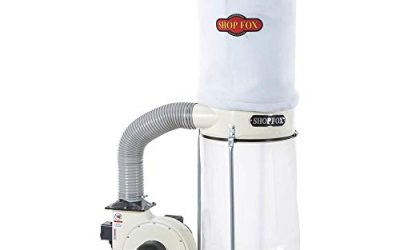
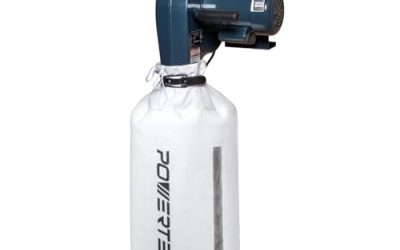
JET DC-1100VX-CK Vortex Cone Dust Collector (708659K)

The DC-1100VX-CK pairs a 1,100 CFM single-stage blower with two upgrades that matter in daily use. The Vortex Cone sits in the collection chamber and helps spin chips down into the bag instead of up into the filter, which keeps airflow steadier between cleanings. The 2-micron canister filter offers far more filter area than a bag and can be cleaned with the built-in handle without removing it. Dual 4-inch inlets on a mobile base make it a strong one-collector answer for a small shop’s main machines.
The DC-1100VX-CK serves as the blower and filter end of the station setup, with its Vortex Cone assisting separation and its canister providing the fine filtration the cyclone passes along.
Key features and specifications (manufacturer):
- Motor: 1-1/2 HP, 115/230V
- Airflow: 1,100 CFM
- Filtration: 2-micron canister filter with cleaning handle
- Vortex Cone design helps keep chips out of the filter area
- Inlet: 6-inch main inlet with dual 4-inch ports
- Collection bag capacity: 5.3 cubic feet
Best for: Renovation shops equipping a cutting station that will also serve general shop work between projects.
Limitations to know: It is still a single-stage design, so abrasive chips pass through the impeller, and the canister needs periodic deep cleaning beyond the paddle handle when fine dust loading builds up.
Quick Comparison
| Product | ASIN | Airflow | Motor | Format |
|---|---|---|---|---|
| Oneida Air Systems Super Dust Deputy XL DIY Cyclone Separator | B011DI6FE2 | Uses your collector | None (separator) | Drum-mounted cyclone |
| Oneida Air Systems Dust Deputy 2.5 DIY Cyclone Separator | B09W68X4HJ | Uses your vacuum | None (separator) | Bucket-mounted cyclone |
| JET DC-1100VX-CK Vortex Cone Dust Collector | B004T86NAK | 1,100 CFM | 1-1/2 HP | Rolling |
Frequently Asked Questions
Why use a cyclone for renovation dust instead of a bag collector?
Volume swings. A bag collector’s filter loads with every dusty phase and suction falls; a cyclone drops the bulk into a drum first, so suction stays consistent and emptying is a drum swap during the workday.
Can a cyclone separator handle drywall dust?
Cyclones are used ahead of vacuums for drywall sanding, but gypsum dust is extremely fine and abrasive; follow the vacuum and filter manufacturers’ guidance for that duty and expect faster filter wear than with wood dust.
What size drum works best on a renovation site?
The largest drum you can still carry comfortably when full. On multi-room projects, a mid-size drum emptied often usually beats a large drum that becomes a two-person lift.
Does a cyclone replace an air scrubber on a renovation project?
No. The cyclone captures dust at the tool; the scrubber cleans the room air. Occupied-home renovation generally calls for both, plus containment at the work zone.
Conclusion
Build the renovation kit in layers: the Super Dust Deputy XL at the cutting station, the Dust Deputy 2.5 on the mobile vacuum, and the JET as the collector that ties the station together.
Related guides
More from Amazon
Programs that pair well with the guide above. Offers and eligibility are set by Amazon and may change.
A free business account with business pricing and bulk-buying tools for work, shop or home office.
Create a business accountFree shipping on eligible items, Prime Video and more. Eligible new members can start with a free trial.
Start a Prime free trialAudiobooks and podcasts to listen to on the go. Eligible new members can start with a free trial.
Try Audible freeAd-free music streaming. Eligible new subscribers can start with a free trial.
Try Music Unlimited freeAs an Amazon Associate we earn from qualifying purchases.