Key takeaways
- Two stage dust collection for experienced DIY woodworkers explained, with verified cyclone separators and collectors that build a true two-stage system.
As an Amazon Associate I earn from qualifying purchases. This post may contain affiliate links at no extra cost to you.
As an Amazon Associate, we earn from qualifying purchases made through links on this page.
Experienced DIY woodworkers usually arrive at two-stage collection the same way: a single-stage collector that clogs its filter during every long planing session. Two-stage design fixes the root cause. A cyclone separator sits before the collector, spins chips and most dust into a drum, and lets only the fine remainder reach the filter — so airflow stays consistent, filters last far longer between cleanings, and emptying becomes a drum swap instead of a bag wrestling match.
True two-stage systems are assembled or bought as cyclone machines. This guide covers the verified building blocks: cyclone separators that convert an existing collector, at both full-size and vacuum scale, plus the canister collector whose cone design borrows part of the two-stage advantage. The honest framing matters: a separator is a component, and the system is separator plus blower plus drum.
What to Look For
- Start from your existing collector. If your single-stage collector’s motor and impeller are healthy, a separator converts it for less than a new machine costs. If it is undersized, replace the system as a whole instead.
- Port size must match. Full-size separators use 6-inch ports for 1-1/2 HP and larger collectors; vacuum-scale separators use 2.5-inch ports. Adapters that neck down a 6-inch system waste the airflow you paid for.
- Drum size and emptying. The drum becomes your main emptying task. A drum you can lift when full of planer chips — and that seals well to the cyclone lid — is the practical choice.
- Filter protection is the payoff. Judge a two-stage conversion by filter cleaning interval. In a working shop the interval stretches from every session to occasional, which is the entire point.
- Height and layout. A cyclone on a drum adds vertical stack beside the collector. Measure the ceiling, the door swing, and the hose path before ordering.
- Static and material. Anti-static resin construction is standard on the separators here and helps keep fine dust from clinging and clogging the cone.
The Picks
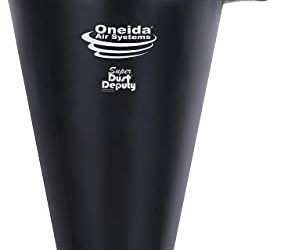
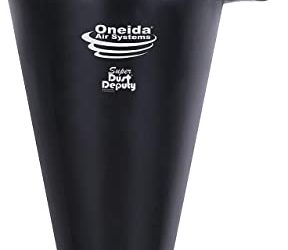
Oneida Air Systems Super Dust Deputy XL DIY Cyclone Separator
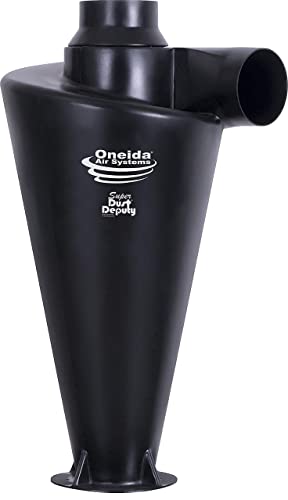
The Super Dust Deputy XL is the component that turns a single-stage collector into a two-stage system. Mounted on a drum between the tools and the collector, its cyclone spins the airstream so chips and the bulk of the dust fall into the drum; only the fine remainder reaches the collector’s filter. The 6-inch ports match the inlets on common 1-1/2 to 3 HP collectors, and the payoff is practical: filters stay cleaner far longer, airflow stays consistent, and emptying a drum is faster than wrestling a collector bag.
The Super Dust Deputy XL is the conversion path for a full-size shop: 6-inch ports, a drum you supply, and your existing collector becomes a genuine two-stage system with dramatically longer filter intervals.
Key features and specifications (manufacturer):
- Type: cyclone separator only — pairs with an existing collector or vacuum blower
- Ports: 6-inch inlet and outlet for dust collector systems
- Separation: cyclonic action drops chips and most dust into your drum before the filter
- Construction: anti-static resin
- You supply: collection drum and the blower or collector it attaches to
Best for: Experienced DIYers with a healthy 1-1/2 HP or larger collector who are tired of filter maintenance.
Limitations to know: It is a separator, not a collector — it needs a blower or dust collector and a suitable drum to work, and it adds height and a hose bend to the layout that must be planned.
Oneida Air Systems Dust Deputy 2.5 DIY Cyclone Separator

The Dust Deputy 2.5 applies the same two-stage idea at vacuum scale. Connected between a tool and a shop vacuum, the cyclone drops chips and dust into a bucket so the vacuum’s filter and bag see only a fraction of the load. For renovation-style work and cabinet shops alike, it is the standard way to keep a vacuum pulling strongly through a long sanding or routing session, and to make emptying a simple bucket swap instead of a filter cleaning.
The Dust Deputy 2.5 applies two-stage separation to the vacuum side of the shop — sanders, routers, and track saws — protecting vacuum filters through long finishing sessions.
Key features and specifications (manufacturer):
- Type: cyclone separator only — pairs with a shop vacuum or small extractor
- Ports: 2.5-inch connections for vacuum hoses
- Separation: cyclonic pre-separation protects vacuum filters and bags
- Construction: anti-static resin
- You supply: a bucket or drum and the vacuum
Best for: DIYers whose fine-dust tools run on a shop vacuum and clog it regularly.
Limitations to know: Vacuum-scale airflow suits handheld tools and small benchtop machines; it cannot replace a true dust collector on a planer, jointer, or table saw, which need far higher CFM.
JET DC-1100VX-CK Vortex Cone Dust Collector (708659K)

The DC-1100VX-CK pairs a 1,100 CFM single-stage blower with two upgrades that matter in daily use. The Vortex Cone sits in the collection chamber and helps spin chips down into the bag instead of up into the filter, which keeps airflow steadier between cleanings. The 2-micron canister filter offers far more filter area than a bag and can be cleaned with the built-in handle without removing it. Dual 4-inch inlets on a mobile base make it a strong one-collector answer for a small shop’s main machines.
The DC-1100VX-CK is not a true two-stage machine, but its Vortex Cone keeps a share of chips out of the canister, and paired with a Super Dust Deputy XL in front of it, it becomes the blower half of a complete two-stage system.
Key features and specifications (manufacturer):
- Motor: 1-1/2 HP, 115/230V
- Airflow: 1,100 CFM
- Filtration: 2-micron canister filter with cleaning handle
- Vortex Cone design helps keep chips out of the filter area
- Inlet: 6-inch main inlet with dual 4-inch ports
- Collection bag capacity: 5.3 cubic feet
Best for: Shops buying a new collector now and planning a cyclone conversion next.
Limitations to know: It is still a single-stage design, so abrasive chips pass through the impeller, and the canister needs periodic deep cleaning beyond the paddle handle when fine dust loading builds up.
Quick Comparison
| Product | ASIN | Airflow | Motor | Format |
|---|---|---|---|---|
| Oneida Air Systems Super Dust Deputy XL DIY Cyclone Separator | B011DI6FE2 | Uses your collector | None (separator) | Drum-mounted cyclone |
| Oneida Air Systems Dust Deputy 2.5 DIY Cyclone Separator | B09W68X4HJ | Uses your vacuum | None (separator) | Bucket-mounted cyclone |
| JET DC-1100VX-CK Vortex Cone Dust Collector | B004T86NAK | 1,100 CFM | 1-1/2 HP | Rolling |
Frequently Asked Questions
What makes a dust collector two-stage?
Separation happens in two steps: a cyclone (or separator chamber) removes chips and coarse dust into a drum first, then the filter handles only the fine remainder. A single-stage collector sends everything through the impeller to one filter or bag.
Is a cyclone separator worth it for a small shop?
If you plane or joint regularly, yes — the filter maintenance reduction is immediate. If your work is mostly sawing with modest volume, a canister collector alone may cover the need more simply.
Does a separator reduce airflow?
A properly sized cyclone adds some resistance, but it preserves airflow over time by keeping the filter clean. A clogged single-stage filter costs far more airflow than the cyclone does.
Can I build a two-stage system in stages?
That is the natural path: buy a capable collector first, add the cyclone separator when filter maintenance becomes the bottleneck, and size the drum to your planing volume.
Conclusion
Two-stage collection is a system decision, not a product category. The Super Dust Deputy XL converts a full-size collector, the Dust Deputy 2.5 fixes the vacuum side, and the JET provides a strong blower foundation for either path.
Related guides
More from Amazon
Programs that pair well with the guide above. Offers and eligibility are set by Amazon and may change.
A free business account with business pricing and bulk-buying tools for work, shop or home office.
Create a business accountFree shipping on eligible items, Prime Video and more. Eligible new members can start with a free trial.
Start a Prime free trialAudiobooks and podcasts to listen to on the go. Eligible new members can start with a free trial.
Try Audible freeAd-free music streaming. Eligible new subscribers can start with a free trial.
Try Music Unlimited freeAs an Amazon Associate we earn from qualifying purchases.