What's inside
As an Amazon Associate I earn from qualifying purchases. This post may contain affiliate links at no extra cost to you.
In a narrow woodworking shop, storage competes with the same floor space you need to move lumber, open machine doors, and work safely. A wall-mounted tool wall keeps equipment visible and easy to reach, but it needs clear wall space and a sensible layout. Cabinets contain dust and clutter, but their doors and depth can make a tight aisle harder to use. The right choice depends on what you store, where dust lands, and how much room you can spare in front of a wall.
As an Amazon Associate we earn from qualifying purchases at no extra cost to you.

Measure the aisle before choosing
Measure the shop’s narrowest working aisle, then account for anything that projects into it: a cabinet door, vise handle, lumber overhang, or machine control. A cabinet that is 18 inches deep takes that much from the aisle even with its doors shut. When a door swings open, it takes more. A tool wall has little depth, though tools and holders still stick out; a drill in a cradle can project several inches.
There is no single aisle width that works for every shop. As a practical check, mark the proposed storage footprint on the floor with tape and walk through it while carrying a board you commonly use. Try turning toward your machines and opening their access panels. If the arrangement forces you to twist around sharp handles or blocks a safe path, it is a poor fit even if the measurements look acceptable.
Wall storage and cabinets compared
| Factor | Tool wall | Storage cabinets |
|---|---|---|
| Access | Fast visual access; tools can be returned to marked outlines | Slower if tools are stacked or drawers are crowded |
| Dust protection | Tools collect airborne dust, especially near sanding and sawing | Doors help keep dust off stored tools and supplies |
| Space use | Uses wall area with little floor depth | Uses floor area; depth and door swing reduce clearance |
| Flexibility | Hooks and holders are easy to rearrange, but need a strong backing | Shelves and drawers suit mixed or changing contents |
| Best fit | Frequently used hand tools and measuring tools | Finishes, spare parts, power tools, and items best kept covered |
When a tool wall works
A tool wall is useful for hand tools you reach for repeatedly: chisels, layout tools, squares, and frequently used screwdrivers. Keeping them visible can cut down on searching and makes missing tools obvious. It also lets you fit storage between machines or above a bench without adding a floor-standing box.
It works only if the wall can support the load. Thin drywall alone is not a reliable mounting surface for a heavily loaded panel. Fasten a cleat or plywood backer into studs or masonry with appropriate hardware, then attach holders to that backer. Before drilling, check for concealed wiring and pipes. A falling chisel rack is both a tool-loss problem and a safety hazard.
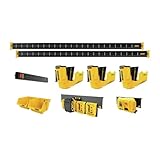
Dust is the main drawback. Near a sander or table saw, exposed tools can need frequent wiping, and dust can settle into tool joints. Keep precision measuring tools and items that rust easily away from the dirtiest zone, or store them in a drawer. For a straightforward setup, compare wall-mounted tool storage panels with a simple plywood backer and individual holders; the cheaper DIY option is fine if it is securely mounted and easy to rearrange.
When cabinets make more sense
Cabinets are the better choice for supplies that benefit from being covered: sanding discs, hardware, spare blades, finishes, and small power tools. Doors reduce settled dust, although they do not make a cabinet airtight. Store flammable finishes according to their labels and local fire rules; an ordinary cabinet is not automatically a flammable-liquid safety cabinet.
In a tight aisle, prefer shallow cabinets or units with drawers that can open without blocking a machine or exit. A tall cabinet also needs to be stable: anchor it to a wall where the manufacturer recommends, especially if heavy items will be stored high. Putting dense tools on lower shelves reduces the chance of a tip-over and makes the cabinet easier to use.
Cabinets can become a hiding place for disorganized piles. Label drawers, group supplies by task, and leave enough room to see what is inside. If you need enclosed storage but want to avoid a wide door swing, consider shallow workshop storage cabinets or drawer units. A basic, inexpensive cabinet is adequate for light supplies; paying more is worthwhile only if you need sturdier slides, better dust control, or higher load capacity.
Match storage to the tools
Do not force every tool into one storage system. Keep daily-use hand tools on the wall near the bench, but put delicate measuring tools and less-used accessories in drawers or a covered case. A router or drill stored in a cabinet is less exposed to dust; a heavy tool should sit on a shelf rated for its weight rather than on a narrow hook. For drawers, check that the slides are rated for the actual load and that the drawer can open fully without hitting equipment.
Leave room for tool handles and safe removal. Closely packed chisels may look efficient, but grabbing one can knock its neighbor onto the floor. Arrange sharp edges so hands do not pass over them, and use guards or dedicated slots where needed. For wall holders, test the layout with the largest tool in each group before fixing every hook in place.
A practical hybrid layout
Many narrow shops work best with both. Put a compact tool wall above or beside the main bench for tools used every session, and use a shallow cabinet or drawers for dusty, delicate, or infrequently used items. Keep the wall closest to the bench rather than across a busy aisle, and do not mount tools where they can fall onto a machine’s work surface or a walkway.
Before buying, make a list of the tools that need a home and measure their actual depth, including handles and plugs. Tape out cabinet depth and door clearance, then try the layout during a normal task. If the storage makes it harder to carry stock or reach a machine’s switch, move it or choose a shallower option. Storage is working well when tools stay clean enough, return easily, and do not take space needed for safe work.