4 Best Rack and Pinion Fence Table Saws (November 2026)
Find the best table saw with rack and pinion fence for straight, repeatable rips. Compare four jobsite saws on fence accuracy, rip capacity, and portability.
As an Amazon Associate I earn from qualifying purchases. This post may contain affiliate links at no extra cost to you.
A table saw is only as accurate as its fence, and a rack and pinion fence is the mechanism that keeps it honest. Turn a knob and the fence glides along a toothed rail, staying parallel to the blade instead of drifting at the far end the way a clamp fence can. That matters every time you rip a long board, because a fence that toes in or out leaves a cut that binds, burns, or wanders off the line you marked. A straight fence turns a jobsite saw into a precision tool.
This guide is for woodworkers who want repeatable rips from a saw they can move. It covers four jobsite saws with rack and pinion fences, from a compact 8-1/4-inch corded model to a full-size 10-inch saw on a rolling stand. Each saw below was selected from the name and specifications shown on its Amazon page, so the four can be judged side by side.
Quick Picks
As an Amazon Associate we earn from qualifying purchases
Product
Best for
Key spec from title
DEWALT DWE7491RS
Widest rip capacity
32-1/2 inch rip capacity
DEWALT DWE7485
Compact corded saw
24-1/2 inch rip capacity
SKIL TS6307-00
Jobsite value
10-inch blade
DEWALT DCS7485B
Cordless cutting
60V MAX FlexVolt battery
How to Choose
Fence Accuracy and How It Locks
The fence is the whole point of this guide, so judge it first. A rack and pinion fence moves on a gear and a toothed rail, which keeps both ends of the fence in step and holds the fence parallel to the blade as it slides. That beats a clamp fence, where the far end can drift out of square without you noticing. Check how the fence locks: a single lever that holds firm under pressure is what you want. Also look at the fence face itself. A tall, flat face supports sheet goods without flexing, and a fence that reads true against the scale saves a tape measure check on every cut.
Rip Capacity and Blade Size
Rip capacity decides the widest board you can cut between the blade and the fence. A 24-1/2-inch capacity handles most plywood rips and cabinet parts, while a 32-1/2-inch capacity reaches the wide cuts a sheet-goods project needs. Blade size follows the same logic: a 10-inch blade cuts deeper than an 8-1/4-inch blade, so it handles thicker stock in one pass. Smaller blades spin faster and make a lighter saw, but they leave very thick boards needing two passes. Match the capacity and blade to the largest pieces you cut regularly, not the smallest. A deeper cut in one pass also leaves a cleaner edge.
Portability and the Stand
A jobsite saw earns its keep by moving, so weigh the whole package, not just the saw. A rolling stand lets one person wheel a full-size saw across a driveway, while a folding stand sets up on any flat surface and stores against a wall. Weight matters too: a 46-pound saw carries in one hand, while a saw on a rolling stand moves best on wheels. Cordless models cut where no outlet exists, but they need a charged battery and a spare for a long day. Think about where the saw will live between jobs as much as where it will cut. A rolling stand is worth having if the saw travels often.
Safety Around the Blade
A table saw demands respect every time it runs. Keep the blade guard and riving knife in place, since they stop the work from kicking back toward you, and use a push stick for any cut that puts your fingers near the blade. Eye and ear protection belong on before the switch goes on, and loose sleeves or gloves stay away from a spinning blade. Stand slightly to the side of the cut line rather than directly behind it, and never reach over a running blade. A clean floor and a clear outfeed path keep a rip from ending in a stumble.
The 4 Best Options
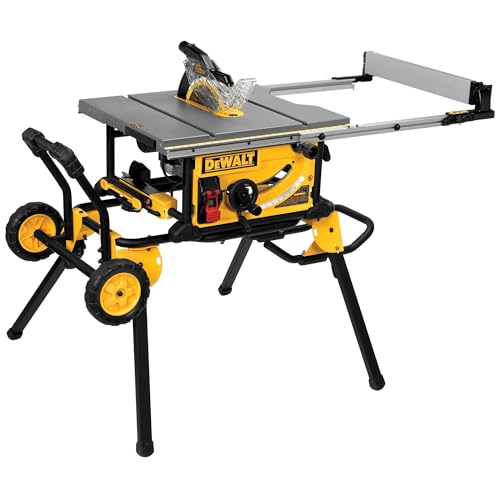
DEWALT DWE7491RS
Top Pick
DEWALT DWE7491RS
Best for: Wide rips and sheet goods in a home shop.
The DWE7491RS is the widest-cutting saw in this group, with a 32-1/2-inch rip capacity that handles full sheet goods without a second setup. Its 10-inch blade runs on a 15-amp motor at 4,800 RPM, and the rack and pinion telescoping fence stays parallel across the whole travel. A 32-1/2-inch rip capacity reaches cuts the other saws here cannot. The rolling stand folds for transport and wheels across a driveway or garage floor. For a woodworker who rips plywood and wide boards often, this is the saw that makes those cuts routine.
Watch out for: It is the largest saw here, so check that the rolling stand fits your storage space.
The DWE7485 packs a rack and pinion fence into the lightest corded saw here, at 46 pounds. Its 8-1/4-inch blade runs on a 15-amp motor at 5,800 RPM, and the 24-1/2-inch rip capacity covers most cabinet parts and plywood cuts. The telescoping fence moves smoothly and locks parallel, so narrow rips come out straight without fuss. For trim work, punch lists, and a saw that carries to the job with one hand, this is the compact pick. It is the lightest corded saw here, and it carries with one hand. A 46-pound saw goes anywhere.
Watch out for: The smaller blade cuts less deep than a 10-inch saw, so very thick stock needs two passes.
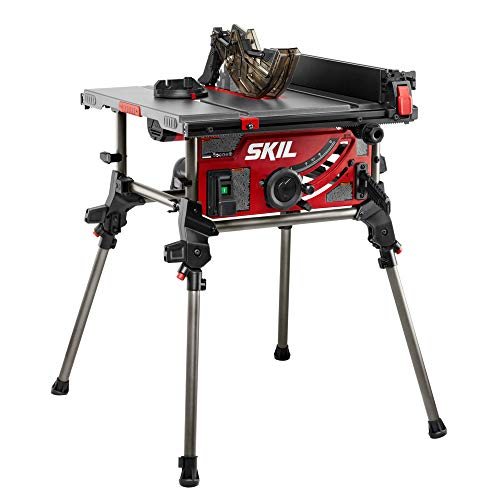
The TS6307-00 brings a 10-inch blade and a rack-and-pinion fence to a jobsite saw with a folding stand. Its 15-amp motor handles plywood and hardwood rips, and the stand sets up on any flat surface, then folds away for storage or transport. The fence system keeps cuts parallel across the table, which is what a first table saw needs most. For a buyer who wants full-size cutting capacity without the largest footprint, this is the value pick of the group. It is the value pick for a buyer who wants full-size cutting without the largest footprint.
Watch out for: Check the folding stand locks firmly before starting a long rip.
DEWALT DCS7485B
DEWALT DCS7485B
Best for: Cordless cutting on job sites without power.
The DCS7485B takes the compact 8-1/4-inch saw off the cord, running on the 60V MAX FlexVolt battery system. Its brushless motor spins the blade to 5,800 RPM, and the rack and pinion fence keeps cuts accurate away from the shop. The 24-inch rip capacity covers most site work, from framing cuts to decking. It ships without a battery or charger, so it suits a buyer who already owns FlexVolt batteries. For framing, decking, and punch-list work on a site with no outlets, it cuts without a generator.
Watch out for: Runtime depends on the battery you own, so carry a spare for a full day.
Which One Fits Your Situation
Ripping Full Sheets in a Small Shop
Pick the DEWALT DWE7491RS when sheet goods are a regular job. Its 32-1/2-inch rip capacity reaches cuts the other saws here cannot, and the rolling stand moves it out of the way when the shop needs floor space. Set the fence once and rip a stack of matching pieces without re-measuring. If your shop only cuts sheet goods occasionally, the smaller saws still handle most plywood work with a second pass.
Trim and Punch-List Work on Site
Take the DEWALT DWE7485 for trim and punch-list work. At 46 pounds it carries in one hand, and the rack and pinion fence keeps narrow rips straight without a long setup. It fits in a truck bed beside other tools and sets up on a bench or sawhorses. For a saw that goes to the job and comes home the same day, the compact corded model is the easy choice for trim work.
A First Table Saw for a Home Workshop
Start with the SKIL TS6307-00 if this is your first table saw. The 10-inch blade and folding stand give full-size cutting capacity, and the rack-and-pinion fence teaches good habits because it stays parallel without constant adjustment. It costs less than the largest saw here while still handling cabinet parts and furniture stock well. Add a push stick and a good blade, and it covers most home workshop work for years.
Cutting Where There Is No Power
Choose the DEWALT DCS7485B when the job site has no outlets. The 60V MAX FlexVolt battery runs the brushless motor to 5,800 RPM, and the rack and pinion fence keeps cuts accurate without a cord in the way. It suits framing, decking, and repairs on new builds before power is connected on site. Bring a charged spare battery, since runtime decides how much a cordless saw can cut in a day on site.
Common Mistakes
Trusting the fence scale without checking it against a tape measure on the first cut.
Ripping a long board without an outfeed support, so it tips off the table and ruins the cut.
Removing the blade guard for a cut that the guard could have handled.
Pushing stock through with hands near the blade instead of using a push stick.
Buying on rip capacity alone and ignoring the weight and stand you will live with.
Frequently Asked Questions
What does a rack and pinion fence do?
A rack and pinion fence moves on a gear and a toothed rail, so both ends travel together and stay parallel to the blade. Turning one knob slides the fence to the width you need, and a lock holds it there. That keeps rips straight across long boards, where a clamp fence can drift out of square at the far end.
Is a 10-inch blade better than an 8-1/4-inch blade?
A 10-inch blade cuts deeper, so it handles thicker stock in one pass and suits furniture and cabinet work. An 8-1/4-inch blade makes a lighter, more portable saw and still covers most plywood and trim cuts. Pick the blade size from the thickest stock you cut regularly, not from the size of the saw you like.
Can a jobsite table saw rip full sheets of plywood?
A saw with a 32-1/2-inch rip capacity can rip wide sheet goods, though a full 4-foot sheet still needs support on both sides of the table. Smaller saws handle sheet goods with a second pass or a circular saw for the first cut. Outfeed support and a helper matter as much as rip capacity on wide sheets.
Do I need a stand for a jobsite table saw?
A stand is not required, since a jobsite saw can sit on a bench or sawhorses. A rolling stand makes a full-size saw easy to move and brings the table to a comfortable height, while a folding stand stores flat. If the saw stays in one shop, a bench works fine; if it travels, the stand is worth having.
J
JD's Woodworks Editorial Team
We compare specs, warranty terms, long-term owner feedback and street pricing before anything earns a spot. Rankings are never paid.
Affiliate disclosure. As an Amazon Associate we earn from qualifying purchases at no extra cost to you. Prices accurate as of the date shown.
Table saws under the 1500 mark compared: the Grizzly G0771Z and Shop Fox W1837 hybrid saws with cast iron tables, 2 HP motors and T-square fences, specs from their listings.
Table saws for fine woodworking compared: the SawStop Professional Cabinet Saw and Powermatic PM1000, judged on fence precision, table flatness and vibration from listing specs.
Table saw combos explained: saws sold with a stand and accessories in one listing, what to check in the box, and which bundle fits your shop or jobsite.
Compare the best planer digital thickness gauges and digital readout kits for portable planers, with fit, resolution and mounting checks before you buy.
Model table saws for scale modelling and hobby work compared: the precision Proxxon FET 37070 and the compact Saker mini table saw, with specs taken from their Amazon listings.
Three CoreXY 3D printers for product development, each with the architecture stated on its listing: an enclosed multicolor machine, a large-format enclosed model and a heated-chamber model.


 DEWALT DCS7485B









