Find the best 6000 watt inverter generators for home backup, RV use and job sites, with peak and running watts, fuel types and 120/240V outlets compared.
Find the best 6000 watt inverter generators for home backup, RV use and job sites, with peak and running watts, fuel types and 120/240V outlets compared.
As an Amazon Associate I earn from qualifying purchases. This post may contain affiliate links at no extra cost to you.
A six-thousand-watt inverter generator sits in a useful middle ground: big enough to run a refrigerator, a furnace blower, a well pump or a full set of job-site tools, yet still light enough for one person to wheel out of a garage. This guide covers four inverter generators in that class, and the class itself needs a plain definition up front. “Six-thousand-watt” here means peak watts around six thousand. The GENMAX in this guide carries a six thousand peak figure exactly. The Champion and the WEN carry 6,250 peak watts. The Briggs & Stratton carries 6,500 peak watts, which sits at the top edge of the class, and that is stated plainly wherever it matters. Running watts, the figure that decides what the unit can sustain, run about five thousand on all four: 5,250 on the GENMAX and 5,000 on the other three.
All four are gasoline inverter generators, and one of them, the GENMAX, also runs on propane. Two are open-frame machines and two are enclosed. All four give 120/240V power and carry a twist-lock outlet for a transfer switch, so any of them can feed a home panel through proper transfer equipment. Every watt figure, noise figure and runtime figure in this guide is a maker figure taken from a listing, a manual or a spec sheet. Noise figures are measured at different loads and distances, so they do not compare head-to-head, and that point is repeated in the buying notes below. Confirm the live listing before buying, since stock and specifications change without notice.
What to Look for
Peak watts and running watts answer two different questions. Peak watts cover the brief surge a motor needs when it kicks on, such as a refrigerator compressor or a well pump. Running watts are what the generator sustains minute after minute. Size a generator by running watts: add up the running watts of everything that must run at the same time, leave headroom for one motor surge, and pick a unit whose running watts cover that total. A unit with a big peak figure and a small running figure will still trip its overload breaker under a steady load.
Inverter power is the second point. An inverter generator turns its output into clean sine-wave power with low total harmonic distortion, which suits sensitive electronics such as laptops, televisions and phone chargers. The four picks in this guide list total harmonic distortion under three percent, and the WEN lists under 1.5 percent at full load. A conventional open-frame generator without inverter electronics does not give that clean output, and it should not feed sensitive electronics.
Voltage and outlets come next. All four picks give 120/240V, which matters for 240V loads such as a well pump or a furnace, and for feeding a home panel. Look for a twist-lock L14-30R outlet if a transfer switch is part of the plan. An RV-ready TT-30R outlet matters for RV use; two of the four picks here carry one, and the other two do not, so check the panel before buying for RV duty.
Fuel type is a real fork in the road. Three picks run on gasoline only. The GENMAX runs on gasoline or propane, and propane brings two trade-offs: it stores far longer than gasoline without going stale, and it gives fewer watts, 4,750 running watts against 5,250 on gasoline. A dual-fuel unit suits a household that keeps propane on hand for a grill or a heater. A gasoline-only unit suits a buyer who wants the simplest fuel routine.
Ignition type decides how the unit wakes up. Pull-cord ignition needs a firm pull and no battery. Push-button ignition and key-fob ignition need a battery, which adds weight and one more part to maintain, but they spare the arm. Two picks here are pull-cord only, one adds push-button and key-fob ignition, and the GENMAX gives all three.
Noise needs care. Every maker measures noise at its own load and distance, so a 62 dBA figure at a quarter load and a 69 dBA figure with no conditions attached are not the same kind of number. Enclosed units tend to run quieter than open-frame units of the same output, and the enclosed GENMAX lists the lowest figure in this guide. Treat any single noise number as a hint, not a verdict, and check the conditions behind it.
Weight and wheels decide whether the unit actually moves. These four weigh between 117.9 lb and 139 lb, and every one of them ships with a wheel kit and a handle. A folding handle and large wheels matter more than a few pounds on paper, since a generator this size is wheeled, not carried.
Carbon monoxide safety is not optional. Some models in this guide include a carbon monoxide sensor with automatic shutdown, and some do not name one in the sources checked. Never run a generator indoors or in an attached garage, keep it at least 20 feet from the house with exhaust pointed away from doors and windows, and use a carbon monoxide detector in the home.
Warranty length rounds out the check. The picks here carry warranties from one year to three years, and a longer warranty says something about how much the maker trusts its own machine.
The GENMAX GM6000iED is the only enclosed unit in this guide and the only one that runs on two fuels, and it is the one pick whose peak figure is six thousand watts exactly. On gasoline it gives six thousand peak watts and 5,250 running watts. On propane it gives 5,500 peak watts and 4,750 running watts. Its 312cc OHV engine feeds a 120/240V panel with a twist-lock L14-30R outlet, a duplex 120V 20A GFCI outlet and two 5V USB ports, so it covers a transfer switch, household loads and small electronics in one panel.
Ignition is the most flexible here: pull-cord, push-button and key-fob ignition are all included, with the battery included for the electric side. A digital control center shows hours run, voltage, load level and fuel level, and a CO Detect sensor watches for carbon monoxide. The enclosed case keeps its noise figure at 62 dBA at a quarter load measured at 23 feet, the lowest figure in this guide, and its total harmonic distortion stays under three percent, which suits sensitive electronics.
Its 3.6-gallon tank runs up to 13 hours at a quarter load per the manual, and one guide lists 8.5 hours at half load, which is a different load and not a conflict. It weighs 117.9 lb, the lightest pick here, and it ships with the key fob, a funnel, a propane hose and a tool kit. Two small conflicts sit in the sources: the manual lists a 3.6-gallon tank while one guide lists 3.8 gallons, and the manual lists 62 dBA while one guide lists 63 dBA, so this guide uses the manual figures. One genuine limit: the manual confirms it has no parallel connection jacks, so two of these cannot be paired for more watts. Its warranty runs one year, the shortest here.
The Champion 100519 is the open-frame workhorse of this guide, with 6,250 peak watts and 5,000 running watts from a 301cc engine. Its panel carries a 120/240V 30A L14-30R twist-lock outlet, two 120V 20A GFCI duplex outlets and a 12V DC outlet, and it is transfer-switch ready out of the box. Economy mode drops engine speed under light loads, and an Intelligauge meter shows volts, frequency and run time. Total harmonic distortion stays under three percent, so it can feed sensitive electronics.
Ignition is pull-cord only, with no push-button or key-fob option and no battery to maintain. Its noise figure is 69 dBA, the highest figure in this guide, which fits its open frame: open-frame units run louder than enclosed units of the same output, and the Champion makes no claim otherwise. It weighs 121 lb net and measures 26.6 x 25.6 x 23.7 inches, and a wheel kit and folding handle come with it. Its warranty runs three years, the longest here.
Runtime figures conflict across sources, so this guide flags them rather than picking one: one roundup lists up to 12.5 hours at a quarter load, a retailer lists up to 13.5 hours at a quarter load, and one guide lists up to 11 hours at half load. Confirm the live listing. No carbon monoxide sensor is named in the sources checked for this model, so treat carbon monoxide safety as the buyer’s own job: outdoor use only, 20 feet from the house, and a detector indoors.
The WEN GN625i is the twin of the Champion in output, with 6,250 surge watts and 5,000 rated watts from a 301cc OHV four-stroke engine, but its panel is the most complete here. It carries four 120V 5-20R receptacles, two 5V USB ports, a 120/240V transfer-switch-ready L14-30R twist-lock receptacle and a 120V RV-ready TT-30R receptacle, so it covers household loads, RV duty and a transfer switch without an adapter. It is CARB compliant, and its total harmonic distortion stays under 1.5 percent at full load and under 0.5 percent at no load, the cleanest power figures in this guide.
Its 4.2-gallon tank runs up to 8.1 hours at half load. It weighs 119.5 lb with the wheel kit fitted and measures 27 x 25 x 24 inches with the kit, and a data meter shows volts, watts, fuel level and run time. Ignition is pull-cord only, with an eco mode button and a fuel shut-off on the panel.
Two figures need honest handling. WEN publishes no noise figure for this model in its manual, and guides disagree wildly, citing 55 to 57 dB at 70 feet, 74 dB and 77 dB, so no single noise number in this guide can be trusted and none is asserted. Weight also conflicts across sources: the manual lists 119.5 lb with the wheel kit, one guide lists 125 lb, and the official listing weight is 133 lb, so this guide uses the manual figure. One stock warning: an Amazon crawl 341 days old reads no buying choices for this ASIN, while a mirror 52 days ago shows it in stock through Amazon fulfillment and a forum thread 8 days ago names an Amazon figure, so the old crawl reads as a stale warning rather than proof, and the live listing needs a click before buying.
The Briggs & Stratton Q6500 is the biggest peak figure in this guide at 6,500 peak watts and 5,000 running watts from a 306cc OHV engine, and that peak figure sits above the six-thousand-watt class, which is stated plainly. Its running watts match the rest of the guide, so it belongs here on sustained output even though its peak figure runs high. Its 5-gallon tank runs 14 hours at a quarter load and 10 hours at half load per the maker, the longest runtime figures here.
Quiet Power Technology drops engine speed under light loads, and its noise figure is 66 dBA at a quarter load measured at 7 meters. Total harmonic distortion stays under three percent. Its panel carries two duplex 5-20R GFCI outlets, a 120/240V L14-30R twist-lock outlet and two USB ports, and a CO Guard sensor shuts the unit down on high carbon monoxide. Ignition is pull-cord only, with no push-button ignition and no battery to maintain, which some buyers will count as a plus and some as a minus.
Two limits matter. It is not parallel-capable, so it cannot be paired with a second unit, and it has no TT-30R outlet, so RV use needs an adapter. Weight conflicts across guides, which list it between 128 lb and 139 lb, so this guide asserts no single weight figure. Amazon evidence is the thinnest here: a retailer listing 169 days old ties the ASIN to the model, and an Amazon screenshot from February 2025 shows the listing in stock, but no fresh Amazon stock line surfaced, so click this one live first before buying.
Six-Thousand-Watt Inverter Generators Compared
Model
Peak watts
Running watts
Fuel
Ignition
Weight
Noise figure
GENMAX GM6000iED
Six thousand
5,250
Gasoline, propane
Pull-cord, push-button, key fob
117.9 lb
62 dBA at quarter load
Champion 100519
6,250
5,000
Gasoline
Pull-cord
121 lb
69 dBA
WEN GN625i
6,250
5,000
Gasoline
Pull-cord
119.5 lb with wheel kit
Not published by WEN
Briggs & Stratton Q6500
6,500
5,000
Gasoline
Pull-cord
128 to 139 lb
66 dBA at quarter load
Frequently Asked Questions
How many running watts do I need for home backup?
Add up the running watts of everything that must run at the same time, then add headroom for one motor surge. A refrigerator, a furnace blower and a few lights typically land well under five thousand running watts, which is why this class fits many homes. A well pump, a sump pump or a large air conditioner can push the total past five thousand, and those loads need a bigger unit or a load plan that runs them one at a time. House circuits need a transfer switch fitted by a licensed electrician; never feed a panel through a suicide cord or backfeed a home.
Can I run sensitive electronics on one of these generators?
Yes, within their running watts. All four are inverter generators with total harmonic distortion under three percent, and the WEN lists under 1.5 percent at full load, which suits laptops, televisions, phone chargers and medical gear such as a CPAP machine. Keep the load inside the running watts figure, since an overload breaker will cut power to everything at once. Confirm the distortion figure on the live listing, since makers revise specifications without notice.
How loud are these generators?
Noise figures in this class are measured at different loads and distances, so they do not compare head-to-head. The enclosed GENMAX lists 62 dBA at a quarter load measured at 23 feet. The open-frame Champion lists 69 dBA. The Briggs & Stratton lists 66 dBA at a quarter load measured at 7 meters. WEN publishes no noise figure for the GN625i, and guides cite figures from the mid-50s to the high 70s, so treat any single number for that model with care. As a rule, an enclosed unit runs quieter than an open-frame unit of the same output, and any generator in this class is heard clearly from across a yard.
How to Choose
Match running watts to the load first, since running watts decide what the unit sustains. All four picks here give about five thousand running watts, so the choice turns on the rest of the panel. Pick the GENMAX if dual fuel matters, since propane stores longer than gasoline, or if remote ignition and the quietest figure in this guide matter. Pick the Champion if a long warranty and a simple pull-cord machine matter, and if the loudest figure here is acceptable. Pick the WEN if the fullest outlet panel matters, with RV-ready and transfer-switch-ready receptacles side by side, and if the cleanest distortion figures matter. Pick the Briggs & Stratton if the longest runtime and a carbon monoxide sensor matter, and if its peak figure running above the class is acceptable. Whichever pick fits, confirm the live listing before buying, check the weight and the wheel kit against the space it must roll through, and plan the transfer switch with a licensed electrician before the next outage.
Disclosure: As an Amazon Associate, we may earn a commission from qualifying purchases made through links in this article, at no additional cost to you.
J
JD's Woodworks Editorial Team
We compare specs, warranty terms, long-term owner feedback and street pricing before anything earns a spot. Rankings are never paid.
Affiliate disclosure. As an Amazon Associate we earn from qualifying purchases at no extra cost to you. Prices accurate as of the date shown.
Table saws under the 1500 mark compared: the Grizzly G0771Z and Shop Fox W1837 hybrid saws with cast iron tables, 2 HP motors and T-square fences, specs from their listings.
Table saws for fine woodworking compared: the SawStop Professional Cabinet Saw and Powermatic PM1000, judged on fence precision, table flatness and vibration from listing specs.
Table saw combos explained: saws sold with a stand and accessories in one listing, what to check in the box, and which bundle fits your shop or jobsite.
Compare the best planer digital thickness gauges and digital readout kits for portable planers, with fit, resolution and mounting checks before you buy.
Model table saws for scale modelling and hobby work compared: the precision Proxxon FET 37070 and the compact Saker mini table saw, with specs taken from their Amazon listings.
Three CoreXY 3D printers for product development, each with the architecture stated on its listing: an enclosed multicolor machine, a large-format enclosed model and a heated-chamber model.

 GENMAX GM6000iED Dual Fuel Inverter Generator
 Champion 100519 Open Frame Inverter Generator
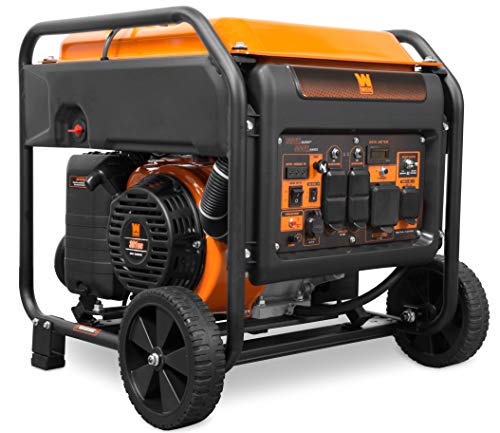 WEN GN625i Open Frame Inverter Generator
 Briggs & Stratton Q6500 Quiet Power Inverter Generator









