
Our Short List of 3
All 4 Picks at a Glance
| Product | Specs | Action |
|---|---|---|
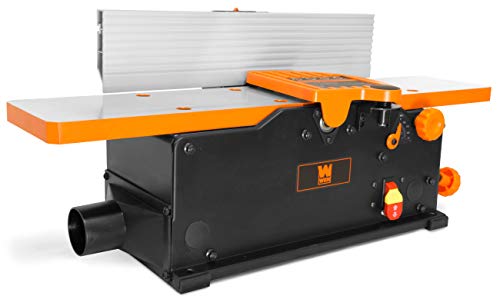 WEN JT630H 10-Amp 6-Inch Spiral Benchtop Jointer | Check price on Amazon | |
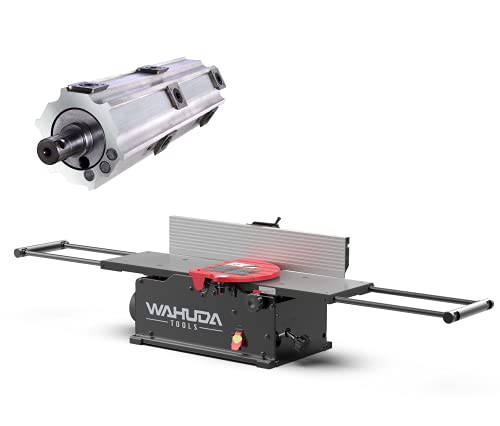 Wahuda Tools 50180CC-WHD 8-Inch Benchtop Jointer | Check price on Amazon | |
 JET JJ-6CSDX 6-Inch Long Bed Jointer | Check price on Amazon | |
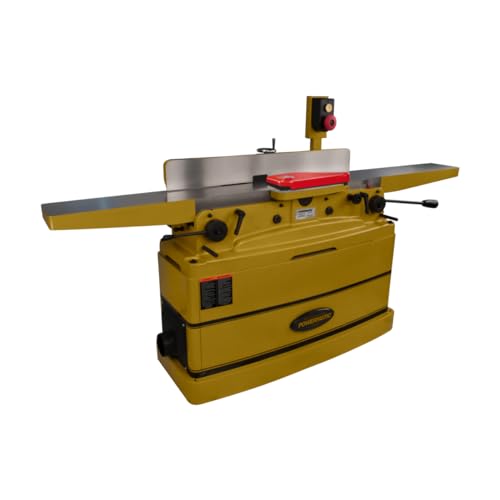 Powermatic PJ-882HH 8-Inch Parallelogram Jointer | Check price on Amazon |
Our Top Picks
What's inside
As an Amazon Associate I earn from qualifying purchases. This post may contain affiliate links at no extra cost to you.
A jointer flattens one face of a board and squares one edge to that face. Without that flat reference face, a thickness planer copies the board’s twist and bow instead of removing it, and glue-ups never sit flush. Every shop that mills rough lumber needs one, and the right size depends on the widest boards you joint and the floor space you can give up.
This guide covers the full span a woodworking shop is likely to need: a compact six-inch benchtop spiral jointer, an eight-inch benchtop spiral jointer with cast iron tables, a six-inch long-bed floor-standing jointer with straight knives, and an eight-inch floor-standing parallelogram jointer with a helical head. All four are standalone jointers, not jointer-planer combos, and each one is a different class of machine, so the comparison is about fit for the shop, not about ranking near-identical machines. The site also has a roundup devoted only to eight-inch jointers; read that one if you already know eight inches is your width.
A jointer does not thickness a board. It makes one face flat and one edge square. The planer then makes the second face parallel to the first. Keep that division of labor in mind when you size the machine: the jointer’s width sets the widest face you can flatten, and its table length sets how long a board you can support while you do it.
What to look for
Cutting width comes first. Six inches covers most furniture stock, from drawer sides to table legs and aprons. Eight inches covers wider panels, wide drawer fronts and glued-up tops that arrive rough. Measure the widest faces you actually joint in a month of work, not the widest board you might joint once a year. A machine that is wider than your work wastes floor space and money; a machine that is narrower than your work forces you to rip wide boards down before you can flatten them, which defeats the point of buying rough lumber.
Cutterhead type comes second. Straight knives cost less up front and sharpen well, but they need careful setting, and they tear figured grain more readily. Spiral and helical heads carry many small inserts set at a shearing angle, which cuts figured grain more cleanly and runs with less noise. Four-sided carbide inserts rotate to a fresh edge when one side dulls, so you change edges instead of sharpening knives. HSS spiral blades are not four-sided carbide inserts, so they wear sooner and cost more to refresh than a carbide insert head.
Table length and material come third. A long cast iron bed supports long boards through the cut, which is what keeps a long board flat instead of rocking it across a short table. Benchtop jointers keep tables near thirty inches, which suits stock under four feet. Floor-standing jointers run beds past fifty inches, which suits long rails and stiles. Cast iron stays flat and damps shake; aluminum tables are lighter and easier to move, but they can bow under a heavy board if the machine is not set up square.
The fence decides how square your edges come out. Look for a fence that locks firmly, tilts to forty-five degrees for bevel work, and stays put under feed pressure. A short fence makes edge jointing long boards awkward; a long fence steadies them. Check that the fence adjusts without tools you have to hunt for, and that it returns to ninety degrees without a long setup routine.
Motor and power decide what the machine can cut in one pass. Benchtop jointers run on a standard 120-volt circuit at ten amps, which is enough for narrow stock at a shallow cut. Floor-standing jointers often need a 230-volt circuit, which is a real shop decision: the outlet, the wiring and the breaker all have to exist before the machine arrives. A one-horsepower motor on 115 volts is light for wide hardwood at full depth, so take shallow passes and let the cutterhead do the work.
The dust port matters more than it looks. Jointers throw a large volume of chips, and a two-and-one-half-inch port hooks to a shop vacuum while a four-inch port hooks to a dust collector. Match the port to the collection you own, and plan the hose run before you place the machine, because a jointer pushed against a wall with no room for a hose is a jointer you will run without collection.
Depth of cut and weight round out the check. A maximum cut near one-eighth inch per pass is normal for benchtop machines; floor machines cut deeper. Weight is stability: a benchtop jointer near forty pounds moves easily and shakes more, while a floor machine near two hundred forty pounds stays put and needs a mobile base or a permanent home.
WEN JT630H 10-Amp 6-Inch Spiral Benchtop Jointer
WEN JT630H 10-Amp 6-Inch Spiral Benchtop Jointer
The JT630H is the compact first pick in this guide, and it is the strongest verified pick here. A ten-amp motor drives a spiral cutterhead with twelve staggered HSS blades across a six-inch width, on a thirty by six-inch table. The fence bevels to forty-five degrees, the maximum cut is one-eighth inch, and the machine ships with two push blocks and a two-and-one-half-inch dust port. The body is cast iron, and the machine weighs just under thirty-seven pounds, so one person can lift it onto a bench and move it out of the way when the bench is needed for something else.
This is the jointer for a shop where stock is mostly narrow and bench space is shared. Six inches covers drawer parts, legs, aprons and most edge jointing, and the spiral head leaves a cleaner face on figured grain than a straight-knife benchtop machine at this size. It runs on a standard 120-volt circuit, so there is no wiring job before the first board.
The limits are the limits of the class. Six inches is the widest face this machine flattens, so wide panels have to be ripped down first. The HSS blades are not four-sided carbide inserts, so they dull sooner on abrasive woods and cost more to refresh than a carbide head. One recent guide noted low stock on the listing, so confirm the listing shows a buy option before ordering.
Wahuda Tools 50180CC-WHD 8-Inch Benchtop Jointer
Wahuda Tools 50180CC-WHD 8-Inch Benchtop Jointer
The Wahuda moves the benchtop class up to eight inches of width without moving to the floor. A ten-amp motor runs at a fixed twelve thousand RPM and drives a spiral cutterhead with four-sided carbide inserts. The tables are cast iron with pull-out extensions, the base table runs thirty-four inches, and the fence tilts from ninety to one hundred thirty-five degrees. The machine weighs just under fifty pounds and measures thirty-four by fourteen by thirteen inches, so it still sits on a bench, but it wants a bench of its own.
This is the pick for a shop that joints wide stock and does not want to give up floor space to a floor-standing machine. Eight inches flattens drawer fronts and wide panels that a six-inch machine cannot touch, and the carbide inserts rotate to a fresh edge when one side dulls, which keeps the machine cutting well without a sharpening setup. The pull-out table extensions steady longer boards, which is the weak point of most benchtop jointers.
Two things need a check before ordering. The listing shows a part number of 50110CC-WHD, which is the ten-inch model in the same family, while the model number reads 50180CC-WHD-Amazon; confirm the listing names the eight-inch model before you buy. And two older Amazon crawls showed no buy option on this listing, while fresh mirrors, a shop mirror two days ago showing it in stock and fulfilled by Wahuda Tools, and a November 27 roundup built from the Amazon product API all show it live. The fresh evidence points to a live listing, but this is the pick to click first.
JET JJ-6CSDX 6-Inch Long Bed Jointer
JET JJ-6CSDX 6-Inch Long Bed Jointer
The JJ-6CSDX is the floor-standing pick for shops that joint long boards. A one-horsepower motor runs on either 115 or 230 volts and drives a three-knife cutterhead at six thousand RPM. The bed is fifty-six inches of precision-machined cast iron, the longest working surface in this guide, and the fence runs thirty-three and one-eighth inches and tilts to forty-five and ninety degrees. The machine does rabbeting, carries a five-year warranty, and measures twenty-two by thirty-seven and one-half by fifty-six inches.
This is the machine for long rails, stiles and table parts, where table length is what keeps a board flat through the cut. The quick-change knife system makes knife changes faster than a standard straight-knife head, and the long bed means a four-foot board stays supported from end to end. The dual-voltage motor is a real advantage: run it on 115 volts now and move it to 230 volts later if the shop wiring grows.
The limits are the limits of straight knives. Three HSS knives need setting and sharpening, and they tear figured grain more readily than a spiral or helical head. One horsepower is light for wide hardwood at full depth on 115 volts, so take shallow passes. One listing mirror gives the weight as two hundred thirty-seven pounds while one roundup lists two hundred fifty-six pounds; the listing figure is used here, and the gap is a reminder to confirm freight and placement before the machine ships. A shop mirror fourteen days ago showed only three left in stock, so confirm the listing shows a buy option before ordering.
Powermatic PJ-882HH 8-Inch Parallelogram Jointer
Powermatic PJ-882HH 8-Inch Parallelogram Jointer
The PJ-882HH is the shop anchor in this guide. An eight-inch parallelogram jointer with a helical cutterhead carrying fifty-four four-sided carbide inserts, driven by a two-horsepower motor on 230-volt single phase. The parallelogram tables adjust without the wedge and gib setup of a dovetail-way machine, which keeps the tables parallel through height changes. Stock number is 1610082, and the machine carries a five-year warranty.
This is the pick for a shop that joints wide stock every day and wants the finish and the insert system to match that workload. Eight inches covers wide panels, the helical head cuts figured grain cleanly and runs with less noise than straight knives, and the carbide inserts rotate to a fresh edge instead of going out for sharpening. The parallelogram design is the part that shows up in daily use: table adjustments stay true, so the machine holds its setup across many boards.
This is also the weakest verified pick in the guide, and it should be clicked first. One older Amazon crawl showed no buy option on the listing, and the fresh evidence is import mirrors only, crawled three days ago showing it in stock from the United States store, plus a retailer listing showing it in stock. The machine is current and the maker does not list it as discontinued, but the Amazon listing itself needs a live check before you order. If the listing has no buy option, the guide still stands on the other three jointers. The machine also needs a 230-volt circuit and freight-size delivery, so plan the circuit, the delivery path and the final placement before ordering.
Comparison
| Jointer | Width | Cutterhead | Motor | Tables | Best for |
|---|---|---|---|---|---|
| WEN JT630H | 6 in | Spiral, 12 HSS blades | 10 amp, 120 V | 30 in, cast iron body | First jointer, narrow stock, shared bench |
| Wahuda 50180CC-WHD | 8 in | Spiral, 4-sided carbide inserts | 10 amp, 120 V | 34 in, cast iron with extensions | Wide stock on a bench |
| JET JJ-6CSDX | 6 in | Straight, 3 HSS knives | 1 HP, 115/230 V | 56 in, cast iron bed | Long boards, floor-standing shop |
| Powermatic PJ-882HH | 8 in | Helical, 54 carbide inserts | 2 HP, 230 V | Parallelogram, cast iron | Daily wide stock, shop anchor |
Frequently asked questions
What width jointer does a woodworking shop need?
Six inches covers most furniture stock, from drawer sides to legs and aprons. Eight inches covers wider panels, wide drawer fronts and glued-up tops that arrive rough. Measure the widest faces you joint in a normal month of work and buy that width. A wider machine than your work wastes floor space and money, and a narrower machine forces you to rip wide boards down before you can flatten them.
Is a helical cutterhead worth it over straight knives?
A helical head carries many small carbide inserts that rotate to a fresh edge, so you change edges instead of sending knives out for sharpening. It also cuts figured grain more cleanly and runs with less noise than straight knives. Straight knives cost less up front and sharpen well, and a quick-change system like the JET head narrows the gap. If you joint figured hardwoods often, the helical head earns its keep. If you joint mostly straight-grained softwood, straight knives serve well and cost less to own.
Can a jointer replace a thickness planer?
No. A jointer flattens one face and squares one edge. A thickness planer makes the second face parallel to the first face and brings the board to a set thickness. You need both to turn rough lumber into surfaced stock. A jointer-planer combo does both jobs in one machine, but none of the four picks here is a combo; each one is a standalone jointer.
How to choose
Begin with the widest faces you joint in a normal month, and buy that width. Then match table length to the longest boards you joint: benchtop tables near thirty inches suit stock under four feet, while a fifty-six-inch bed suits long rails and stiles. Then match power to the circuit you have: benchtop machines run on a standard 120-volt circuit, while the floor-standing eight-inch machine here needs 230 volts. Then decide the cutterhead by how much sharpening you want to do: straight knives cost less and need setting, carbide inserts rotate to a fresh edge and cost more up front. Finally, measure the floor space and the delivery path, because a floor-standing jointer arrives as freight and stays where you put it. Buy the machine that fits the shop you have, not the shop you hope to build, and the jointer will earn its floor space on the first rough board you flatten.
Disclosure: As an Amazon Associate, we may earn a commission from qualifying purchases made through links in this article, at no additional cost to you.
Related guides
More from Amazon
Programs that pair well with the guide above. Offers and eligibility are set by Amazon and may change.
A free business account with business pricing and bulk-buying tools for work, shop or home office.
Create a business accountFree shipping on eligible items, Prime Video and more. Eligible new members can start with a free trial.
Start a Prime free trialAudiobooks and podcasts to listen to on the go. Eligible new members can start with a free trial.
Try Audible freeAd-free music streaming. Eligible new subscribers can start with a free trial.
Try Music Unlimited freeAs an Amazon Associate we earn from qualifying purchases.









