Key takeaways
- Table saws for fine woodworking compared: the SawStop Professional Cabinet Saw and Powermatic PM1000, judged on fence precision, table flatness and vibration from listing specs.
What's inside
As an Amazon Associate I earn from qualifying purchases. This post may contain affiliate links at no extra cost to you.
Fine woodworking exposes a table saw’s weaknesses faster than any other work. A fence that sits a few thousandths out of parallel burns one side of a rip cut. A table with a low spot shows up as a gap in a glued panel. Vibration that a carpenter would never notice telegraphs into the surface of a tabletop blank. So the buying decision for fine work is not horsepower — it is precision: how flat the table is, how the fence locks, how the trunnions are built, and whether the machine holds its settings month after month.
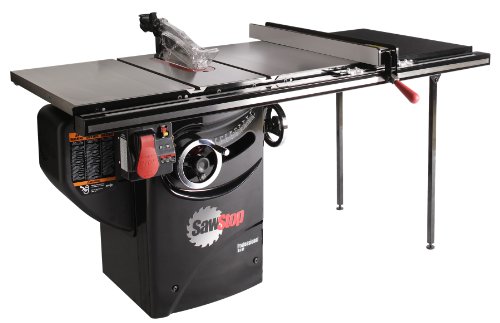

This roundup is for furniture makers and serious hobbyists building pieces where joints come off the saw ready for glue and surfaces need minimal cleanup. Both picks are full cabinet saws chosen from the precision details in their Amazon listings: fence system, table construction, motor configuration and weight. They are stationary machines for dedicated shops, and the article treats them that way.
Quick Picks
As an Amazon Associate we earn from qualifying purchases
| Product | Best for | Key spec from title |
|---|---|---|
| SawStop Professional Cabinet Saw PCS31230-TGP236 | Precision with flesh-sensing blade brake | 3 HP, 36-inch Professional TGlide fence |
| Powermatic PM1000 | Classic cabinet saw accuracy on 115V | 1-3/4 HP, 52-inch Accu-Fence, 115/230V |
How to Choose
Fence design decides your glue-line rips
A T-square fence that rides a front rail and locks at a single point stays parallel because there is only one clamping action to get right. Both saws here use professional T-square systems — SawStop’s TGlide and Powermatic’s Accu-Fence — with fine adjustment and solid lock-down. When reading listings, look for the fence named as a system with stated rail length, not a generic claim. Also check whether the fence faces are replaceable and whether the scale reads from a hairline cursor; those details separate furniture-grade fences from contractor-grade ones. A fence with a micro-adjustment feature earns its keep on fine work, where the final setting is often reached by nudging rather than by reading the scale.
Table flatness and mass kill vibration
A precision-ground cast iron table is the reference surface for every cut, and mass is what keeps the saw from walking or humming under load. Cabinet saws in this class weigh between roughly 400 and 500 pounds, most of it in the table, trunnions and cabinet. Listings that state table dimensions and total weight tell you more about fine-work suitability than any marketing line. Extension wings should be cast iron or heavy steel and machined flush with the main table, because a step at the wing joint catches wide panels mid-cut. Mass also buys quiet: a heavy cabinet saw runs with a low hum instead of the scream of a universal motor, which makes long milling sessions in a home shop far more tolerable.
Trunnions and arbor runout
Fine work rewards cabinet-mounted trunnions: the whole blade mechanism hangs from the cabinet rather than the tabletop, so the table stays a flat reference even as the blade tilts. A heavy arbor assembly with close bearings minimises runout, the side-to-side wobble that widens kerfs and roughens cut surfaces. Listings rarely quote runout figures, so use construction clues — cabinet mounting, belt drive type, and overall machine weight — and plan to verify runout with a dial indicator during setup regardless of brand. Belt choice matters here too: a poly-V belt, as on the Powermatic, transmits power with less vibration than a single V-belt because its ribs keep constant contact with the pulleys.
Power and electrical requirements
The two picks take different routes. The Powermatic PM1000 runs a 1-3/4 HP motor wired for 115/230 volts, so it works on a heavy household circuit and suits shops without 240-volt service. The SawStop listed here is the 3 HP version, which needs a 240-volt circuit but delivers effortless ripping in thick hardwood and holds blade speed through deep cuts. Neither is better in the abstract: match the motor to the electrical service you have or are willing to add.
The 2 Best Options
SawStop Professional Cabinet Saw, 3 HP (PCS31230-TGP236)
SawStop’s Professional Cabinet Saw pairs the precision hardware fine work demands with the company’s flesh-sensing blade brake, which stops the blade on contact with skin and is the deciding feature for many buyers. The listing specifies the 36-inch Professional TGlide fence system, a heavy cabinet build at roughly 470 pounds, and a gas-piston blade elevation system that makes height changes smooth and repeatable. Table flatness is a stated design priority on this platform. If the budget stretches to one saw for decades of furniture work, this is the complete package. The 3 HP motor also holds blade speed through deep cuts in dense hardwood, which keeps cut surfaces consistent from the start of a long rip to the end.
Specs
- Blade diameter: 10 inches
- Motor: 3 HP, 230 volts
- Fence: 36-inch Professional TGlide fence system
- Model number: PCS31230-TGP236
- Safety system: flesh-sensing blade brake with bypass mode
- Blade elevation: gas piston assist
- Weight: approximately 470 pounds
Best for: Furniture makers who want cabinet-saw precision plus SawStop’s blade brake
Watch out for: The 3 HP motor requires a 240-volt circuit, and a brake activation destroys the blade and cartridge, so keep a spare cartridge on hand
ASIN: B009C7NGTE
Powermatic PM1000 10-Inch Cabinet Saw, 52-Inch Rip
The PM1000 is Powermatic’s answer for shops that want a true cabinet saw without 240-volt power: its 1-3/4 HP motor runs on 115/230 volts, prewired for the lower voltage. The listing highlights the Accu-Fence system on 52-inch rails, a poly-V belt drive chosen to cut vibration, and an oversized cast iron table. For fine woodworking, the combination of a smooth belt drive, a fence with a strong precision reputation and wide rip capacity for panel work makes it a complete furniture saw that plugs into far more shops than most cabinet saws. The digital bevel readout on this platform also helps when a project calls for repeated angled cuts at a precise setting.
Specs
- Blade diameter: 10 inches
- Motor: 1-3/4 HP, 115/230V single phase
- Rip capacity: 52 inches with Accu-Fence system
- Model number: PM1000 (manufacturer part 1791001K)
- Drive: poly-V belt for reduced vibration
- Table: cast iron with extension wings
- Dust port: 4 inches
Best for: Fine woodworkers who need cabinet-saw accuracy and wide rip capacity on 115V service
Watch out for: At 52-inch rails the footprint is wide; measure the shop wall before choosing this rail package over the 30-inch version
ASIN: B00E8N4UXS
Which One Fits Your Situation
Safety is part of your buying decision
Take the SawStop. It is the only saw in this class whose blade stops on skin contact, and nothing about its precision hardware is a compromise — the TGlide fence and cabinet build are furniture-grade in their own right. The premium buys both the brake and the saw, and for many fine woodworkers that settles the question immediately.
Your shop only has 115-volt service
Choose the Powermatic PM1000. It is a genuine cabinet saw — cast iron table, cabinet-mounted trunnions, Accu-Fence — that runs on the power you already have. The 1-3/4 HP motor handles furniture work, including thick rips with the right blade, and the poly-V belt keeps the cut surface clean.
You rip wide panels and value rip capacity
The PM1000’s 52-inch Accu-Fence rails are the widest setup here and make breaking down sheet goods for casework straightforward at the saw itself. The SawStop’s 36-inch fence covers most furniture parts, but if wide panels are weekly work, the Powermatic’s rail package is the practical advantage that shows up in every project.
You are setting up a long-term one-saw shop
Both machines qualify, so decide on power and safety. If you will add a 240-volt circuit anyway and the brake matters to you, the SawStop is the endgame purchase. If the shop’s electrical service is fixed and panel capacity matters more, the PM1000 delivers the same class of cut quality with fewer installation demands.
Common Mistakes
- Judging a fine-woodworking saw by horsepower when fence lock-up and table flatness determine cut quality.
- Skipping the dial-indicator setup checks — blade parallel to the mitre slot and fence parallel to the blade — because the saw is a premium brand.
- Buying 52-inch rails for a shop wall that cannot fit them, then crowding every other machine to compensate.
- Forgetting that a brake-equipped saw needs a spare cartridge and a blade budget for the day the brake fires, including on wet or conductive material.
- Running a cabinet saw on an undersized circuit and blaming the motor for slow starts and tripped breakers.
Frequently Asked Questions
What makes a table saw good for fine woodworking?
Four things: a flat cast iron table, a fence that locks parallel every time, heavy cabinet-mounted trunnions that keep the blade aligned through tilts, and low vibration from mass and belt drive. Those qualities produce glue-ready rip edges and consistent dimensions. Horsepower matters less than any of them at furniture scale.
Is the SawStop brake worth it for a careful woodworker?
That is a personal judgement, but the relevant facts are simple: the brake reacts to skin contact in milliseconds, it works regardless of how careful the operator is, and it costs a cartridge and a blade each time it fires, including false triggers on conductive material. Many fine woodworkers decide the insurance is worth it; the saw underneath is a full cabinet saw either way.
Can a 1-3/4 HP cabinet saw handle thick hardwood?
Yes. Cabinet-saw horsepower ratings are conservative compared with jobsite ratings, and a 1-3/4 HP induction motor with a sharp, appropriate blade rips 8/4 hardwood steadily. Feed rate is the variable: let the blade work rather than forcing the stock. For production ripping all day, a 3 HP motor is more comfortable, but that is a workload question, not a capability gap. Blade choice amplifies or erases the difference: a thin-kerf rip blade asks noticeably less of the motor than a full-kerf combination blade.
How much setup does a cabinet saw need out of the crate?
Plan on several hours: mounting and levelling extension wings, checking blade-to-slot parallelism, aligning the fence, setting the riving knife and verifying the 90-degree stop. Freight delivery is curbside, and the saw weighs over 400 pounds, so arrange help and, ideally, a mobile base before it arrives. That one careful setup is what the next decade of accurate cuts is built on. Recheck the key alignments after the first month of use; new machines settle, belts seat in, and a short second alignment session keeps the saw cutting the way it did on day one.
Related guides
More from Amazon
Programs that pair well with the guide above. Offers and eligibility are set by Amazon and may change.
A free business account with business pricing and bulk-buying tools for work, shop or home office.
Create a business accountFree shipping on eligible items, Prime Video and more. Eligible new members can start with a free trial.
Start a Prime free trialAudiobooks and podcasts to listen to on the go. Eligible new members can start with a free trial.
Try Audible freeAd-free music streaming. Eligible new subscribers can start with a free trial.
Try Music Unlimited freeAs an Amazon Associate we earn from qualifying purchases.