
What's inside
As an Amazon Associate I earn from qualifying purchases. This post may contain affiliate links at no extra cost to you.
Best DeWalt Belt Sanders: Compare Power, Belt Size, and Dust Collection
The best DeWalt belt sander for most shop users is the corded 3 × 21-inch model: its belt is long enough for useful stock removal yet manageable on doors, tabletops, and other broad surfaces. Choose DeWalt’s 3 × 18-inch option when lower weight and easier handling matter more, or the wider 4 × 24-inch model for larger, flatter workpieces and sustained material removal. Confirm the exact model’s specifications before buying, since availability and details can vary by market.
DeWalt belt sander comparison
These figures describe common corded DeWalt models. Weight is approximate and may differ by revision or whether the dust bag is fitted. Belt size is the key consumable to check: belts of different lengths or widths are not interchangeable.
As an Amazon Associate we earn from qualifying purchases at no extra cost to you.
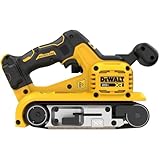


| Model | Belt size | Motor / speed | Approx. weight | Best fit | Dust collection |
|---|---|---|---|---|---|
| DeWalt DWP352VS | 3 × 21 in | 8 A; variable, 850–1,300 ft/min | About 8.2 lb | General-purpose shop and renovation work | Dust bag; vacuum connection |
| DeWalt DWP360 | 3 × 18 in | 6 A; 800 ft/min | About 7 lb | Lighter-duty work and easier handling | Dust bag; vacuum connection |
| DeWalt DWE6423 (4 × 24 in belt-sander model) | 4 × 24 in | 10 A; 1,500 ft/min | About 12.3 lb | Large, flat surfaces and faster stock removal | Dust bag; vacuum connection |
Specifications and model names can vary by region; check the manufacturer’s current manual or product page for your exact version. The DWE6423 designation is sometimes associated with a different DeWalt tool in retailer listings, so verify that the listing explicitly describes a 4 × 24-inch belt sander before purchasing. If you cannot confirm that model locally, compare available DeWalt belt sanders by the printed belt size and nameplate specifications rather than relying on a model-number match.
Pick by the work, not just the motor
For a versatile first belt sander: 3 × 21 inch
A 3 × 21-inch belt is a practical middle ground. The narrower footprint is easier to control than a 4-inch belt, while the longer belt offers more sanding area than a compact model. A variable-speed machine such as the DWP352VS gives you more control over the rate of removal: start slower on unfamiliar material or near an edge, then increase speed if the belt is cutting cleanly without burning or digging in. It suits furniture parts, doors, and general flattening, but it is still an aggressive tool—not a substitute for a random-orbit sander when you need a fine finish.
For overhead or occasional work: 3 × 18 inch
A lighter 3 × 18-inch sander is easier to lift and reposition, which can matter when sanding a door in place or working for short sessions. The trade-off is less belt length and typically less power than a heavier full-size machine. That is not a problem for modest jobs, but repeated sanding of wide, hard stock can take longer and require more frequent belt changes. Compare the actual weight and speed of the model on sale; “compact” does not guarantee a specific advantage across every version.
For broad stock removal: 4 × 24 inch
A 4-inch-wide belt covers more area per pass and can make sense on wide boards, benchtops, or other large, flat work. The wider platen also demands careful technique: tilting the sander or pausing in one spot can leave a visible hollow or gouge. The added width and mass make this style less appealing for vertical or overhead sanding. Choose it when the work is mostly horizontal and the extra coverage will be used regularly, not simply because the motor has a higher amp rating.
What the numbers mean at the bench
Belt size affects both coverage and availability. A 4-inch belt covers one-third more width than a 3-inch belt, but that does not mean the job will finish one-third faster: wood species, grit, belt condition, pressure, and how flat the workpiece is all matter. Before choosing a machine, check that the belt size is easy to buy locally in the grits you use. A less common size can cost you time even if the sander itself is a good fit.
Motor amperage is an indicator of electrical input, not a direct measure of how much wood the tool removes. Belt speed, belt tracking, abrasive quality, and the operator’s ability to keep the platen flat matter too. More pressure is not a reliable shortcut; it can overheat the abrasive, mark the wood, and overload the machine. Let the belt cut with steady, light pressure.
Dust bags are convenient for quick jobs but should not be treated as full dust control. They can fill quickly, and fine dust may still escape. Empty the bag before it is packed, keep its connector clear, and use a suitable dust extractor when practical. Even with collection attached, wear appropriate respiratory and eye protection and follow the tool and abrasive manufacturers’ safety instructions.
Choose by your workspace and buying priorities
| Your situation | Best starting point | Why |
|---|---|---|
| Small shop, occasional projects, limited storage | 3 × 18 in | Typically easier to handle and store; adequate for smaller jobs |
| One sander for mixed furniture and home projects | 3 × 21 in, preferably variable speed | Useful balance of belt length, control, and general-purpose capability |
| Frequent work on wide, flat panels | 4 × 24 in, if available and verified | Wider belt covers more surface per pass; heavier tool is less nimble |
| Low purchase budget | Compare total ownership cost, not just tool price | Check belt availability and price, dust-bag condition, and whether a vacuum adapter is included |
If you are choosing between two models, try holding them in the position you will actually sand in. A pound or two can feel significant when the tool is held at chest height, while it matters less on a sturdy bench. For a fixed workshop, corded power avoids battery-runtime limits. For site work without convenient outlets, compare the complete cordless system cost and expected runtime rather than assuming a cordless sander will match a corded tool’s sustained removal rate.
Setup and ownership: avoid the common failures
- Fit the belt in the correct direction. Many belts have an arrow indicating travel direction. Follow the belt markings and tool manual; incorrect installation can affect tracking or belt life.
- Center the belt before sanding. With the tool unplugged, check that the belt sits correctly. Use the tracking adjustment as described in the manual, then run the sander briefly in a safe position and adjust if the belt drifts.
- Keep the platen flat and moving. Start the tool before it touches the work, move steadily with the grain where appropriate, and lift it clear before switching off. Rocking or stopping in one place can create dips that are difficult to remove.
- Change belts when they stop cutting cleanly. A glazed or clogged belt creates heat and encourages excess pressure. Match grit to the job, and progress to finer grits before a finishing sander; a belt sander can leave deep scratches that take time to remove.
- Clear dust after use. Unplug the tool, empty the bag, and clean vents and dust passages according to the manual. Dust buildup can reduce collection and contribute to overheating. Do not use compressed air in a way that spreads fine dust into your breathing zone.
Belts are the main recurring cost. Keep a small selection of the correct size and replace belts that are torn, unevenly worn, or no longer cutting effectively. Avoid sanding painted or coated material unless you know what it contains and can control the dust safely; coatings can clog abrasives and create hazardous debris.
Bottom line
For the broadest range of ordinary woodworking and renovation jobs, start with a DeWalt 3 × 21-inch variable-speed belt sander. Go smaller if lifting comfort and compact storage are more important than sustained removal. Go wider only when you regularly sand large, flat surfaces and can manage the added weight and risk of uneven sanding. Before ordering, verify the exact model, belt size, current specifications, and dust-collection fittings—especially when listings use confusing model numbers.