
What's inside
As an Amazon Associate I earn from qualifying purchases. This post may contain affiliate links at no extra cost to you.
The best mini belt sander for detail work is the Makita 9032 if you want the steadiest tracking and the widest useful speed range; choose the WEN 6307 for a lower-cost corded option, or a narrow cordless model when outlet-free access matters more than maximum belt area.
As an Amazon Associate we earn from qualifying purchases at no extra cost to you.

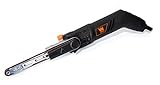


Best mini belt sanders at a glance
| Model | Belt size | Speed control | Approx. tool weight | Best suited to | Typical market range |
|---|---|---|---|---|---|
| Makita 9032 | 1/2 x 18 in. | Variable, about 500–1,700 ft/min | About 4.6 lb | Frequent detail work, drawer parts, tight edges | $180–$250 |
| WEN 6307 | 1/2 x 18 in. | Variable speed | About 6 lb | Budget workshop use and occasional repairs | $45–$75 |
| Compact 3/8-inch cordless belt sander | Typically 3/8 x 21 in. | Usually two-speed or electronic variable speed | About 4–6 lb with battery | On-site fitting and work without a cord | $130–$250 as a bare tool |
| Compact detail belt sander with a narrow arm | Commonly 1/2 x 18 in. | Often variable | About 4–7 lb | Inside corners, small curves and narrow stock | $50–$200 |
Belt size is only part of the decision. A 1/2-inch belt removes material quickly enough for a drawer side or a hardwood edge, while a 3/8-inch belt reaches narrower recesses and produces less drag on small parts. For delicate work, tracking stability and low-speed control matter more than motor wattage.
Our picks by situation
Best overall: Makita 9032
The Makita 9032 is the strongest all-around choice for a mini belt sander because its narrow 1/2-inch arm can work close to an inside corner without the bulky nose of a standard belt sander. Its variable speed range is particularly useful: slow the belt for end grain, veneer edges and softwood curves, then increase speed for shaping hardwood or removing old finish.
The adjustable arm is valuable on drawer boxes. A nearly vertical position can clean a protruding edge, while a different angle gives access to a narrow inside surface. The tool is also relatively light for a corded machine, so it is easier to control with one hand while the other hand holds a small workpiece—although the workpiece should still be clamped whenever possible.
Its main drawback is cost. Replacement belts are also less interchangeable than common 3 x 21-inch belts, so you should confirm the correct 1/2 x 18-inch size before buying abrasives.
Best budget corded choice: WEN 6307
The WEN 6307 offers the basic advantages of a mini belt sander—narrow belt width, variable speed and a rotating sanding arm—at a much lower price than professional-oriented tools. It makes sense for occasional cabinet fitting, rounding small parts and smoothing rough bandsawn curves.
Expect more compromise in refinement. Budget tools can require more frequent tracking adjustments, and the switch, cord and dust-control details may not feel as durable under daily shop use. It is a sensible choice when the sander will be used a few times per month rather than for hours every day.
Best for cordless access: a 3/8-inch battery model
A compact cordless belt sander is convenient for fitting doors, trimming installed cabinetry and working at a jobsite where a cord is awkward. The narrower 3/8-inch belt can enter spaces that a 1/2-inch arm cannot, but the reduced abrasive area also means slower stock removal.
Battery runtime depends heavily on pressure, belt grit and the battery’s capacity. As a practical planning figure, a compact cordless belt sander may provide roughly 15–30 minutes of intermittent trigger-on sanding from a 2.0–4.0 Ah battery. That is usually enough for fitting several parts, but not for continuous production sanding. Buy into a battery platform you already use if possible; purchasing batteries and a charger can add $80–$180 to the initial cost.
What separates a useful mini belt sander from a frustrating one?
Belt width and arm reach
For drawer boxes and small furniture parts, 1/2-inch belts are the best compromise. They offer enough coverage to level an edge without making the tool too wide for close work. A 3/8-inch belt is preferable when the job involves narrow slots, tight curves or small model-making components.
Look for an arm that can rotate or pivot. A fixed arm limits the tool to one approach angle, while an adjustable arm lets you align the belt with a curved edge or reach the inside of a cabinet opening. The tradeoff is that every moving joint introduces another place where looseness can affect tracking.
Tracking stability
The belt should remain centered when the tool is unloaded and should not walk sideways when light pressure is applied. Tracking problems are especially damaging on small parts: the belt can ride over the edge, cut a groove, or damage the side of the sanding arm.
A good tracking adjustment responds in small, predictable increments. If a quarter-turn causes the belt to jump from one edge to the other, accurate work becomes difficult. Before judging the tool, check that the belt is installed in the correct direction and that dust has not packed around the roller.
Variable speed
Variable speed is more important on a mini belt sander than on a large removal sander. Small parts have less mass to absorb heat, and a narrow belt can burn an edge quickly when pressed hard at full speed.
- Low speed: use for end grain, resin, painted surfaces, thin stock and final shaping.
- Medium speed: use for general hardwood and softwood edge work.
- High speed: reserve for rapid material removal on stable, well-clamped parts.
Speed control does not replace light pressure. Let the abrasive cut; pushing harder usually creates heat, loads the belt and makes tracking less stable.
Decision matrix for choosing your mini belt sander
| Your situation | Recommended configuration | Reason |
|---|---|---|
| First sander, occasional use, limited budget | Corded 1/2 x 18-inch model | Lowest ownership cost and adequate reach for common repairs |
| Weekly furniture or cabinet work | Variable-speed professional 1/2 x 18-inch model | Better control, tracking and durability reduce rework |
| Installed cabinetry or outdoor work | Cordless 3/8-inch model on an existing battery platform | No cord around finished surfaces or jobsite obstacles |
| Very tight curves and narrow recesses | Narrow belt with a pivoting arm | Smaller contact area reaches confined shapes |
| Large flat panels or long edges | Standard 3 x 21-inch belt sander instead | A mini tool will be slower and harder to keep flat |
How to set up a mini belt sander for accurate work
- Choose the belt grit. Start with 80 or 100 grit for noticeable shaping, 120 or 150 grit for fitting, and 180 grit or finer for smoothing. Do not begin with coarse 40-grit abrasive on a small edge unless substantial material must be removed.
- Install the belt in the indicated direction. Some belts have a directional arrow. Seat the belt fully on both rollers before switching on the tool.
- Run the sander briefly in free air. Watch whether the belt moves toward either edge. Correct tracking before touching the work.
- Clamp the part and mark the removal limit. A pencil line or marking gauge line prevents an attractive curve from becoming an undersized part.
- Start at low or medium speed. Use short passes and check the surface frequently. A mini belt sander can remove more material than expected in a few seconds.
- Finish with a sanding block or fine abrasive. The belt follows curves well but can leave a slightly uneven scratch pattern on a flat edge.
Ownership costs and common failure points
The first consumable to wear is normally the belt, not the motor. Belts clog quickly when sanding paint, resin or soft pitchy wood. A loaded belt creates heat and encourages the operator to press harder, accelerating wear on the drive roller and arm.
Keep several grits available and replace a belt when its abrasive is rounded, glazed or torn. Cleaning the belt with a purpose-made abrasive cleaner can extend its life for ordinary wood dust, but it cannot restore worn grit. Avoid forcing a clogged belt against the work.
After each session, brush or vacuum dust from the rollers, vents and tracking mechanism. Do not direct high-pressure air into a sealed motor or bearing area unless the manufacturer permits it; compressed air can drive abrasive dust deeper into the tool. Store the sander with the belt relaxed if the design allows belt tension to be released.
For most woodworkers, the buying decision is simple: select the Makita 9032 when control and frequent use justify the price, the WEN 6307 when budget is the priority, and a cordless 3/8-inch model when access and portability outweigh belt coverage. Whichever format you choose, prioritize stable tracking, usable low speed and readily available replacement belts over headline motor power.