
Our Top Picks
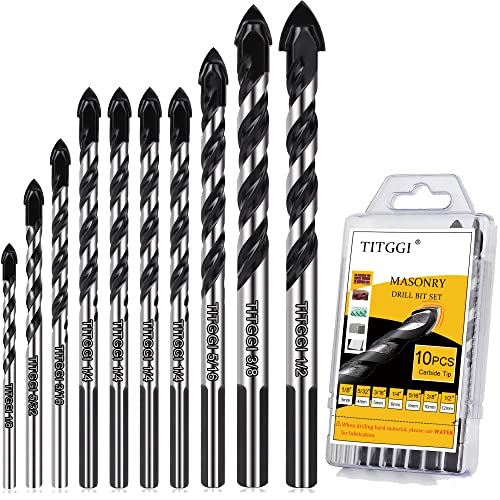
 DYRECELVE 12-Piece Masonry Drill Bit Set and Concrete5.51 x 2.95 x 0.64 inches0.45 PoundsCheck on Amazon


What's inside
As an Amazon Associate I earn from qualifying purchases. This post may contain affiliate links at no extra cost to you.
I snapped three masonry bits in one afternoon trying to anchor a French cleat to my garage wall. Not because the concrete was unusually hard, but because I grabbed the cheapest bits in the bin, ran them dry in a plain drill/driver, and leaned on them like I was drilling pine. If you’re hunting for the best drill bits for concrete, the honest answer is that the bit matters less than the combination of bit geometry, shank type, and whether your drill actually hammers. Get those three right and a $6 bit outlives a $20 one used wrong.
This is written from a one-person garage shop perspective. I’m not drilling foundations for a living. I’m hanging lumber racks, bolting down a bench, running conduit for shop lights, and occasionally punching through a slab edge for a dust collection line. That workload is different from a concrete crew’s, and the right bit for me is probably the right bit for you.
As an Amazon Associate we earn from qualifying purchases at no extra cost to you.


Quick Comparison: Concrete Bit Types
Before you shop, figure out which category you’re in. The shank is the fastest way to narrow it down, because it determines what drill can even use the bit.
| Bit Type | Shank | Best For | Reality Check |
|---|---|---|---|
| Standard masonry bit | Round or hex | Brick, block, mortar, soft concrete | Fine in a hammer drill, painful in a drill/driver |
| SDS-Plus | SDS-Plus | Cured concrete, slabs, anchors | Needs a rotary hammer, not just a hammer drill |
| SDS-Max | SDS-Max | Large holes, thick structural concrete | Overkill for most garages |
| Multi-material bit | Round or hex | Mixed substrates, tile over concrete | Convenient, not the fastest in concrete |
| Rebar cutter bit | SDS-Plus | Holes that hit steel | Specialty purchase, worth it if you hit rebar |
| Core bit | SDS-Plus/Max | Large diameter pass-throughs | Rental territory for a hobby shop |
The line that trips people up is the middle one. A hammer drill and a rotary hammer are not the same tool. A cordless hammer drill uses two ridged clutch plates to vibrate the chuck, which is enough for brick and block. A rotary hammer uses a piston to deliver a real impact, and it turns concrete drilling from a chore into a non-event. If you own the former and keep burning up bits, the bit isn’t the problem.
What Actually Makes a Good Concrete Bit
Every bit in this category has a carbide tip brazed onto a steel body. The differences that matter:
Carbide head shape. Older bits use a simple flat chisel tip. Newer designs use a four-cutter or full-head carbide tip that stays centered and handles rebar contact better. Four-cutter heads cost more and are worth it if you’re drilling into anything post-1970 that might have mesh or rebar. For plain block walls, a two-cutter is fine.
Braze quality. This is where cheap bits fail. The carbide separates from the steel body under heat and the bit is instantly garbage. You can’t inspect this at the store, which is the main argument for buying from established lines rather than unbranded multipacks.
Flute design. Concrete dust has to get out of the hole. If it doesn’t, it packs, friction spikes, heat builds, and the carbide gives up. Wide, deep, steeply pitched flutes clear faster. This is the least glamorous spec and probably the second most important one.
Shank engagement. Round shanks slip in a keyless chuck under hammering. Hex shanks help. SDS shanks lock in and can’t slip at all, which is a big part of why SDS bits feel so much more efficient.
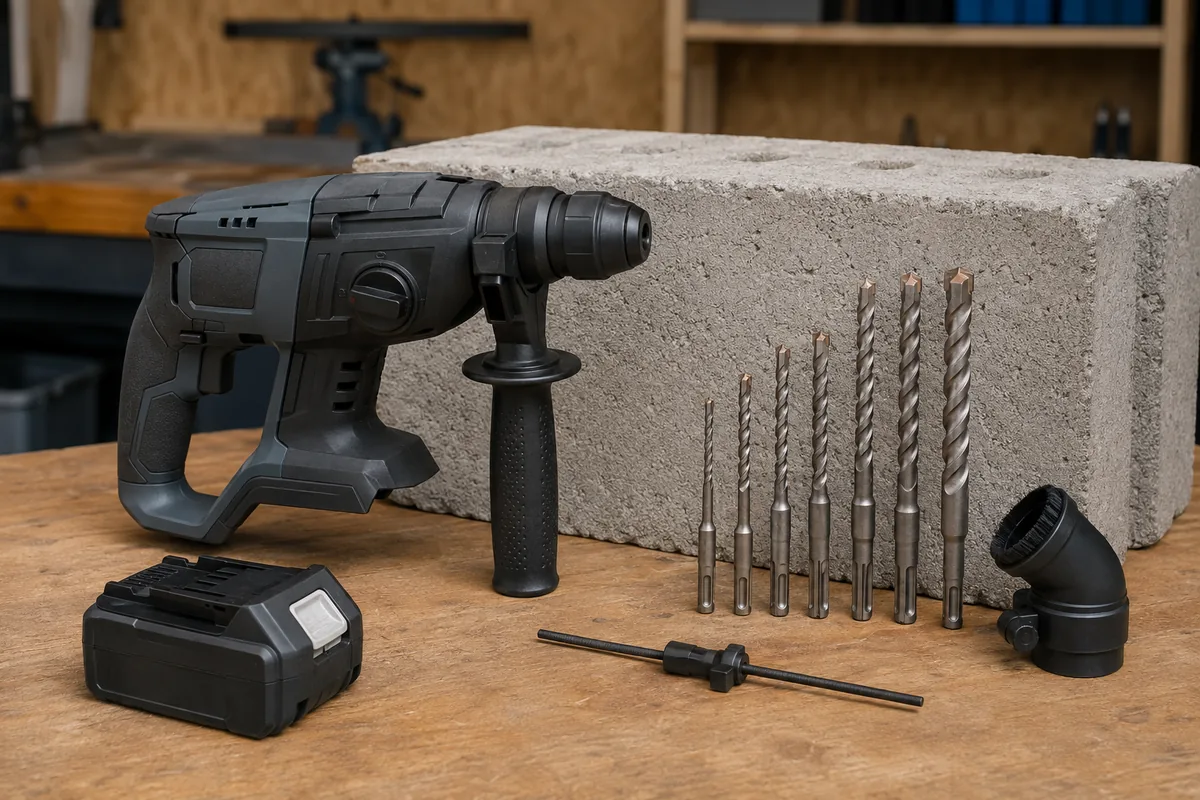
SDS-Plus Concrete Bit Set
If you already own or plan to buy a rotary hammer, this is where your money should go. A basic SDS-Plus set covering roughly 3/16″ through 1/2″ handles nearly every anchor size a garage shop needs. Look for four-cutter heads in the 3/8″ and 1/2″ sizes since those are the ones most likely to meet rebar. Skip the giant 20-piece sets full of sizes you’ll never touch.
Best Drill Bits For Concrete By Job
Hanging shelves and lumber racks in block walls. Standard carbide masonry bits in a hammer drill are genuinely fine here. Concrete block is soft compared to a poured slab. Buy a small assortment in the sizes your anchors call for, usually 3/16″ and 1/4″ for tapcon-style screws.
Bolting a bench or machine to a slab. This is where I’d insist on SDS-Plus and a rotary hammer, even a small corded one. Slab concrete is dense, you’re drilling to depth for wedge or sleeve anchors, and hole quality matters because the anchor’s holding power depends on it. Trying this with a drill/driver is how you end up with a wallowed-out hole and an anchor that spins.
Drilling through a slab edge or foundation wall. Long-reach SDS-Plus bits, and expect to hit steel. This is the one scenario where a dedicated rebar cutter bit earns its price, because a standard carbide tip will burn itself out fighting rebar while a rebar bit is designed to cut through it.
Tile over concrete backer or slab. Start with a diamond or spear-point tile bit to get through the glaze, then switch to your masonry or SDS bit. Hammer mode through tile cracks it. I learned that on a bathroom job I don’t like talking about.
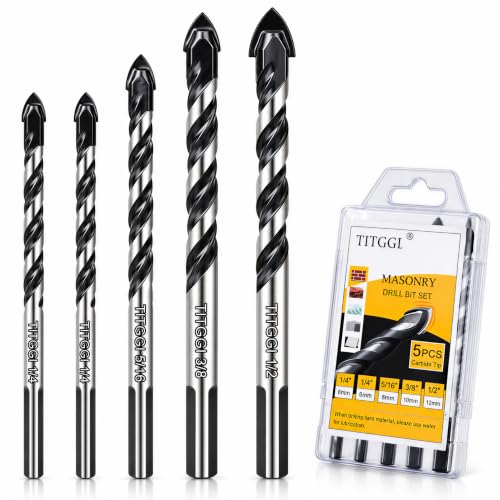
Carbide Masonry Bit Set (Hex Shank)
For block, brick, and mortar with a cordless hammer drill, a hex-shank carbide set is the sensible buy. The hex shank resists slipping in a keyless chuck, which is the failure mode that makes round-shank bits so frustrating. Treat these as consumables and don’t feel bad when one dulls out.
Technique That Saves Bits
Most bit deaths in a home shop are user error. Mine certainly were.
Let the tool hammer and stop pushing. Moderate, steady pressure is all a hammer drill or rotary hammer needs. Extra force just generates heat and stalls the impact mechanism.
Pull the bit partway out every inch or so to clear dust. In deep holes this is the difference between a smooth job and a smoking bit. Blow or vacuum the hole out before setting an anchor too, since dust in the bottom of the hole is a leading cause of anchors that don’t hold their rated pullout.
Run the drill in the right mode. Hammer plus rotation for concrete, rotation only for tile or when you’re feeling for rebar. Some rotary hammers have hammer-only mode for chiseling, which is not for drilling.
Wear a respirator. Silica dust from concrete is a real health hazard, not a nuisance. An N95 minimum, better yet a half-mask with P100 cartridges, and a shop vac with a decent filter positioned at the hole. This is the safety point I’d argue hardest for, because the damage is cumulative and invisible.
Don’t cool a hot bit in water. Thermal shock cracks carbide. Let it air cool or swap to a second bit and rotate them.
- ✔ Carbide masonry bits are cheap enough to treat as consumables
- ✔ SDS-Plus shanks can’t slip in the chuck, so all the energy goes into the hole
- ✔ Four-cutter heads survive incidental rebar contact
- ✔ Hex-shank sets work with the cordless drill you already own
- ✘ SDS bits require a rotary hammer, which is another tool purchase
- ✘ Unbranded multipacks hide bad carbide brazing you can’t inspect
- ✘ Long-reach and rebar-specific bits get expensive fast
- ✘ No concrete bit fixes a drill without a real hammer mechanism
Do You Need A Rotary Hammer?
Honest answer for a hobby shop: if you drill concrete more than two or three times a year, yes. A compact corded SDS-Plus rotary hammer in the entry range is one of the better value tools you can put in a garage, and cordless options in the DeWalt XR, Milwaukee FUEL, and Makita LXT lines are excellent if you’re already on one of those battery platforms.
If you drill concrete once every couple of years, don’t buy one. Rent it from a home center for an afternoon, buy the two SDS bit sizes you actually need, and put the savings into lumber. I owned a rotary hammer for four years before I used it enough to justify it, and I’m not going to pretend otherwise.
Rebar Cutter SDS-Plus Bit
Buy one of these only when you know you’ll hit steel, like drilling through a foundation wall or an older slab with mesh. It’s a single-purpose purchase but it turns a job that would destroy two or three standard bits into one clean hole. Match the diameter to your anchor and keep it separate from your general set.
FAQ
Can I drill concrete with a regular cordless drill? You can get through soft block and mortar slowly with a carbide masonry bit, but a poured slab will beat you. Without a hammer mechanism you’re grinding rather than fracturing the aggregate, which burns the bit and the drill’s motor. If it’s one small hole, try it. If it’s four anchor holes in a slab, borrow or rent a hammer drill.
What size bit do I use for concrete anchors? Follow the anchor manufacturer’s instructions, not a general rule. Tapcon-style screws typically call for a slightly undersized hole, while wedge and sleeve anchors call for a hole matching the anchor diameter. The packaging states the required bit size and minimum embedment depth, and hole size is the single biggest factor in whether the anchor holds.
How do I know when a masonry bit is worn out? It stops making progress and starts making heat. If you’re pressing harder than usual, the dust coming out is fine powder instead of chips, or the carbide edges look rounded and glassy, it’s done. Masonry bits can be sharpened on a bench grinder with a green silicon carbide wheel, but for what they cost I usually just replace them.
My Take
Buy hex-shank carbide masonry bits if you’re working on block walls with the cordless hammer drill already in your shop. Buy a small SDS-Plus set and a compact rotary hammer if you’re anchoring anything to a slab. Add a rebar cutter bit only when a specific job demands it. Then focus on the boring stuff that actually determines success: clear the dust, ease off the pressure, wear the respirator, and match the hole size to the anchor spec.
Check prices on Amazon →