What's inside
As an Amazon Associate I earn from qualifying purchases. This post may contain affiliate links at no extra cost to you.
A shop split across two or more floor levels needs more than a larger dust collector. The main problems are long duct runs, vertical rises, awkward hose routing, and blast gates that are easy to forget. A good system keeps the collector close to the machines that produce the most chips while giving every level a short, low-resistance path to the same collection point.
As an Amazon Associate we earn from qualifying purchases at no extra cost to you.

Start With the Shop Layout
Map the machines, floor levels, stairs, and doorways before buying ductwork. Mark the table saw, planer, jointer, router table, and sanding stations separately. These tools do not produce dust in the same way: planers and jointers generate large chip loads, while sanders need steady airflow and good filtration.
In most multi-level shops, the best arrangement is a central collector on the lowest practical level, with a main duct rising to the upper floor. Put the collector near an exterior wall if you can vent or service the filter there, but avoid placing it directly under a bedroom or office. A running dust collector transmits vibration through framing surprisingly well.
Do not run a small flex hose from the basement to an upstairs machine and expect strong performance. A 4-inch hose can work for one short connection, but its internal ridges and bends consume airflow. Use smooth-wall rigid duct for the main runs and reserve flex hose for the final 2 to 4 feet at each tool.
Choose the Collector Around the Worst Tool
For a shop with a table saw, planer, and jointer, a 1.5 to 2 hp two-stage cyclone is usually the most practical starting point. A cyclone separates heavy chips before they reach the filter, which keeps suction more consistent and reduces filter cleaning. A single-stage collector can be adequate for a small shop, especially when used with one tool at a time, but its filter loads faster.
Check the collector’s airflow at a stated static pressure, not only its free-air CFM rating. Free-air numbers are marketing-friendly and do not represent a connected system. A typical 4-inch tool branch may need roughly 350 to 450 CFM at the machine. A 6-inch main can support substantially more, but only if the collector, fittings, and filter can maintain the required pressure.
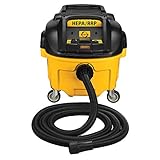
For a compact shop or a single benchtop tool, a shop vacuum with a dust separator is often the cheaper and better choice. It is easier to carry between levels and works well with sanders, routers, and small saws. It is not a substitute for a high-volume collector on a planer or wide jointer.
Build the Vertical Duct Correctly
Keep the main vertical riser as straight as possible. Every sharp elbow adds resistance, and a staircase route can turn a manageable system into a weak one. Use two gradual 45-degree elbows instead of a tight 90-degree elbow where the layout permits. Sweep fittings are especially valuable at the base and top of a vertical run.
Use a 6-inch main whenever the collector supports it, then reduce to 4 inches near smaller machines. Do not reduce the entire system to 4 inches just because most tools have 4-inch ports. The smaller main increases velocity but sharply limits total airflow and makes future upgrades harder.
Rigid metal duct is durable and has a smoother interior than typical flexible hose. 6-inch dust collection ductwork costs more than plastic hose, but the difference is justified on a permanent vertical run. Flexible hose is fine for a short machine connection; long suspended sections sag, collect chips, and create turbulence.
Control Each Floor With Blast Gates
Run separate branches to each floor and install a blast gate at every machine or small group of machines. The collector should normally serve one large machine at a time. Leaving several gates partly open can reduce airflow at every tool, while a forgotten open branch can make a system appear undersized.
Place gates where they can be seen and reached without climbing over equipment. On an upper level, a gate at the bottom of the riser is convenient but easy to forget; a gate beside the machine gives better feedback. Label each gate if multiple users share the shop.
| Layout choice | Best use | Main advantage | Main drawback |
|---|---|---|---|
| One central cyclone with rigid main duct | Permanent multi-level shop | Strong airflow and automatic chip separation | Highest installation cost and noise |
| Collector on each floor | Separated work areas or long buildings | Shorter duct runs and simpler branches | Two filters, motors, and collection bins to maintain |
| Portable shop vacuum with separator | Small tools and occasional work | Low cost and easy to move | Insufficient volume for planers and jointers |
| Central collector with remote gates | Frequently used professional-style shop | Convenient operation between levels | More wiring, controls, and troubleshooting |
Seal Leaks and Protect the Filter
Air leaks after the collector do not merely waste suction; they can pull contaminated air from dusty parts of the shop into the system and reduce capture at the tool. Seal metal joints with foil HVAC tape or duct sealant. Do not use ordinary cloth duct tape, which dries out and peels.
Add a cyclone or pre-separator before the collector when handling planer shavings. For a small vacuum, a dust separator cyclone bucket kit keeps larger debris out of the vacuum filter. Leave enough room to remove the collection drum without disconnecting the ductwork.
Fine dust is the health concern, not just visible chips. Use a cartridge filter rated for fine wood dust and keep the collector’s exhaust inside the shop only when the filter is properly rated and maintained. An overhead air cleaner can reduce airborne dust after cutting, but it does not replace source capture at the tool.
Plan for Safe Operation
Ground metal ductwork according to local electrical practice, especially where static buildup, flammable dust, or long runs are involved. Keep the collector and cords away from stairs and walking paths. Use a dedicated circuit sized for the motor, and provide adequate lighting at each blast gate and machine.
Inspect the system monthly. Look for collapsed flex hose, clogged filters, loose clamps, and bins that are nearly full. A full drum can block the cyclone outlet or allow chips into the filter. If a planer suddenly produces weak collection, check for a packed hose and closed gate before assuming the motor has failed.
For most multi-level hobby shops, spend the budget first on a correctly sized collector, a smooth 6-inch main, and good filtration. The cheaper portable vacuum remains sensible for a small upper-floor bench area, but a long hose stretched between floors is usually a false economy.