3 Best DW788-Class 20-Inch Scroll Saws (November 2026)
Our guide to the best dw788 scroll saw compares 20-inch scroll saws on throat depth, speed range and blade changes, so you can pick the right one for fretwork.
As an Amazon Associate I earn from qualifying purchases. This post may contain affiliate links at no extra cost to you.
The DeWalt DW788 set the standard for a 20-inch variable-speed scroll saw, and the class it defined still shapes what woodworkers expect from a fretwork machine. A saw in this class gives you enough throat depth to turn a wide panel, a speed range that covers both delicate veneer and thick hardwood, and an arm design that keeps vibration low enough for fine lines. This guide compares three saws in that class, including the DW788 itself, so you can see exactly how they differ where it matters most.
We picked every saw below from the name and specifications shown on its Amazon page, and we weigh throat depth, speed control, table size and blade handling rather than brand loyalty. Whether you cut portraits, intarsia or pierced panels, the three models below share the same 20-inch class and the same variable-speed heart, and the advice that follows will help you match the saw to the work you plan to cut most in the months and years ahead.
Quick Picks
As an Amazon Associate we earn from qualifying purchases
Product
Best for
Key spec from title
DeWalt DW788
Fine fretwork and the class standard
20-in throat, 400–1750 SPM
Delta 40-694
Large panels and a tilting table
20-in throat, 400–1750 SPM
Jet JWSS-22B
Extra throat depth and foot control
22-in throat, foot switch
How to Choose
Throat Depth and Table Size
Throat depth sets the widest panel you can turn inside the saw, and in this class it runs from 20 inches on the DeWalt and Delta to 22 inches on the Jet. A 20-inch throat handles most portraits and pierced panels, while the extra two inches matter when you cut wide clock faces or large intarsia scenes. Table size matters too, because a broad cast-iron table supports a heavy panel without tipping. Check the table dimensions on the listing and picture your largest workpiece resting on it. A saw that swallows your biggest panel without a struggle is the one that will still suit you in a year. A broad table steadies heavy panels.
Speed Control and Vibration
Variable speed is the heart of this class, and all three saws run from 400 to 1750 strokes per minute. Slow speeds suit thin veneer and delicate fretwork, where a fast blade would scorch or tear the wood, while fast speeds clear thick hardwood efficiently. A parallel-link arm design keeps the blade moving straight up and down, which cuts vibration and keeps the cut line true. Before you buy, think about the thinnest material you cut and the thickest, and make sure the speed range covers both ends. A saw that hums smoothly at low speed is worth more than one that only shines at full tilt. A smooth low speed matters most for veneer.
Blade Changes and Blade Types
Blade handling decides how often you reach for the saw instead of a coping saw. The DW788 offers tool-free blade changes, which matter when a portrait needs dozens of inside cuts and every blade swap eats time. Plain-end blades suit fine fretwork and tight turns, while pin-end blades suit faster work in thicker stock, so check which types each saw accepts. On-tool blade storage keeps spares within reach and stops them vanishing into a drawer. A saw that changes blades quickly will see far more use than one that fights you at every inside cut. Tension matters too, so learn the feel of correct tension on scrap before you cut a portrait.
Safety and Dust Control
Safe scroll sawing starts with the guard and the hold-down that ship with the saw. Keep the blade guard in place and the hold-down foot close to the workpiece so thin stock cannot lift and catch. Wear eye protection, because a snapped blade throws fragments, and keep your fingers clear of the blade path by guiding the work with the sides of your hands. Switch the saw off and unplug it before changing a blade, and clear dust from the table so the cut line stays visible. A dust blower or a shop vacuum hose keeps the line clear and the air cleaner. Sweep the table between cuts so dust does not hide the line.
The 3 Best Options
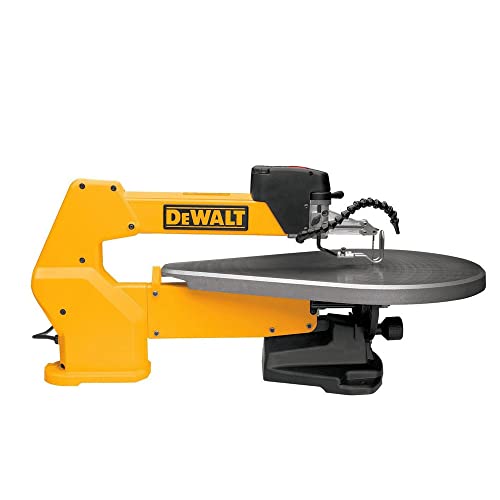
DeWalt DW788 20-Inch Variable-Speed Scroll Saw
Top Pick
DeWalt DW788 20-Inch Variable-Speed Scroll Saw
Best for: Fine fretwork, portraits and intarsia where smooth running and quick blade changes matter most.
The DW788 is the saw this class is measured against, and it earns that place with a combination of smooth running and quick blade changes. Its double parallel-link arm design keeps vibration low, so fine lines stay true even on long cuts, and the variable-speed control runs from 400 to 1750 strokes per minute to cover veneer and hardwood alike. Tool-free blade changes make inside cuts far less tedious, and the large cast-iron table supports wide panels without tipping. For a woodworker who wants the proven standard in this class, the DW788 remains the reference point that the other two saws are judged against. It remains the class reference.
Watch out for: It costs more than some saws in its class, and its 20-inch throat is two inches shorter than the Jet.
Delta 40-694 20-Inch Variable-Speed Scroll Saw
Runner-Up
Delta 40-694 20-Inch Variable-Speed Scroll Saw
Best for: Large panels, bevel cuts and inlay work where a big tilting table earns its keep.
The Delta 40-694 matches the DW788 on throat depth and speed range, then adds a larger tilting table that suits big panels. Its 16 by 24 inch table tilts from 0 to 45 degrees, which opens up bevel cuts for inlay and angled fretwork without a separate jig. The dual parallel-link arm keeps the blade stroke straight and the vibration low, and the 1.3 amp motor runs the same 400 to 1750 strokes per minute as the class leaders. On-tool blade storage keeps spares at hand, and a 5-year warranty backs the machine. It holds a panel steady through long sessions on a sturdy stand.
Watch out for: At 70 lb it needs a sturdy bench or stand, and it has no foot switch.
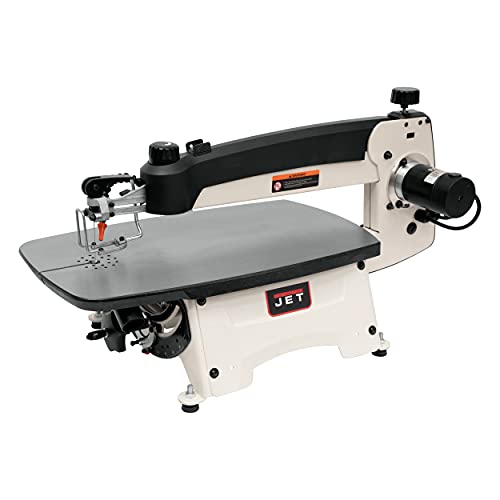
Jet JWSS-22B 22-Inch Scroll Saw
Jet JWSS-22B 22-Inch Scroll Saw
Best for: Wide panels, large portraits and cutters who want foot control and extra turning room.
The Jet JWSS-22B stretches the class with a 22-inch throat, giving you two extra inches of turning room for wide panels and large portraits. A foot switch comes with the saw, so you can start and stop the blade without taking your hands off the workpiece, which helps when you thread a blade through a tiny drilled hole for an inside cut. Blade storage keeps spares close. If your work runs wide and you value hands-free control, the extra throat depth and the foot switch make this Jet the most spacious saw in the class. The extra throat depth also suits wide clock faces and large intarsia scenes.
Watch out for: The standalone saw needs a live re-check before ordering, since a bundled version with a flip-top table has been listed as unavailable.
Which One Fits Your Situation
Fine Fretwork and Intarsia
Fine fretwork lives or dies on smooth running and fast blade changes, because a portrait can need dozens of inside cuts. The DW788 leads here with tool-free blade changes and a low-vibration arm, and the Delta matches it on speed range with a larger table. Pick the DeWalt when blade changes dominate your day, and the Delta when you want more table under a wide panel.
Larger Panels and Portraits
Wide panels need throat depth and table support before anything else. The Jet JWSS-22B gives you 22 inches of throat, which turns panels the 20-inch saws cannot, and its foot switch frees your hands for threading blades through drilled holes. The Delta answers with a 16 by 24 inch tilting table. If your portraits keep growing, the Jet is the natural pick.
First Scroll Saw for a New Shop
A first scroll saw should be forgiving, quiet and easy to learn. The DW788 is the safest starting point, with the smoothest arm in the class and the simplest blade changes, while the Delta offers more table and a longer warranty for the same speed range. Choose the DeWalt for the easiest learning curve, and the Delta when you want the biggest table.
Weekend Projects and Gifts
Weekend projects such as ornaments, puzzles and name signs suit any saw in this class, so pick on comfort rather than capacity. The DW788 changes blades fastest when a puzzle needs many inside cuts, while the Delta holds a larger blank steady on its wide table. Keep a range of blades on hand, from fine for thin ornaments to coarse for thicker signs, and any of the three saws will carry a weekend of gift-making.
Common Mistakes
Buying a 16-inch saw for wide panels and discovering the throat is too short to turn the work on the table.
Running full speed on thin veneer and scorching or tearing the cut line instead of slowing the saw down.
Forcing the blade through a tight turn instead of letting the saw do the work at its own steady pace.
Skipping the hold-down foot and letting thin stock lift, chatter and catch the blade mid-cut.
Using a dull blade and blaming the saw for wandering cuts when a fresh blade would fix the problem.
Frequently Asked Questions
What is the difference between a 16-inch and a 20-inch scroll saw?
Throat depth is the distance from the blade to the back of the arm, and it sets the widest panel you can turn inside the saw. A 16-inch saw handles small ornaments, while a 20-inch saw turns wide portraits and clock faces. If your work keeps growing, the extra four inches saves you from outgrowing the machine.
Can a scroll saw cut hardwood?
Yes, a variable-speed scroll saw cuts hardwood well when you match the blade and the speed to the thickness. Use a slower speed and a coarser blade for thick hardwood, and let the blade cut at its own pace without forcing the work forward. Keep the blade sharp, support the panel on the table, and take light passes on the thickest stock.
Do I need pin-end or plain-end blades?
Plain-end blades suit fine fretwork because they fit through tiny drilled holes and turn tightly, while pin-end blades suit faster work in thicker stock. The DW788 accepts plain-end blades with its tool-free clamps, and many saws in this class accept both types. Check the listing for each saw, and buy blades that match the clamps your saw uses. Keep spares on hand.
How do I reduce vibration on a scroll saw?
Mount the saw on a heavy, sturdy bench or stand, because a light table amplifies every stroke. A parallel-link arm already keeps the blade moving straight, which cuts vibration at the source. Check that the blade is tensioned correctly and not dull. Tighten the mounting bolts before you cut, and check the table is level.
J
JD's Woodworks Editorial Team
We compare specs, warranty terms, long-term owner feedback and street pricing before anything earns a spot. Rankings are never paid.
Affiliate disclosure. As an Amazon Associate we earn from qualifying purchases at no extra cost to you. Prices accurate as of the date shown.
Table saws under the 1500 mark compared: the Grizzly G0771Z and Shop Fox W1837 hybrid saws with cast iron tables, 2 HP motors and T-square fences, specs from their listings.
Table saws for fine woodworking compared: the SawStop Professional Cabinet Saw and Powermatic PM1000, judged on fence precision, table flatness and vibration from listing specs.
Table saw combos explained: saws sold with a stand and accessories in one listing, what to check in the box, and which bundle fits your shop or jobsite.
Compare the best planer digital thickness gauges and digital readout kits for portable planers, with fit, resolution and mounting checks before you buy.
Model table saws for scale modelling and hobby work compared: the precision Proxxon FET 37070 and the compact Saker mini table saw, with specs taken from their Amazon listings.
Three CoreXY 3D printers for product development, each with the architecture stated on its listing: an enclosed multicolor machine, a large-format enclosed model and a heated-chamber model.