
What's inside
As an Amazon Associate I earn from qualifying purchases. This post may contain affiliate links at no extra cost to you.
A hand bench planer — meaning a bench plane used by hand — removes stock accurately when its sole is flat, its blade is sharp, and its mouth is set for the job; for most shops flattening boards and smoothing, a No. 5 jack or No. 4 smoothing plane in the $150–$300 range is the right buy, while edge jointing rewards the longer sole of a No. 7 or No. 8.
As an Amazon Associate we earn from qualifying purchases at no extra cost to you.

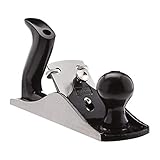

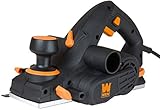
What “Hand Bench Planer” Actually Means
The phrase gets used two ways, and the distinction matters before you spend money. A hand bench planer is a bench plane — the two-handed steel-bodied tool held against a bench — used manually. That is different from a benchtop planer, the electric thicknesser that sits on your bench and feeds boards through spinning knives. And “hand planer vs bench plane” is itself a false fight: bench planes are a category of hand plane, alongside block planes and specialty planes. If you are searching “bench planer vs hand planer,” you are probably deciding between a powered thicknesser and muscle-powered flattening — and the honest answer is the hand tool wins on boards wider than your planer’s 12–13 inch bed, on figured grain that tears out under knives, and on end grain, which thicknessers cannot touch safely.
The Size Number Tells You the Job
Bench planes are numbered by historical Stanley convention, and the number mostly encodes sole length — which determines what the plane can flatten. A plane can only register on what its sole touches, so short soles follow hills and valleys while long soles bridge them.
| Size | Sole length | Typical weight | Blade width | Best at |
|---|---|---|---|---|
| No. 3 | ~8 in (20 cm) | ~3.5 lb | 1¾ in | Small panels, tight work |
| No. 4 smoother | ~9 in (23 cm) | ~4 lb | 2 in | Final surface, tear-out cleanup |
| No. 5 jack | ~14 in (36 cm) | ~6 lb | 2 in | Stock removal, first plane to own |
| No. 6 fore | ~18 in (46 cm) | ~7.5 lb | 2⅜ in | Preliminary flattening |
| No. 7 jointer | ~22 in (56 cm) | ~9 lb | 2⅜ in | True flattening, edge jointing to ~6 ft |
| No. 8 jointer | ~24 in (61 cm) | ~10 lb | 2⅝ in | Wide panels, long edges |
The practical rule: joint edges up to roughly three times your sole length reliably. A No. 5 can straighten a 3-ft edge; for 6-ft tabletop glue-ups, the No. 7’s 22-inch sole is what keeps the edge honest instead of gently curved.
The Four Features That Separate Good From Frustrating
Sole flatness
This is the single biggest quality divider. Premium makers (Lie-Nielsen, Veritas, Clifton) machine soles flat to within roughly 0.001–0.0015 in out of the box. Budget castings can arrive 0.005–0.010 in off, which shows up as the plane cutting at the toe but not mid-sole. You can lap a sole flat on sandpaper over a flat reference — figure 30–60 minutes of work and a permanent warranty question — or pay the difference up front. Check flatness claims against a verified straightedge, not against the cast-iron table saw top you hope is flat.
Blade adjustment and bedding
Look for three things: a depth adjuster with minimal backlash (turn it backward, then forward — good mechanisms resume cutting within a half turn), a lateral-adjust lever for squaring the edge, and a frog that beds the blade solidly. Bedrock-style frogs (Lie-Nielsen, some WoodRiver models) put full metal contact under the blade and dampen chatter; standard Bailey frogs are fine if the mating surfaces are machined cleanly.
Blade steel
A2 holds an edge longest and resists chipping in abrasive woods; O1 sharpens faster on stones; PM-V11 (Veritas) splits the difference with good edge life and easier sharpening than A2. Budget irons in generic high-carbon steel work but need sharpening roughly twice as often — on a tool you sharpen constantly anyway, that’s a real cost.
Handle comfort
You will push a jointer plane thousands of strokes on one tabletop. The rear tote should fill your grip — fingers wrapped, not fingertip-clawed — and the front knob should let you press down without wrist flexion. Hardwood totes (rosewood, cherry, maple) beat plastic. If a tote is too small for your hand, aftermarket replacements exist, but buying a plane sized for your grip is cheaper.
Picks by Situation
| Your situation | Recommended type | Representative models | Expect to pay |
|---|---|---|---|
| First plane, general stock removal | No. 5 jack, low angle optional | WoodRiver No. 5, Lie-Nielsen 62 | $170–$350 |
| Finishing surfaces, figured wood | No. 4 smoother | Veritas No. 4 PM-V11, Clifton No. 4 | $200–$330 |
| Flattening wide boards, jointing long edges | No. 7 or No. 8 jointer | Lie-Nielsen No. 7, WoodRiver No. 7 | $350–$500 |
| Tight budget, willing to fettle | Mid-range casting you’ll lap flat | Qiangsheng Luban planes, restored vintage Stanley Bailey | $60–$150 |
| End grain and shooting board work | Low-angle jack with 25° iron + accessory bevels | Veritas Low Angle Jack, Lie-Nielsen 62 | $300–$360 |
Note the low-angle jack appearing twice: with bevel-up geometry you change effective cutting angle by swapping iron bevels — 25° for end grain, ~38° for general work, 50° for difficult grain — making it the most versatile single plane in 2026’s market.
Setup That Makes the Difference
Even a premium plane cuts poorly if assembled wrong. The sequence that matters:
- Hone the iron first. A factory “sharp” edge is usually a ground edge, not a honed one. Work to at least 1,000 grit, ideally higher.
- Set the cap iron (chipbreaker) close. For smoothing, 1/32 in or less from the edge; for heavy jack work, 1/16 in. This — not the sole — is what actually controls tear-out.
- Adjust the frog so the mouth suits the task. Mouth opening roughly equal to shaving thickness for smoothing; wide open for scrubbing.
- Sight down the sole while advancing the blade until it just appears, then center with the lateral lever. Take a test shaving on a board edge, not in the air.
Ownership Realities
What wears first is the blade edge — plan on touching up every 15–30 minutes of continuous planing in hardwood, and a full rehoning when stropping no longer restores the bite. Soles on ductile-iron bodies are essentially lifetime parts; wooden totes crack occasionally after drops and cost $20–$40 to replace. The common mistakes: storing the plane sole-down on a bench (retract the iron or lay it on its side), overtightening the lever cap (it can bow the frog and open the mouth), and trying to joint a long edge with a smoothing plane, which produces a smooth curve instead of a straight line.
FAQ
Is a No. 4 or No. 5 the better first plane?
No. 5. It roughs, flattens small boards, and smooths acceptably; a No. 4 can only do the last of those well. Add the smoother second.
Do I need a jointer plane if I own a powered jointer?
For boards wider than the machine bed and for edges longer than its infeed support, yes. A 6-in powered jointer leaves the No. 7 useful constantly.
Low-angle vs standard bevel-down — which adjusts easier?
Low-angle planes typically have a Norris-style adjuster combining depth and lateral alignment in one knob, which most beginners find faster to dial in.