
What's inside
- Why Sole Length Decides Whether a Board Gets Flat
- Blade Steel: A2 vs O1 vs PM-V11
- Mouth Adjustability: The Feature That Separates Finishing Planes
- Recommended Planes by Situation
- Budget vs Premium: What the Extra Money Actually Buys
- Setting Up to Eliminate Chatter: A Five-Step Check
- Ownership Realities: What Wears and What Mistakes Cost You
- FAQ
- Related Guides
As an Amazon Associate I earn from qualifying purchases. This post may contain affiliate links at no extra cost to you.
A hand planer flattens a board without chatter when three things line up: a sole long enough to bridge the high spots, a blade that takes a keen edge and holds it, and a mouth opening fine enough to prevent tear-out — and the best choice for most woodworkers is a low-angle jack plane in the 14–15 inch range paired with a 9–9½ inch block plane, because that combination covers flattening, dimensioning, and trimming tasks better than any single plane.
As an Amazon Associate we earn from qualifying purchases at no extra cost to you.
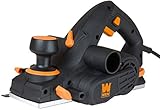


Why Sole Length Decides Whether a Board Gets Flat
A plane can only register on the surfaces its sole touches. If the sole is shorter than the waves or cup in your board, the plane rides the bumps instead of cutting them down. That’s why traditional “bench plane” numbering maps directly to sole length, and why the length matters more than almost any other spec for flattening work.
| Plane Type | Typical Sole Length | Blade Width | Best Job | Flattening Ability |
|---|---|---|---|---|
| Block plane | 6–7 in | 1⅜–1⅝ in | End grain, chamfers, trim | Poor — sole too short to bridge |
| Smoothing plane (No. 4) | 9–9½ in | 2 in | Final surface finishing | Moderate — follows slight undulations |
| Jack plane (No. 5) | 14–15 in | 2 in | Flattening, dimensioning, joints | Good — bridges most cup and twist |
| Jointer plane (No. 7/8) | 22–24 in | 2⅜–2⅝ in | Edge jointing, long board flattening | Best — but heavy (7–10 lb) and tiring |
For boards under about 3 feet, a jack plane hits the sweet spot: long enough to flatten genuinely, light enough (typically 5–6.5 lb) to use for a full session. Jointer planes flatten faster on long stock but cost more and demand more physical effort — most hobbyists end up using them less than expected.
Blade Steel: A2 vs O1 vs PM-V11
Blade steel determines how often you sharpen and how the plane behaves at the cutting edge, and it changes which plane suits your habits.
- O1 tool steel sharpens quickly on basic stones, takes a very keen edge at lower honing angles, and dulls faster in abrasive or figured woods. Traditional Stanley irons and many budget aftermarket blades are O1-type steel. Good if you sharpen little and often.
- A2 tool steel is air-hardened, holds an edge roughly 2–3 times longer in tough grain, and resists chipping at the 30° micro-bevels common on modern planes. It’s the default at Lie-Nielsen and WoodRiver. The trade-off: it takes longer to re-sharpen because you remove more metal per honing session.
- PM-V11 (Veritas) sits between them — edge life comparable to A2 but sharpens at closer to O1 speed, and tolerates a 25° primary bevel without crumbling. It costs more but reduces total sharpening time over the life of the blade.
Chatter — the juddering that leaves washboard marks — is partly a steel question. Thicker blades (0.140 in and up, versus the ~0.080 in vintage irons) dampen vibration. If a budget plane chatters, swapping in a thicker aftermarket blade often fixes it for less than a premium plane costs.
Mouth Adjustability: The Feature That Separates Finishing Planes
An adjustable mouth closes the gap in front of the blade, supporting wood fibers right up to the cut so they sever cleanly instead of tearing. On a smoothing plane working figured maple or reversing grain, tightening the mouth from “normal” to “fine” is the difference between a glassy surface and shredded fibers.
- Adjustable-mouth block planes (Stanley 60-1/2 style, Veritas DX60, Lie-Nielsen 102/60-1/2) let you open up for rough trimming or choke down for end grain. Worth paying for — fixed-mouth block planes are noticeably more limited.
- Movable-frog bench planes (the Bailey-pattern design used by Stanley, WoodRiver, Lie-Nielsen, Veritas) adjust the mouth by shifting the frog forward or back. Effective but fiddly: you may need to re-set blade depth afterward, and it’s a two-minute job rather than a thumbwheel turn.
- Fixed mouths on budget planes and low-angle jacks are fine when the blade projection is small — a tight mouth matters less when you’re taking thin shavings anyway.
Recommended Planes by Situation
Rather than one “best” plane, match the plane to your budget and the work you actually do:
| Situation | Pick | Why | Typical Price Range |
|---|---|---|---|
| First plane, tight budget | Budget block plane (Taytools, AmazonBasics-style, or a tuned vintage Stanley 60-1/2) | Low cost of entry; learn sharpening and setup where mistakes are cheap | $20–$60 |
| First bench plane, will flatten boards | Low-angle jack plane (Veritas, WoodRiver, or Luban-type) | 14–15 in sole flattens well; bevel-up design is simple to set and resists tear-out at higher cutting angles | $120–$300 |
| Serious hobbyist, hand-tool-heavy workflow | Lie-Nielsen No. 62 low-angle jack or No. 4 smoother | Premium machining, thick A2 blades, arrives needing minimal fettling | $325–$450 |
| Mostly power tools, need one trim plane | Veritas DX60 or Lie-Nielsen 102 block plane | Adjustable mouth, precise depth control for chamfers and end grain | $180–$240 |
| Long boards, edge jointing | Veritas or Lie-Nielsen No. 7 jointer | 22 in sole registers truly; only buy if boards routinely exceed 4 ft | $400–$500 |
Budget vs Premium: What the Extra Money Actually Buys
A premium hand planer’s price isn’t about the cut — a $50 vintage Stanley No. 5 with a sharp blade produces shavings indistinguishable from a $400 plane. What premium machining buys is time and forgiveness:
- Sole flatness out of the box. Budget planes often need 30–60 minutes of lapping on abrasive film to flatten the sole and square the frog seats. Premium planes are typically flat to within 0.001–0.002 in as delivered.
- Adjuster backlash. Cheap depth adjusters have half a turn of slop, so dialing in a fine shaving is guesswork. Lie-Nielsen and Veritas adjusters engage nearly immediately.
- Frog seating. A poorly machined frog transmits vibration into the blade — a leading chatter cause. This is the hardest budget-plane flaw to fix yourself.
The honest middle path: a mid-range plane (WoodRiver, Rider, or Luban) plus an hour of setup gets you 90% of premium performance. Budget $60–$80 for a diamond stone or honing setup regardless — every plane arrives needing a sharpen.
Setting Up to Eliminate Chatter: A Five-Step Check
If a plane chatters or skips, work through this sequence before blaming the tool — each step addresses a different vibration path:
- Sharpen and flatten the blade back (at least the first ½ in behind the edge). A dull blade pushes rather than shears, and pushing force is what starts the chatter cycle.
- Seat the frog fully so its face is flush with or just behind the rear edge of the mouth. A frog set too far back leaves the blade unsupported at the cutting edge.
- Tighten the lever cap firmly. A loose cap lets the blade flex. You should need real thumb pressure to snap it closed on a bench plane.
- Set the chipbreaker 1/32 in or closer to the edge for difficult grain — it adds downward pressure and breaks shavings before they can lever the edge up.
- Take a thinner shaving. If steps 1–4 don’t cure it, reduce the depth of cut. Chatter scales with cutting resistance; a 0.001–0.002 in shaving rarely chatters on any plane.
Ownership Realities: What Wears and What Mistakes Cost You
- Blades are consumables. Expect to re-hone every 30–60 minutes of actual planing in hardwoods, and to grind a new primary bevel after a dozen or so honings. A blade lasts years but not forever — replacement irons run $30–$60.
- Sole waxing matters. A dry sole drags and rusts. Paste wax or a candle rubbed on every session cuts effort noticeably and protects cast iron in humid shops.
- Don’t store a plane on its sole. Retract the blade or rest it on its side — bench debris can nick an exposed edge, and a blade resting on grit dulls even sitting still.
- The common expensive mistake: buying a smoothing plane first. A No. 4 can’t flatten a board and frustrates beginners who expected it to. Start with the jack or block plane; add the smoother when you’re doing final finishing.
FAQ
Is a low-angle jack plane better than a standard No. 5?
For a single-plane toolkit, usually yes. The bevel-up design lets you swap blades sharpened at different bevel angles to change the effective cutting angle — 25° for end grain, 38–50° for difficult grain — giving one plane the versatility of two. It also has a simpler mechanism with fewer parts to misadjust.
Do I need a jointer plane?
Only if you regularly flatten boards over 4 feet long or joint edges for glue-ups without a powered jointer. For typical furniture-scale parts, the jack plane does the job and you’ll spend the savings on sharpening gear.
A2 or O1 for a beginner?
O1 if you’re learning to sharpen — it forgives imperfect technique and comes to an edge fast. Switch to A2 or PM-V11 once sharpening takes you under five minutes, because the longer edge life starts paying off.