
What's inside
As an Amazon Associate I earn from qualifying purchases. This post may contain affiliate links at no extra cost to you.
Best High-Gain Distortion Pedals for Heavy Tones: Quick Picks
The best high gain distortion pedals for heavy tones are the Revv G3 for modern, controlled rhythm sounds, the Friedman BE-OD for amp-like British aggression, and the Boss MT-2 Metal Zone for versatile EQ at a lower price. Choose by how much low-end control and tone shaping you need—and whether the pedal must work into a clean amp, an already distorted amp, or a recording setup.
Compare the Shortlist
These are established models with different design priorities, not interchangeable versions of the same sound. Prices vary by retailer and region, so the ranges below are broad typical new-market estimates in US dollars, not current quotes.
As an Amazon Associate we earn from qualifying purchases at no extra cost to you.
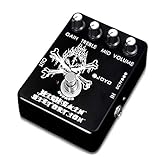


| Pedal | Gain and tone controls | Size and power | Best fit |
|---|---|---|---|
| Revv G3 | High-gain drive; three-band EQ and aggression switch | Approx. 4.8 × 2.6 in; 9V DC, center-negative | Tight modern metal and defined rhythm work; about $200–$250 |
| Friedman BE-OD | High gain; bass, treble, presence, and tight controls | Approx. 4.7 × 2.6 in; 9–18V DC, center-negative | British-flavored amp-style crunch and lead tones; about $200–$250 |
| Boss MT-2 Metal Zone | High gain; three-band EQ with sweepable mids | Approx. 5.1 × 2.9 in; 9V battery or adapter | Broad tonal shaping and budget flexibility; about $100–$130 |
| EVH 5150 Overdrive | High gain; three-band EQ, presence, and noise gate | Approx. 5.9 × 4.9 in; 9V DC, center-negative | Modern hard rock and metal, especially when a built-in gate helps; about $250–$300 |
| Pro Co RAT 2 | Distortion from gritty to saturated; filter control | Approx. 4.8 × 3.7 in; 9V battery or adapter | Rougher, less surgical distortion and a lower-cost option; about $80–$110 |
Dimensions are approximate manufacturer-style enclosure measurements; plugs, knobs, and jacks can affect pedalboard fit. Check the current manual for power requirements before connecting any pedal.
Which Pedal Suits Your Rig?
For tight, modern rhythm tones: Revv G3
The G3 is a strong pick when palm-muted riffs need to stay firm and notes need to separate in dense arrangements. Its three-band EQ and aggression switch offer more useful shaping than a single tone knob, while keeping the control layout manageable. It can sound focused into a clean amp, but it still responds to the amp’s speaker and voicing; a bright, thin combo may not become a convincing low-tuned metal platform just by adding gain.
Start with gain around the lower-middle of its range, then raise it only until chords sustain adequately. Too much distortion compresses pick attack and makes fast parts blur. Use the aggression switch as a voicing change, not a substitute for dialing the EQ.
For amp-like British drive: Friedman BE-OD
The BE-OD emphasizes a muscular, amp-inspired distortion character. Bass, treble, presence, and tight controls let you shape the low end and high-frequency bite independently. That makes it useful for hard rock, classic metal, and heavier lead tones, though its feel differs from a very clipped, ultra-modern distortion circuit.
Its broad gain range can be tempting to run high. For articulate rhythm playing, back the gain down and let the guitar’s pickup output and amp volume provide some of the push. The internal trim control on some versions is an important setup detail: it affects the available gain range, so check the model’s manual before adjusting it.
For maximum EQ flexibility on a budget: Boss MT-2 Metal Zone
The Metal Zone’s reputation can obscure its main practical advantage: its sweepable mid control can make large changes to the sound. That flexibility is valuable, but it also makes extreme settings easy to get wrong. A deep mid scoop may sound impressive alone and disappear once bass, drums, and another guitar enter.
Begin with the mid frequency near the center of its range and the EQ controls around noon. Adjust one control at a time, listening in a full-band or backing-track context. The pedal can work into a clean amp or as a distortion stage in a larger rig, but placement and level matter: feeding an already saturated amp with excessive output can make the result harsh and congested.
For a built-in gate: EVH 5150 Overdrive
A noise gate makes the 5150 Overdrive appealing for players who want a quick way to reduce hiss and muted-string noise between phrases. A gate does not remove noise while notes are sustaining, and an aggressive setting can choke quiet notes or fading chords. Set it only as high as needed, then check the decay at performance volume.
Its EQ and presence controls help tailor the sound to different amps, but the pedal’s strong character may not suit every clean platform. If possible, compare it at the volume and gain level you actually use rather than judging only through headphones or at bedroom volume.
For raw, less polished distortion: Pro Co RAT 2
The RAT 2 is not a dedicated modern-metal pedal, but its gritty distortion can work well for punk, alternative metal, sludge, and fuzzy leads. Its Filter control darkens the sound as you turn it clockwise, so it behaves differently from a conventional treble knob. It offers less precise low-end tightening than the Revv, BE-OD, or 5150, making it a weaker first choice for sharply defined, low-tuned chugs.
Match the Pedal to the Amp and Switching Setup
- Clean, neutral amp: A preamp-style pedal such as the BE-OD or G3 can supply most of the distortion character. Keep the amp’s own gain low enough that the pedal remains clear.
- Bright or small combo: Favor pedals with useful bass and mid controls. Avoid boosting treble and presence automatically; small speakers can become piercing before the low end feels substantial.
- Already high-gain amp: Try an overdrive-style boost before buying another distortion. Lower drive and increased output can tighten the amp, while stacking two full-gain stages often adds noise and compression rather than clarity.
- Live set with multiple sounds: Check whether the pedal is true bypass or buffered, whether it has a remote switching jack, and whether your board needs MIDI or loop-based control. The pedals above are primarily stompbox solutions; do not assume they offer preset recall.
- Recording direct: Confirm how the pedal will reach a speaker simulation or cabinet impulse response. A distortion pedal alone is not the same as a complete direct-recording rig.
Dial In Tight Heavy Tones Without Adding Noise
Use this order to avoid chasing problems with the wrong control:
- Set the amp first. Use a clean or moderately driven baseline, then find a comfortable volume. The pedal will sound different through a fizzy, overly bright, or already-compressed amp.
- Set gain lower than expected. Add enough for sustain, then test palm-muted riffs and open chords. If notes smear together, reduce gain before cutting more bass.
- Control bass before distortion when possible. Excessive low frequencies hitting a high-gain circuit can create flub. A tighter pedal voicing or an overdrive placed before the distortion can help; a huge bass boost after distortion usually cannot restore definition.
- Shape mids in context. Keep enough midrange for the guitar to remain audible beside bass and drums. Make small changes while playing with a mix rather than soloing.
- Address noise at its source. High-output pickups, long cable runs, poor power supplies, and stacked gain stages can all contribute. Use a suitable isolated power output, keep audio cables away from power supplies, and mute unused strings. A gate is the final control, not a fix for every noise problem.
Before buying, check power polarity, current draw, and whether a battery is supported. Avoid daisy-chaining a noisy or incompatible supply simply because the plug fits. Knobs and footswitches are also wear points: keep grit out of controls, avoid pressing switches with excessive force, and secure the pedal so cables do not lever against the jacks. If it will be used weekly onstage, reliable power and pedalboard protection may matter more over time than a small difference in gain range.
Bottom Line
Choose the Revv G3 for tight, modern rhythm tones; the Friedman BE-OD for a more amp-like British voice; the Boss MT-2 for flexible EQ at a moderate price; the EVH 5150 Overdrive when its gate and strong distortion character suit your rig; or the RAT 2 for rougher, less clinical saturation. The best match depends less on maximum gain than on whether the pedal’s EQ, low-end response, and switching fit the amp and the way you play.