
What's inside
As an Amazon Associate I earn from qualifying purchases. This post may contain affiliate links at no extra cost to you.
The best jointer for the money is usually a 6-inch benchtop or compact floor-standing machine with a helical cutterhead, a flat cast-iron bed, and a fence that adjusts without losing square; for most home woodworkers, spending roughly $500–$1,300 delivers better value than buying the cheapest machine or jumping straight to a premium cabinet jointer.
As an Amazon Associate we earn from qualifying purchases at no extra cost to you.


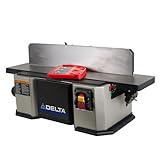
Best jointer values by situation
| Situation | Best fit | Typical market range | Why it represents value |
|---|---|---|---|
| Small shop, occasional use | 6-inch benchtop jointer with straight knives | $300–$550 | Low entry cost and compact storage, provided boards are modest in width |
| Small shop, frequent use | 6- or 8-inch benchtop jointer with helical cutterhead | $550–$1,100 | Quieter cutting, longer edge life, and less downtime for knife changes |
| Dedicated workshop | 6-inch floor-standing jointer | $900–$1,600 | Longer beds, steadier feeding, and better support for furniture-length stock |
| Heavy use or wide solid lumber | 8-inch floor-standing jointer | $1,700–$3,500+ | Wider capacity and longer tables justify the cost when used regularly |
What makes a jointer a good value?
Price alone does not determine value. A low-cost machine becomes expensive if its fence is difficult to square, its tables are too short for your stock, or replacement knives and inserts are hard to find. Evaluate the complete ownership cost across seven areas: cutterhead performance, bed length, fence adjustment, maximum board width, footprint, setup difficulty, and replacement parts.
Cutterhead performance
Entry-level jointers commonly use two straight knives. They can produce excellent edges when sharp, but a nicked knife leaves a continuous ridge or line across the workpiece. Knives also require careful alignment after sharpening or replacement.
Helical and spiral cutterheads use multiple small carbide inserts. The inserts generally produce quieter cuts and handle figured or interlocked grain with less tear-out. When one insert is damaged, you rotate or replace that insert rather than aligning an entire knife set. The trade-off is a higher purchase price and a continuing cost for replacement inserts.
For occasional softwood work, straight knives can be the economical choice. For frequent hardwood work, the premium for a helical head is easier to justify. A useful calculation is cost per use: a $900 jointer used 180 times over five years costs $1 per use in machine purchase alone, while a $400 jointer used 20 times costs $4 per use. Frequency matters more than the initial price.
Bed length matters more than many buyers expect
Longer tables make it easier to keep a long board stable while removing a consistent amount of material. A compact benchtop machine with approximately 28–34 inches of total table length can flatten short cabinet parts and shelves, but it becomes demanding with 6-foot boards. Floor-standing 6-inch models often provide roughly 60–70 inches of combined table length, making them substantially easier to control.
Neither bed length nor cutter width guarantees that a jointer will flatten a badly bowed board in one pass. Technique still matters: support the board on the outfeed table after the first flat section is created, and take shallow cuts until the reference face is established.
Fence adjustment and accuracy
A fence should lock firmly, remain square to the tables, and allow repeatable bevel settings. A basic sliding fence can be perfectly usable, but a narrow or flexible fence is frustrating when jointing tall boards. Look for a fence around 4–5 inches tall, positive stops at 90 degrees, and an adjustment mechanism that does not require loosening several unrelated bolts.
After setup, check the fence with a reliable square at both ends of the cutterhead opening. If the fence is square at one end but not the other, the issue may be twist in the fence or an incorrectly aligned table, not merely a calibration error.
Representative models and specifications
| Model or type | Cutter width | Cutterhead | Approx. table length | Maximum board width | Approx. weight | Typical market range |
|---|---|---|---|---|---|---|
| Porter-Cable PC160JT | 6 inches | Two straight knives | Approximately 29 inches | 6 inches | Approximately 35–40 lb | $300–$450 |
| WEN JT833H | 8 inches | Spiral carbide inserts | Approximately 34 inches | 8 inches | Approximately 65–75 lb | $600–$850 |
| Wahuda 50180CC-WHD | 8 inches | Spiral carbide inserts | Approximately 33 inches | 8 inches | Approximately 65–75 lb | $650–$950 |
| JET JJ-6CSDX | 6 inches | Two straight knives | Approximately 56 inches | 6 inches | Approximately 250–300 lb | $1,100–$1,600 |
| Powermatic 54HH | 6 inches | Helical carbide inserts | Approximately 66 inches | 6 inches | Approximately 500 lb | $2,500–$3,500 |
Specifications and pricing can change by year, configuration, and seller, so verify the current manufacturer sheet before purchasing. The table is most useful as a scale comparison: portable 8-inch machines offer width, while floor-standing 6-inch machines offer support and stability.
Where each choice makes sense
Best low-cost choice: a 6-inch benchtop jointer
Choose this type if you build boxes, small tables, shelves, and cabinet components, or if storage space is limited. Its main weakness is not necessarily accuracy; it is limited table length and a smaller, lighter frame. You may need an auxiliary stand or outfeed support, and long boards require more attention during feeding.
A straight-knife model such as the Porter-Cable PC160JT can be economical when replacement knives are readily available and your material is mostly clear-grained softwood. Budget separately for a stable stand, dust collection, and a quality square.
Best width-per-dollar choice: an 8-inch benchtop jointer
Models such as the WEN JT833H and Wahuda 50180CC-WHD provide an 8-inch maximum width without the footprint and weight of a full cabinet machine. That extra width is valuable when preparing wide boards for tabletops or panels.
The compromise is bed length. These machines can joint an 8-inch board, but they do not support a long board as naturally as a heavy floor-standing jointer. Use roller support carefully; poorly adjusted rollers can lift the stock and create a concave or convex edge.
Best stability upgrade: a floor-standing 6-inch jointer
The JET JJ-6CSDX type of machine costs more and occupies dedicated floor space, but its long tables and heavier base reduce movement during a cut. This is often the best choice for someone who uses a jointer every week but does not routinely need an 8-inch capacity.
Do not buy a floor-standing machine solely for its motor size. A stronger motor cannot compensate for short tables, a difficult fence, or inaccurate table alignment.
Best premium ownership experience: helical floor-standing jointer
The Powermatic 54HH represents the premium end of the 6-inch category. Its helical head and long bed make it attractive for frequent hardwood work, but the purchase only makes financial sense if the machine will receive regular use. A hobbyist who joints a few boards each month may get better overall value from an 8-inch benchtop model and a good dust collector.
Setup steps that protect accuracy
- Place the machine on a rigid, level surface. A portable jointer that rocks during a cut cannot produce repeatable edges.
- Clean shipping oil and debris from the tables, then apply a compatible paste wax or dry lubricant. Avoid products that leave a silicone residue.
- Check that the infeed and outfeed tables are coplanar. A straightedge should not rock across the table transition.
- Set the fence square to the table and confirm it at both ends. Record the adjustment method so future recalibration is faster.
- Set the infeed table for a shallow cut, generally 1/32 inch or less during initial setup. Deeper cuts increase strain and make control harder.
- Joint a test board, mark the reference face, and check it with winding sticks or a straightedge. A clean-looking edge is not enough if the board is twisted.
Ownership costs and common failure points
Straight knives are consumables. Budget for replacement or professional sharpening, and expect them to dull faster when cutting dirty, recycled, or abrasive stock. Helical inserts last longer in many shops, but individual carbide inserts still need replacement after damage. Confirm that the manufacturer sells the correct insert size and mounting screws before buying.
Dust collection also affects value. Packed chips can interfere with the cutterhead, reduce visibility, and leave debris on the tables. Clean the tables after use, vacuum the cutterhead area with the power disconnected, and periodically inspect the belt, fence lock, table adjustment screws, and insert screws.
The most common user mistake is trying to remove too much material in one pass. Another is pressing down heavily over the infeed table and then continuing that pressure after the stock reaches the outfeed table. Let the outfeed table support the finished section; excessive downward force can reproduce a hollow edge.
Final buying advice
Choose a 6-inch benchtop jointer when price and storage dominate, an 8-inch benchtop helical model when width is more important than long-board support, and a floor-standing machine when you joint long stock frequently. Pay for a helical cutterhead if reduced tear-out, quieter operation, and simpler damaged-cutter maintenance will save meaningful time. Otherwise, a well-aligned straight-knife machine remains capable of accurate work.
The best jointer for the money is therefore the smallest machine that comfortably handles your usual stock, has a fence you can adjust and verify, and has replacement knives or inserts that will remain available at a sensible cost.