
What's inside
- Best Metal-Cutting Blades for Table Saws
- Quick picks by cutting situation
- Tooth count: finish, feed speed, and chip load
- Kerf: the overlooked fit and power specification
- Metal thickness and realistic table-saw limits
- Arbor size, diameter, and RPM: the non-negotiable checks
- Safety limits that matter before buying
- How to set up an approved blade
- Ownership costs and what wears first
- Bottom line
- Related Guides
As an Amazon Associate I earn from qualifying purchases. This post may contain affiliate links at no extra cost to you.
Best Metal-Cutting Blades for Table Saws
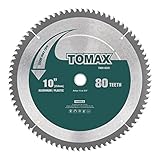
The best metal cutting blade for a table saw is a thin-kerf, carbide-tipped ferrous-metal blade only when the saw manufacturer approves that blade and the blade’s maximum RPM, diameter, arbor, guard, and work capacity all match; for regular steel cutting, a dedicated metal-cutting saw is usually the safer and more controllable choice.
Table saws are designed primarily for wood. Metal-cutting creates greater resistance, throws hot chips, and can grab workpieces differently from wood. Before buying, check the saw manual for permitted blade types. A blade marketed for a miter saw, chop saw, or handheld circular saw is not automatically suitable for a table saw.
As an Amazon Associate we earn from qualifying purchases at no extra cost to you.


Quick picks by cutting situation
| Situation | Best blade type | Useful starting specification | Why it fits |
|---|---|---|---|
| Occasional thin aluminum | Carbide-tipped nonferrous-metal blade | 10 in, 80–100 teeth, 5/8 in arbor, approximately 0.090–0.110 in kerf | Fine teeth reduce burrs and suit thin sheet, angle, and small extrusions |
| Occasional thin steel, only on an approved saw | Carbide-tipped ferrous-metal blade | 10 in, 60–80 teeth, 5/8 in arbor, approximately 0.090–0.125 in kerf | Designed for cooler, slower chip formation than a wood blade |
| Frequent steel tube or plate work | Dedicated metal-cutting circular saw or cold-cut saw | Blade and RPM matched by the tool manufacturer | Better guarding, clamping, chip control, and motor protection |
| Fast rough cuts in aluminum | Nonferrous-metal blade with fewer teeth | 10 in, 60–80 teeth, positive or neutral geometry as specified | Faster feed rate, while still controlling tooth engagement |
| Very thin sheet or trim | High-tooth-count carbide blade | 10 in, 80–100 teeth, thin kerf only if approved | More teeth support a smoother edge and reduce snagging |
Tooth count: finish, feed speed, and chip load
Tooth count is not a quality score. It determines how many teeth enter the metal during each revolution and how quickly the saw can clear chips.
- 60–80 teeth: a practical range for many 10-inch blades cutting aluminum, thin-wall steel tube, and light-gauge stock. It offers a balance between cutting speed and edge quality.
- 80–100 teeth: better for thin sheet, narrow profiles, and cleaner cuts, but usually slower. A high tooth count can clog if the feed rate is too slow or the material is thick.
- Fewer than 60 teeth: may cut faster in thicker nonferrous stock, but the cut is rougher and the risk of aggressive tooth engagement increases. Use this range only when the blade maker specifies it for the material.
For steel, look for a blade specifically labeled for ferrous metal, stainless steel, or structural steel as applicable. A wood blade’s alternate-top-bevel teeth can catch metal and are not an acceptable substitute. Metal blades commonly use a triple-chip grind or another geometry intended to spread the cutting load and reduce tooth shock.
Kerf: the overlooked fit and power specification
Kerf is the width of the cut, not simply the thickness of the blade plate. A full-kerf 10-inch blade commonly removes about 1/8 inch of material, while a thin-kerf blade may remove roughly 0.090 to 0.110 inch. The narrower cut can reduce motor load, which sounds helpful, but it is only suitable if the blade is stable at the saw’s speed and the riving knife or splitter matches the kerf.
Do not install a thin-kerf blade with a riving knife that is thicker than the cut. The workpiece can bind against the knife behind the blade. Conversely, a riving knife that is too thin may not keep the kerf open effectively. The knife should remain slightly thinner than the blade kerf while being thick enough to prevent the work from closing into the blade, according to the saw manufacturer’s specification.
Metal thickness and realistic table-saw limits
Blade packaging may list a maximum material thickness, but that number does not override the table saw’s limits. The saw’s fence, table size, motor, guard, arbor design, and ability to clamp short stock are equally important.
| Material example | Reasonable occasional target on an approved setup | Main concern |
|---|---|---|
| Aluminum sheet or flat bar | Approximately 1/16–1/4 in | Gumming, burrs, and workpiece movement |
| Aluminum extrusion | Approximately 1/16–1/8 in wall | Thin walls can vibrate or collapse into the blade |
| Mild-steel sheet | Approximately 18–14 gauge, only if the saw and blade are approved | Heat, sparks, kickback, and motor overload |
| Steel square tube | Light-wall tubing with secure clamping | Rolling stock and interrupted cuts increase tooth impact |
These are conservative planning ranges, not universal capacities. Thick plate, hardened steel, stainless steel, rebar, cast iron, and galvanized material deserve a dedicated metal-cutting machine or another process specified for that material. Galvanized coatings can also produce hazardous fumes when heated, so follow the coating manufacturer’s safety guidance and use suitable ventilation.
Arbor size, diameter, and RPM: the non-negotiable checks
Most 10-inch table saws use a 5/8-inch arbor, while some larger or specialized saws use 1-inch or metric arbors. The blade must fit the arbor exactly or with a manufacturer-approved reducing ring. Never enlarge an arbor hole, stack improvised washers, or use a blade whose mounting system is unclear.
Match the blade diameter to the saw. A 12-inch blade should not be fitted simply because its arbor hole matches a 10-inch saw. The larger radius can interfere with the guard, riving knife, throat plate, or elevation mechanism. Also compare maximum blade RPM with the saw’s no-load RPM. The blade’s rated speed must be at least as high as the tool’s maximum speed; a lower-rated blade is unsuitable even if its diameter and arbor fit.
Many metal-cutting blades are intended for slower cold-cut saws than ordinary woodworking table saws. That is one of the strongest reasons not to assume compatibility from the arbor alone.
Safety limits that matter before buying
- Guard compatibility: Confirm that the original guard can be reinstalled and fully covers the blade above and below the table where designed. If the blade’s body or tooth geometry prevents correct guarding, do not use it.
- Riving knife or splitter: Verify its thickness against the blade kerf. Metal work should not be an excuse to remove this protection.
- Blade brake and saw electronics: Some table saws detect blade characteristics or are calibrated for woodworking blades. Follow the manufacturer’s approved accessory list.
- Workholding: Long, narrow, round, or short metal pieces need a stable fixture or appropriate clamping method. Hands alone are not enough for stock that can rotate.
- Chip protection: Wear eye protection and hearing protection, and use clothing that does not leave loose material near the blade. Hot chips can travel farther than wood dust.
- Dust collection: Do not assume a wood dust collector is suitable for hot metal chips. Remove combustible dust before cutting and follow the saw and blade maker’s instructions.
How to set up an approved blade
- Disconnect power and inspect the blade for bent teeth, cracks, resin, or packed aluminum.
- Confirm diameter, arbor, kerf, tooth direction, and maximum RPM against the saw manual.
- Install the correct riving knife, guard, and throat plate. Check that the blade spins freely by hand before reconnecting power.
- Support the work close to the blade and fence. Clamp or fixture pieces that can roll, twist, or lift.
- Make a shallow test cut in scrap at a controlled feed rate. Stop if the motor labors, the blade squeals, the work vibrates, or the cut shows heavy rubbing.
- After cutting, wait for the blade to stop completely before clearing offcuts. Inspect teeth and clean chips only with power disconnected.
Ownership costs and what wears first
Metal blades usually cost more than general-purpose wood blades, commonly about $40–$150 depending on diameter, tooth count, coating, and carbide grade. A simple cost-per-use calculation helps: a $90 blade used for 150 clean cuts costs about $0.60 per cut before considering the stock and machine time. A cheaper blade that dulls after 35 cuts costs more than $1.70 per cut.
Teeth normally wear first, but aluminum can also build up on the tooth gullets and sides. Clean only with a product approved for the blade’s coating and carbide. Do not strike teeth with a screwdriver or file the carbide by hand. Store the blade flat, protect the teeth, and replace it if teeth are chipped, missing, or producing excessive heat and burrs.
Bottom line
For occasional aluminum, choose a carbide nonferrous-metal blade with the correct arbor, RPM, kerf, and a tooth count suited to the stock thickness. For steel, buy only a ferrous-metal blade explicitly approved for your exact table saw, and keep the work light and securely supported. If steel cutting is frequent, thick, or production-oriented, skip the search for a universal metal cutting blade for table saw and use a dedicated metal-cutting saw designed for the heat, chips, clamping, and slower cutting speeds involved.