Best Mortising Chisel Bits for Square Mortise-and-Tenon Joints (November 2026)
Find the best mortising chisel bits for clean square mortises in this guide: hollow-chisel sets and singles compared by size, shank, steel, and machine fit.
Fisch Mortise Bit Chisel Set, 4 Pieces — Precision pick: four Austrian-made hollow chisel bits in the core joinery sizes, built for clean walls and long edge life. View on Amazon
SaferCCTV 7-Piece Square Hole Drill Bit Set — Widest size range: seven sizes from 1/4 inch to 3/4 inch for shops that cut everything from small cabinet mortises to large bench joints. View on Amazon
Fisch Mortise Bit Chisel Set, 3/8 Inch — Best single size: the most-used mortise width for furniture work, in Austrian steel with a 5/8 inch shank. View on Amazon
SaferCCTV 4-Piece HSS Mortise Chisel Set — Value set: four high-speed steel bits in the standard sizes for a dedicated mortiser, at a friendly entry point for occasional use. View on Amazon
Fisch Mortise Bit Chisel Set, 4 Pieces — Precision pick: four Austrian-made hollow chisel bits in the core joinery sizes, built for clean walls and long edge life. View on Amazon
SaferCCTV 7-Piece Square Hole Drill Bit Set — Widest size range: seven sizes from 1/4 inch to 3/4 inch for shops that cut everything from small cabinet mortises to large bench joints. View on Amazon
Fisch Mortise Bit Chisel Set, 3/8 Inch — Best single size: the most-used mortise width for furniture work, in Austrian steel with a 5/8 inch shank. View on Amazon
As an Amazon Associate I earn from qualifying purchases. This post may contain affiliate links at no extra cost to you.
As an Amazon Associate I earn from qualifying purchases.
The Short Answer
The best mortising chisel bits for most woodworkers are a four-piece hollow-chisel set covering the common joinery sizes of 1/4 inch, 5/16 inch, 3/8 inch, and 1/2 inch. That range handles the tenons on cabinet doors, table aprons, chair frames, and workbench stretchers without buying a separate bit for every joint. If you cut mortises every week, step up to a premium Austrian or American-made set with harder steel and a cleaner factory grind. If you only need one size for a single project, a single chisel-and-bit in 3/8 inch or 1/2 inch is the sensible buy. Before ordering anything, measure your machine: the chisel shank, the overall length of the bit, and the collar your mortiser or drill-press attachment accepts decide whether a bit fits at all.
Our Top Picks
Top Pick
Our Top Picks
Fisch Mortise Bit Chisel Set, 4 Pieces — Precision pick: four Austrian-made hollow chisel bits in the core joinery sizes, built for clean walls and long edge life. View on Amazon
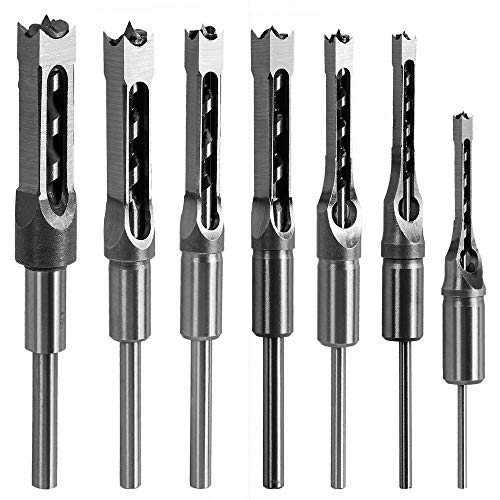
SaferCCTV 7-Piece Square Hole Drill Bit Set — Widest size range: seven sizes from 1/4 inch to 3/4 inch for shops that cut everything from small cabinet mortises to large bench joints. View on Amazon
Fisch Mortise Bit Chisel Set, 3/8 Inch — Best single size: the most-used mortise width for furniture work, in Austrian steel with a 5/8 inch shank. View on Amazon
SaferCCTV 4-Piece HSS Mortise Chisel Set — Value set: four high-speed steel bits in the standard sizes for a dedicated mortiser, at a friendly entry point for occasional use. View on Amazon
A mortising chisel bit is a two-part tool: a hollow square chisel that stays still and an auger bit that spins inside it. The auger bores the round hole and clears waste while the four sharp corners of the chisel shear the walls square. That system needs a dedicated benchtop mortiser or a drill-press mortising attachment to hold the chisel fixed; a handheld drill cannot do that, so these bits do not belong in one.
Fit comes down to three measurements. First, the chisel shank diameter: 5/8 inch is the common shank for full-size mortiser bits, while smaller machines and some drill-press attachments use shorter, smaller-shank bits. Second, the overall length: bits come in short and long patterns, and a bit that is too short will not reach the chuck while seated in the collar, while one that is too long leaves the auger unsupported. Third, the collar or bushing size on your attachment. Check your machine manual for all three numbers, then match the listing specs against them. When a listing does not state a measurement, confirm on the listing before ordering.
Pick the sizes you actually cut
For furniture and cabinet work, 1/4 inch suits small drawer and door joinery, 3/8 inch is the workhorse for table aprons and chair frames, and 1/2 inch covers workbench and bed joinery. A four-piece set in 1/4, 5/16, 3/8, and 1/2 inch covers nearly every tenon a home shop cuts. Seven-piece sets add 5/8, 9/16, and 3/4 inch for large structural joints, which is useful if you build benches, gates, and outdoor furniture, and unnecessary if you do not. A single bit makes sense when one joint size dominates your work: buy the size that matches your most common tenon thickness.
Steel and edge quality
Hollow chisel bits are sold in high-speed steel and in hardened carbon steel. High-speed steel holds an edge longer in hardwoods and tolerates heat better, which matters when you plunge many mortises in oak or maple. Carbon steel takes a very keen edge and sharpens easily, which suits woodworkers who hone their tooling regularly. Either steel can cut clean mortises; the difference shows up in how often the edge needs attention. Factory sharpness varies widely, especially on value sets, so plan on honing the inside bevel of the chisel and the auger before first use. A conical slip stone fits the inside corners of the square chisel, and a flat stone or fine file dresses the auger.
Chip clearance and auger projection
The auger must project slightly ahead of the chisel rim, roughly one sixteenth of an inch, so the bit bores before the chisel shears. Too little projection and the chisel rubs and burns; too much and the auger wanders before the chisel engages. Set the gap with the spacers or collars your machine provides, and check it every time you change sizes. Chip ejection matters just as much: a bit with a clear flute path and a chisel with open slots clears waste instead of packing it, and packed waste is what causes smoking, burning, and torn mortise walls. Back the bit out of deep mortises every quarter inch or so to let chips escape.
What about sharpening and upkeep
Hone the chisel faces on a flat diamond plate to remove burrs, work the inside bevel with a conical stone, and keep the auger spurs sharp so the bit bores instead of tearing. Wipe the bits with a light coat of protective fluid before storage, especially carbon steel, which rusts faster than high-speed steel. Keep each chisel with its matching auger, since the auger diameter and the chisel bore are matched at the factory.
The Picks in Detail
Fisch Mortise Bit Chisel Set, 4 Pieces
Fisch makes its mortising bits in Austria, and this four-piece set is the precision option for woodworkers who want clean mortise walls with minimal cleanup. The set covers 1/4, 5/16, 3/8, and 1/2 inch with an overall length of 7-1/4 inches, and the Austrian steel is ground to a sharp edge that holds up well in hardwoods. The bits are re-sharpenable, which keeps the set useful for years rather than a single project run. Confirm the shank size on the listing against your machine before ordering, since Fisch bits are built to full-size mortiser dimensions.
Pros:
Austrian steel with a clean factory grind for crisp mortise walls
Four core sizes cover nearly all furniture joinery
Re-sharpenable, so the set stays in service for years
Consistent sizing across the set for predictable tenon fits
Cons:
Needs a full-size mortiser or compatible attachment; check shank and length fit first
A four-piece set is more than a one-project buyer needs
Requires honing before first use for the cleanest cuts
This seven-piece set is the range pick: 1/4, 5/16, 3/8, 1/2, 5/8, 9/16, and 3/4 inch in one box, so there is a bit for every tenon from a small cabinet door to a heavy workbench leg. The listing describes the bits as steel with 56HRC hardness, and the set is built for mortising machines and drill-press attachments. The broad range is the real argument here: instead of ordering a single size every time a new project calls for a wider tenon, the size is already in the drawer. Confirm the shank size and overall length on the listing, since the set is sold for several machine types.
If you buy one single mortising bit, 3/8 inch is the size most furniture makers reach for first: it matches the tenons on table aprons, chair rails, and cabinet frames. This Fisch single pairs a 3/8 inch hollow chisel with its auger in Austrian steel, with a 5/8 inch shank and an 8-1/2 inch overall length. The longer overall length suits full-size mortisers, and the Fisch grind is known for slicing fibers cleanly rather than tearing them, which shows up as crisp mortise corners in woods prone to tear-out.
This four-piece high-speed steel set from SaferCCTV covers the standard 1/4, 5/16, 3/8, and 1/2 inch sizes for a dedicated mortising machine, and it is the value entry point in this guide. High-speed steel holds its edge well in hardwoods, and the set is part number ZXL3193-1, from the same SaferCCTV line as the seven-piece set above. It is the right choice for a hobbyist setting up a first mortiser or as a backup set that keeps the main kit complete when one size is out for sharpening. Expect to hone the edges before first use, as with most value sets, and confirm shank size and overall length on the listing against your machine.
Furniture makers cutting mortises weekly: the Fisch four-piece set. The Austrian steel, clean grind, and re-sharpenable edges pay off across hundreds of joints.
Shops that build benches, gates, and large casework: the SaferCCTV seven-piece set. The range up to 3/4 inch means the right size is on hand for heavy tenons.
Woodworkers who live at one tenon size: the Fisch 3/8 inch single. Buy the size you cut most and put the rest of the budget toward sharpening stones.
First mortiser owners and occasional users: the SaferCCTV four-piece HSS set. It covers the standard sizes and leaves room to upgrade the sizes you wear out first.
Anyone replacing a single worn bit: match the diameter, shank, and overall length of the bit you are replacing, and buy the single rather than a set.
Common Mistakes
Buying before measuring the machine. The most common error is ordering a bit with the wrong shank or the wrong overall length. Short bits fit drill-press attachments and compact mortisers; long bits fit full-size machines. A bit that cannot seat in the collar and reach the chuck at the same time is unusable, whatever its quality.
Using a handheld drill. Hollow chisel bits need the square chisel held still while the auger spins. A handheld drill cannot do that, and forcing the issue produces torn holes and a real risk of the bit grabbing. Use a mortiser or a drill-press attachment with a proper collar.
Skipping the auger gap. The auger tip should project about one sixteenth of an inch past the chisel rim. Set it with spacers every time you change a bit. A flush auger rubs, burns, and packs chips; an auger set too far forward wanders off the layout line.
Plunging full depth in one pass. Deep mortises cut cleaner in a series of shallow plunges, backing out between passes to clear chips. One hard plunge packs waste, overheats the steel, and leaves a rough, oversized hole.
Forgetting to sharpen. Mortising bits dull like any edge tool, and a dull chisel crushes fibers instead of shearing them. Hone the inside bevel with a conical stone and lap the outside faces on a flat diamond plate before the cut quality drops, not after. Keep each chisel with its matching auger: swapping augers between chisels of the same nominal size from different makers often leaves a loose fit, and a loose auger chatters and cuts oversize.
FAQ
What is a mortising chisel bit?
A mortising chisel bit, also called a hollow chisel mortiser bit or square hole drill bit, is a two-part tool: a hollow square chisel on the outside and an auger bit spinning inside it. The auger bores the bulk of the waste while the sharp corners of the stationary chisel shear the hole square in a single plunge.
Can I use mortising chisel bits in a normal drill press?
Yes, with a mortising attachment. The attachment clamps to the drill-press quill and holds the square chisel still while the chuck drives the auger. Without the attachment, the chisel spins with the chuck and the bit cannot cut a square hole. Check that the attachment collar matches the chisel shank and that the bit length suits your press.
How do I sharpen a mortising chisel bit?
Hone the inside bevel of the square chisel with a conical slip stone, working from the inside of each corner, then lap the four outside faces on a flat diamond plate to remove the burr. Sharpen the auger with a small flat stone or fine file, following the original spur and cutting edge.
Why is my mortising bit smoking or burning the wood?
Burning usually comes from a dull edge, a clogged chip path, or the wrong auger gap. Check that the auger projects about one sixteenth of an inch past the chisel rim, back the bit out often to clear chips, slow the feed rate, and hone the edges.
Are mortising chisel bits the same as hand mortise chisels?
No. A hand mortise chisel is a solid chisel struck with a mallet to chop a mortise by hand, while a mortising chisel bit is a hollow square sleeve with a spinning auger inside, made for a mortising machine or a drill-press attachment. The two tools cut the same joint by different methods, and their bits and chisels are not interchangeable.
Conclusion
The best mortising chisel bits are the ones that fit your machine, match the tenon sizes you cut most, and hold an edge through real shop work. A four-piece set in the standard sizes is the right starting point for most woodworkers, with the Fisch set leading on precision and the SaferCCTV four-piece set leading on value. Add the seven-piece set when your work ranges up to large structural joints, or buy the Fisch 3/8 inch single when one size does nearly all of your joinery. Measure the shank and overall length against your machine first, set the auger gap before every session, and keep the edges honed.
J
JD's Woodworks Editorial Team
We compare specs, warranty terms, long-term owner feedback and street pricing before anything earns a spot. Rankings are never paid.
Affiliate disclosure. As an Amazon Associate we earn from qualifying purchases at no extra cost to you. Prices accurate as of the date shown.
Best Mortising Chisel Bits for Square Mortise-and-Tenon Joints…Check price on Amazon
Miter saw vs table saw: compare crosscuts, rip cuts, accuracy, space, and value to choose the right saw for your shop and your first woodworking projects.
Compare five solar portable generators for shops, campsites, and outages, covering battery size, output, solar charging, outlets, and what to check first.
The best portable CNC machines for small shops and shared spaces, compared by footprint, weight, work area, and setup. Compact benchtop picks for wood, acrylic, and soft metal.
Find the best Penn Industries dust collector on Amazon: the PSI Woodworking DC3XX blower and the DC725 tabletop unit, compared on airflow, pressure, and shop fit.
Compare five large stationary horizontal metal band saws for fabrication shops on cutting capacity, motor, power supply, blade speed, and mitering before buying.
Find the best drill press base for your shop. Compare rolling stands and mobile bases by capacity, footprint, casters, locking, and setup before you buy.
Find the best dewalt planer dw734 blades for your 12-1/2-inch thickness planer. Compare OEM and aftermarket 3-knife sets, steel types, and fit before you buy.



 SaferCCTV 4-Piece HSS Mortise Chisel Set