What's inside
As an Amazon Associate I earn from qualifying purchases. This post may contain affiliate links at no extra cost to you.
Flammable finishes—oil-based varnish, lacquer, shellac, stains, thinners and some adhesives—need more than a tidy shelf. Vapors can travel to an ignition source, and oil-soaked rags can heat up and ignite without a spark. Good storage limits both hazards while keeping the materials usable.
As an Amazon Associate we earn from qualifying purchases at no extra cost to you.
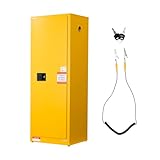
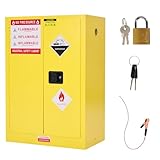

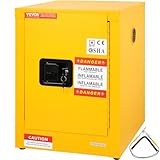
Identify the hazard before choosing storage
Read the product label and Safety Data Sheet (SDS), not just the color of the can. Look for “flammable liquid,” “combustible liquid,” flash point information and storage instructions. Lacquer thinner and many lacquer products produce especially fast-moving vapors. Water-based finishes are usually a lower fire risk, but they still need protection from freezing, contamination and excessive heat.
Keep finishes in their original, labeled containers whenever possible. If you must transfer a product, use a compatible, approved container and copy the product name and hazard information onto it. Never put solvent in a drink bottle, food jar or an unmarked squeeze bottle. A mistaken container is a poisoning risk as well as a fire risk.
Choose a cool, low-traffic storage location
Store flammable finishes in a dedicated area away from heaters, furnaces, boilers, battery chargers, welding, grinding and other spark-producing work. Do not put cans directly beside a dust collector motor or underneath a bench where a falling tool can puncture them. Avoid direct sun and locations that regularly exceed about 100°F. Heat raises vapor pressure and can damage seals.
A cool, dry cabinet along an exterior wall is often a practical workshop choice. It should not block an exit, electrical panel, fire extinguisher or ventilation opening. Keep containers upright, with lids tightly closed, and leave enough room to see labels. Store heavier cans on low shelves to reduce injury and spills.
Do not treat a normal wood cabinet as fire protection. A metal utility cabinet can contain clutter, but it is not automatically a listed flammable-storage cabinet. If you keep more than a small working supply, buy a properly rated flammable liquid storage cabinet and check local fire-code requirements. A cabinet is not permission to exceed local quantity limits.
Compare common storage options
| Storage method | Best use | Main advantage | Important limitation |
|---|---|---|---|
| Approved flammable-storage cabinet | Regular stock of solvent-based finishes | Designed for containment and safer organization | Costs more and must still be kept away from ignition sources |
| Metal utility cabinet | Small quantities and nonflammable supplies | Inexpensive and durable | Not necessarily fire-rated or code compliant |
| Open shelf | Short-term staging only | Easy access and low cost | Offers no spill, vapor or fire protection |
| Plastic bin | Water-based finishes and accessories | Good for organization and leak containment | Many plastics are unsuitable for solvents and can melt or degrade |
The cheaper option is fine when you have one or two tightly sealed cans and your local rules allow that quantity. It is not a good substitute for a rated cabinet when the collection grows, containers are frequently opened, or other people use the shop. Never store solvent cans in an unventilated enclosed box if the manufacturer or local authority prohibits that arrangement; a cabinet’s design and labeling matter.
Control quantity and container condition
Buy only what you expect to use within a reasonable period. Old finishes take up space, lose performance and increase the number of containers that can leak. Mark the purchase or opening date on each can. Dispose of swollen, badly rusted, leaking or crusted containers through your local household hazardous-waste program. Do not pour solvent or finish down a drain, onto soil or into a dust-collection barrel.
Keep a small “active work” quantity at the bench and return the main container to storage when the task is finished. Wipe the rim before replacing the lid, then close it firmly without over-tightening. A dirty rim prevents a seal and lets vapors escape. Use a tray or shallow secondary container under open cans during work, especially on a wooden bench.
For dispensing, a metal safety can or approved solvent container is a better choice than an improvised bottle. A solvent dispensing safety can can reduce tipping and evaporation, but it does not make a product safe to leave beside a heat source.
Treat finishing rags as a separate fire hazard
Oil-based stain, boiled linseed oil, Danish oil and some wiping varnishes can cause rags to self-heat as they oxidize. Do not pile them in a trash can, toolbox or cardboard box. During use, lay each rag flat outdoors on a noncombustible surface until fully dry, or place it immediately in a listed, self-closing oily-waste can.
A proper self-closing oily-waste can should have a tight-fitting lid and a raised bottom that limits heat transfer. Do not fill it above the marked level. Empty it according to the manufacturer’s instructions—typically daily in active commercial settings—and use a hazardous-waste service or other approved disposal method. Never mix solvent-soaked rags with sawdust.
Rags wet with lacquer thinner usually evaporate rather than self-heat in the same way, but they remain flammable waste. Keep them in a closed, compatible waste container until disposal, and follow the SDS.
Control vapors while using finishes
Storage cannot compensate for poor ventilation. Use finishing products with the doors or windows arranged to move vapors outdoors, and use an exhaust fan rated for flammable vapors when the product and local code require it. A standard box fan can have an exposed motor or switch and may be an ignition source. Keep the exhaust path away from neighbors, furnace intakes and open flames.
Do not rely on a dust collector to remove solvent vapor. Many dust collectors are not designed for flammable atmospheres, and collecting solvent-soaked sanding dust can create a second hazard. Separate finishing from dusty operations when possible, turn off ignition sources, and keep a suitable fire extinguisher accessible. For exact cabinet capacities, ventilation rules and allowable quantities, ask the local fire marshal; those requirements vary by jurisdiction and occupancy.