
What's inside
As an Amazon Associate I earn from qualifying purchases. This post may contain affiliate links at no extra cost to you.
The best table saw with a safety stop for most home workshops is the SawStop Jobsite Saw Pro, while the SawStop Professional Cabinet Saw is the stronger choice for frequent furniture work; European buyers should also consider the Festool TKS 80.
As an Amazon Associate we earn from qualifying purchases at no extra cost to you.

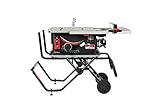
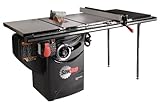

Quick comparison: which safety-stop table saw fits?
| Model or type | Safety system | Stopping method | Rip capacity | Approx. weight | Typical price range in 2026 |
|---|---|---|---|---|---|
| SawStop Jobsite Saw Pro | Active Injury Mitigation flesh detection | Aluminum brake contacts the blade; blade drops below the table | 25 1/2 in. right of blade | About 113 lb. | $1,000–$1,400 |
| SawStop Contractor Saw | Active Injury Mitigation flesh detection | Brake fires and blade retracts below the table | Up to about 36 in., depending on fence configuration | About 260 lb. with stand and extension | $1,700–$2,300 |
| SawStop Professional Cabinet Saw | Active Injury Mitigation flesh detection | Brake stops the blade and arbor drops | 36 in. or 52 in. configurations | About 515–685 lb., depending on setup | $3,000–$5,000 |
| Festool TKS 80 | SawStop-developed flesh-detection technology | Blade stops and retracts below the table | About 31 1/2 in. | About 154 lb. | €3,000–€4,000 where sold |
Capacity, weight, and included accessories vary by package and market, so treat the figures as buying-guide numbers rather than universal specifications. The central distinction is that these machines detect electrical contact with skin and trigger a physical brake. A magnetic switch, emergency paddle, or motor overload protector is a useful safety feature, but it is not a flesh-detection safety stop.
How the main safety systems differ
SawStop Active Injury Mitigation
SawStop’s system sends a small electrical signal through the blade. When conductive skin touches it, an aluminum brake springs into the blade’s teeth, stopping rotation in roughly a few milliseconds. The arbor then drops under the table. This is the most widely available table saw safety system in North America and is offered across compact, jobsite, contractor, and cabinet-saw categories.
The event is deliberately expensive: the brake cartridge must be replaced, and the blade is normally damaged by the brake. The arbor and surrounding parts should also be inspected before the saw returns to service. The benefit is a very fast stop with a blade that generally moves only a short distance before disappearing below the tabletop.
Festool TKS 80
The TKS 80 uses SawStop-developed technology but is designed around Festool’s European product ecosystem. Its system detects contact, stops the blade, and retracts it. It is a substantial precision machine rather than a lightweight portable saw, and availability, voltage, plug type, and service arrangements vary significantly outside Europe.
It makes the most sense when dust extraction, track-compatible workflows, and Festool service support matter as much as maximum rip width. It is not automatically the best value for a small shop buying a first table saw.
Electronic and mechanical “safety stops”
Many ordinary table saws have an oversized emergency paddle, magnetic no-volt switch, soft start, or electronic brake. These controls stop the motor when the operator presses the switch, but they do not recognize accidental skin contact. A saw advertised as having a “safety stop” may therefore be describing an emergency switch rather than a flesh-detection safety system. Confirm the exact technology before comparing prices.
Head-to-head buying decisions
For a small shop or occasional DIY work
Choose a compact or jobsite SawStop if storage space and portability are more important than wide sheet-goods capacity. The Jobsite Saw Pro’s roughly 25 1/2-inch rip capacity handles shelving, trim, small cabinets, and most solid-wood projects. Its rolling design is easier to store than a cabinet saw, but its lighter table and shorter fence demand more care when supporting large panels.
A compact saw is also easier to overload. Use a proper outfeed table or roller support, keep the fence parallel to the blade, and do not expect a portable machine to behave like a 500-pound cabinet saw during a full-width plywood rip.
For a serious hobbyist making cabinets
A contractor or hybrid-style safety-stop saw is the compromise choice. It offers more stable support, a larger rip fence, and better dust containment without requiring the floor space and electrical planning of a full cabinet saw. Select at least 30 inches of usable right-side rip capacity if you regularly break down 24-inch cabinet panels and want room for the fence, workpiece, and hand clearance.
For daily production and maximum cut accuracy
A SawStop Professional Cabinet Saw is the strongest choice when the machine will run frequently. Its heavier trunnion, cast-iron table, enclosed base, and longer fence resist movement and vibration. The 36-inch version is suitable for many furniture shops; the 52-inch version is more practical when full plywood sheets are routinely ripped in-house.
The cabinet saw costs more to buy and install, but the ownership advantages are real: better dust collection, less fence drift, smoother height adjustment, and less need to improvise support. It still requires accurate setup. A heavy saw cannot compensate for a fence that is out of parallel or a dull blade.
Cut accuracy, rip capacity, and setup details
Safety technology does not determine cut quality by itself. Before buying, check whether the fence locks firmly at both ends, whether the rails remain rigid at maximum extension, and whether the blade can be aligned to the miter slot. A useful acceptance check is to measure the gap between the fence and a straight blade tooth at the front and rear of the blade. The readings should agree closely; a slight intentional opening at the rear is preferable to a fence that pinches the work against the blade.
For repeated furniture cuts, prioritize a flat cast-iron or well-supported composite table, a stable fence, and a reliable 90-degree stop. For sheet goods, prioritize rip capacity and outfeed support. A 52-inch fence is not useful if the shop cannot safely support the panel beyond the table.
Blade changes after a safety stop
- Disconnect power and wait for the blade to stop completely. Do not reach into the guard area until the arbor is stationary.
- Remove the throat plate and raise the arbor enough to access the blade nut.
- Use the manufacturer’s arbor-lock procedure or supplied wrenches. Do not strike the wrench or force the arbor against the brake mechanism.
- Install the blade with the teeth facing the correct direction, seat it fully against the flange, and tighten the nut securely without excessive force.
- Reinstall the throat plate, riving knife, guard, and dust hose. Confirm that the blade spins freely by hand before reconnecting power.
- Check alignment and make a test cut in scrap. If the safety brake has fired, install the correct replacement cartridge before operating the saw.
On a SawStop machine, a cartridge replacement is normally needed after a flesh-detection event. A wet or green piece of wood can sometimes trigger the system because it conducts electricity. The manufacturer provides a bypass mode for cutting conductive material, but using that mode removes the flesh-detection protection and should not be treated as normal operation.
Ongoing consumable cost: a realistic calculation
Plan for three recurring costs: brake cartridges, blades, and dust-collection filters or bags. A replacement cartridge commonly costs about $80–$120, while a general-purpose 10-inch blade may cost $40–$120 depending on tooth count and carbide quality.
For example, suppose an occasional user makes 60 substantial cutting sessions per year, replaces one blade every 30 sessions, and budgets one cartridge over five years. Using a $70 blade and a $100 cartridge:
- Two blades per year: 2 × $70 = $140
- One cartridge every five years: $100 ÷ 5 = $20 per year
- Estimated blade-and-cartridge reserve: about $160 per year
That calculation is not a prediction of accidental activation. It is a reserve for ownership planning. Normal blade wear, resin buildup, misalignment, and poor support are much more common expenses than a fired safety brake. Clean blades periodically, use the correct tooth geometry, and avoid forcing stock through a dull blade.
Decision matrix
| Your situation | Best fit | Why |
|---|---|---|
| Limited space, occasional use, needs portability | Jobsite safety-stop saw | Small footprint and adequate capacity for trim, shelving, and small panels |
| Beginner who values injury mitigation but has a limited budget | Used or entry-level SawStop model in good condition | Access to flesh detection without paying cabinet-saw prices; inspect cartridge and alignment |
| Weekly cabinet and furniture projects | Contractor or hybrid safety-stop saw | More stable support and fence capacity without full cabinet-saw bulk |
| Daily shop use and large sheet goods | Professional cabinet safety-stop saw | Best stability, dust control, fence options, and 36- or 52-inch rip capacity |
| European shop using an integrated dust-extraction system | Festool TKS 80 | Precision-oriented ecosystem and flesh-detection protection, subject to local service availability |
What to check before purchase
Confirm the voltage, included stand, fence length, throat-plate options, riving-knife compatibility, replacement-cartridge availability, and local service support. Ask whether the used machine has ever activated its safety stop and whether the arbor, brake, and cartridge housing were inspected afterward.
The safest table saw is still operated with the guard and riving knife installed, suitable hearing and eye protection, controlled feed pressure, and an outfeed arrangement that prevents the workpiece from tipping. A table saw with stop safety reduces the consequences of one specific type of contact; it does not prevent kickback, falling panels, entanglement, or every other workshop hazard.