What's inside
As an Amazon Associate I earn from qualifying purchases. This post may contain affiliate links at no extra cost to you.
A wall-mounted dust collector can clear valuable floor space, but it only works well when its airflow matches the tools and ductwork attached to it. A small collector with a long, narrow hose may disappoint even if its advertised airflow looks impressive. For a compact shop, prioritize the filter, the size of the machine’s inlet, and a short, practical route to the tools you use most.
As an Amazon Associate we earn from qualifying purchases at no extra cost to you.

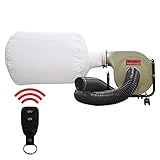


Choose by the tools you need to connect
Routers, sanders, and benchtop machines often have small dust ports and produce less waste than a planer or table saw. A single-stage collector with a roughly 1-horsepower motor and a 4-inch inlet can be adequate for one small machine at a time, particularly when the hose run is short. It is a reasonable lower-cost choice for a hobby shop with occasional use.
Planers, jointers, and larger saws produce more chips and need more air volume. For those tools, look at a larger collector—often around 1½ to 2 horsepower—with a 5- or 6-inch main connection, then reduce to the tool port near the machine. A small collector may keep up with a sander but clog or leave chips behind at a planer. Check the tool maker’s airflow recommendations if available; motor horsepower alone does not tell you how much air reaches the tool.
Compare the main options
| Setup | Good fit | Main trade-off |
|---|---|---|
| Compact single-stage, 4-inch inlet | One benchtop tool at a time; short hose runs | Limited capacity for high-chip tools and long duct runs |
| Larger single-stage, 5- or 6-inch inlet | Small shop with a planer, jointer, or saw | Takes more wall space and may be louder; still usually serves one tool well at a time |
| Collector with a pleated cartridge filter | Frequent use where fine-dust filtration matters | Costs more; filter needs cleaning and replacement eventually |
| Shop vacuum with a separator | Sanders, routers, and small portable tools | Not a substitute for high-volume chip collection |
For a small shop focused on light tools, compare compact wall-mount dust collectors. If your work includes machines that make heavy chips, compare larger-inlet wall-mounted collectors and verify the manufacturer’s airflow and filter specifications before buying.
Don’t overlook the filter and collection bag
Many basic collectors use a fabric bag that catches chips and larger dust but allows more fine particles through than a well-sealed pleated cartridge. If you sand often or spend long hours in the shop, a cartridge filter is worth considering. Check the stated filtration rating and whether the filter is sold separately; ratings are useful for comparison, but poor seals or a dusty bag change real-world performance.
Collection capacity matters too. A small bag fills quickly when planing, and an overfilled bag can restrict airflow. Make sure you can remove and empty the bag without moving the machine or striking nearby tools. Keep spare bags available if changing them is a hassle that might lead you to keep working with a full collector.
Mount it securely and keep the duct run simple
A loaded collector is heavier than it looks: the machine, filter, and a full bag all add weight. Fasten it to wall studs or a properly installed structural backing board, using the mounting hardware and clearances specified by the manufacturer. Do not rely on drywall anchors. Before drilling, check for wiring and plumbing, and leave room to open the filter housing and change the bag.
Put the inlet near the machines it serves. A short, smooth 4-inch hose is often better than a long route with several tight bends. Corrugated flex hose is convenient but adds resistance, so use as little as practical; use smooth duct for fixed sections where it makes sense. Abrupt reductions, leaky joints, and unnecessary branches all cut airflow. Close blast gates on tools you are not using, and expect a modest collector to work best with one gate open at a time.
Treat dust as a health and fire concern
Visible chips are not the whole problem: fine wood dust can remain airborne and is easy to breathe. A collector is not a guarantee of clean air, especially with an open fabric bag or a poorly fitted duct. Use a properly rated respirator when cutting or sanding, and consider a separate ambient air cleaner for fine dust that escapes the tool hood. Keep the shop ventilated without directing dust into living areas.
Wood dust is combustible. Empty the bag regularly, keep it away from heaters and ignition sources, and follow the collector’s instructions about grounding and electrical connections. Do not assume a plastic hose is safe because a wire is wrapped around it; grounding practices vary by system, so use compatible components and follow the manufacturer’s guidance.
A practical buying checklist
Measure the wall area, including the space needed to remove the bag and service the filter. Confirm the inlet diameter, outlet arrangement, filter type, and replacement-part availability. Check the circuit requirements and noise level if the shop shares a wall with living space. If you only collect from a sander or router, a shop vacuum and separator may be cheaper and easier to store; look at shop-vacuum dust separator setups instead of buying more collector than the work requires.
Choose the smallest collector that meets the needs of your highest-demand tool with a realistic hose layout—not the smallest one that fits the wall. If a planer is in the plan, size for it now. If the shop is limited to portable tools, spend the savings on a better filter, sound control, or a respirator rather than paying for unused capacity.