
What's inside
As an Amazon Associate I earn from qualifying purchases. This post may contain affiliate links at no extra cost to you.
Jet 14 Bandsaw: Which Model Fits Your Shop?
Jet’s 14-inch bandsaw lineup is one of the most complete mid-size ranges in woodworking, spanning from the budget-friendly JWBS-14CS open-stand model to the JWBS-14DXPRO with its tall resaw fence and 1.25 HP motor — so the right choice depends almost entirely on whether you plan to resaw wide boards or mostly cut curves and tenons.
The 14 Jet Bandsaw Lineup at a Glance
Jet has offered several 14-inch bandsaws over the years, and a few remain common on the new and used market. The current lineup is built around a welded steel frame rather than the older cast-iron design, which allows a taller resaw capacity without a riser block.
As an Amazon Associate we earn from qualifying purchases at no extra cost to you.


| Model | Motor | Max Resaw Height | Throat (width of cut) | Stand | Dust Port | Typical Street Price Range |
|---|---|---|---|---|---|---|
| JWBS-14CS | 1 HP, 115V | 6″ | 13.5″ | Open stand | 4″ | $500–$650 |
| JWBS-14OS | 1 HP, 115V | 6″ | 13.5″ | Open stand | 4″ | $550–$700 |
| JWBS-14SFX | 1.75 HP, 115/230V | 12″ | 13.5″ | Enclosed steel cabinet | 4″ | $1,000–$1,300 |
| JWBS-14DXPRO | 1.25 HP, 115/230V | 12″ | 13.5″ | Enclosed steel cabinet | 4″ | $1,200–$1,500 |
Prices fluctuate with retailer promotions; treat these as general market ranges for 2026.
Resaw Capacity: The Biggest Divider
The single most important spec on any Jet 14 inch bandsaw is resaw height. The CS and OS models top out at 6 inches — fine for bookmatching smaller stock, cutting veneer off narrower boards, and all general curve work. The SFX and DXPRO cut the full 12 inches, which covers most furniture-scale resawing without stepping up to an 18-inch machine.
If your work involves slicing your own veneer, resawing 8–10 inch boards, or cutting thick turning blanks, the extra capacity isn’t a luxury — it’s the difference between one pass and two. If you mostly cut joinery, curves, and bandsawn boxes, a 6-inch capacity machine saves you $500 or more with no practical loss.
Motor Power: Where It Actually Matters
All four models run on standard shop power, but power delivery differs. The 1 HP motors on the CS and OS are adequate for hardwoods up to about 4 inches thick with a sharp, properly tensioned blade. They will bog in a 6-inch resaw of hard maple, especially with a dull blade.
The 1.75 HP SFX is the strongest of the group and noticeably more confident through full-height resaws. The DXPRO’s 1.25 HP is a reasonable middle ground — its resaw capability comes more from frame design and fence quality than raw power. The SFX and DXPRO can also be rewired for 230V, which is worth doing if you run other 230V tools and want less amp draw on a shared circuit.
Blade Tracking and Guides
Jet equips these saws with bearing guide systems. The DXPRO includes tool-less guide adjustment, which speeds up blade changes meaningfully — on older-style setups, swapping blades and re-setting guides is a 15–20 minute job that discourages you from using the right blade for each task.
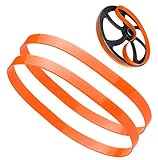
A practical note on the 14 inch Jet bandsaw platform: it uses roughly 111–112 inch blades depending on model (check your manual). A common mistake is leaving the blade under full tension between sessions. Jet’s frame designs include a quick-release tension lever on current models — use it. Keeping a blade tensioned for weeks stretches it and fatigues the tires, which are rubberized and do wear out over years of use.
Blade suggestions by task
- Resawing: 1/2″ or 3/4″ hook-tooth blade, 3 TPI
- Curves and general work: 1/4″, 6 TPI skip-tooth
- Tight scroll work: 1/8″ or 3/16″ blade
Buying a $30–$40 quality blade and learning to set the guides properly improves cut quality more than any single hardware upgrade on these saws.
Dust Collection
All models ship with a 4-inch dust port below the table. That port handles most dust generated at the table level, but bandsaws inherently throw fine dust downward past the lower guides, and some will always escape. Connecting to a dust collector (not a shop vac — the airflow demands are too high for effective collection) gets you maybe 80–90% capture. Adding an aftermarket port near the lower wheel is a popular upgrade on all Jet 14 band saw variants.
Setup Difficulty
None of these saws is plug-and-play, but the enclosed-stand models arrive more nearly aligned. Expect the following for any model:
- CS/OS: Assemble stand, mount saw, align wheels, set guides, tension and track blade, fence alignment. Roughly 2–3 hours for a first-time setup.
- SFX/DXPRO: Heavier cabinets come mostly assembled; main work is wheel coplanarity check, guide setting, and fence calibration. Roughly 1.5–2 hours.
The step beginners most often skip is checking that the wheels are coplanar — if they aren’t, the blade will drift off track no matter how you adjust the tilt, and people chase this problem for months.
Decision Matrix: Pick by Situation
| Your situation | Recommended model | Why |
|---|---|---|
| Hobbyist, weekend use, curves and joinery | JWBS-14CS | Lowest cost; 6″ capacity covers typical hobby work |
| Serious hobbyist wanting resaw capability under ~$1,300 | JWBS-14SFX | Strongest motor in the lineup + 12″ resaw |
| Frequent blade changes, production-ish workflow | JWBS-14DXPRO | Tool-less guides save real time across dozens of swaps |
| Tight budget, shopping used | Used CS/OS | Simple open-stand design; easy to inspect and refurbish |
| Resawing over 12″ regularly | None — look at 18″ class | A 14″ frame is the wrong tool; don’t fight it |
Ownership Realities
Beyond the spec sheet, a few things show up over years of ownership:
- Tires wear first. Rubber wheel tires develop grooves and cracks; replacements are inexpensive and a 1-hour swap.
- The stock miter gauge is basic. Most owners upgrade or use a shop-made jig.
- Guide bearings are consumables. Bearings should spin freely and be replaced when gritty — a cheap maintenance item that dramatically affects cut quality when neglected.
- Table needs waxing. A coat of paste wax every few weeks prevents rust and lets workpieces glide.
- Drift is a blade issue, not a saw defect. Before blaming the fence, try a different blade — uneven tooth set causes most drift complaints.
FAQ
Can a Jet 14 inch band saw replace a table saw for ripping?
For rough ripping and resawing, yes — and it’s safer for some cuts. But a bandsaw leaves a rougher edge that needs jointing or planing, and it won’t match a table saw for precise, repeatable rips of sheet goods.
Is the extra resaw capacity worth the price jump from CS to SFX?
Only if you’ll actually resaw boards wider than 6 inches. If that’s a regular part of your work, the SFX pays for itself quickly in lumber savings — resawing your own stock from rough lumber typically saves 30–40% versus buying S4S boards.
What blade length does a Jet 14 bandsaw take?
Most current steel-frame models use 111–112 inch blades; older cast-iron models may differ. Always verify against the manual for your specific model before ordering.