What's inside
- Performax drum sander models at a glance
- Which Performax sander fits your shop?
- Why the Performax 1632 remains attractive on the used market
- Abrasive wrapping and grit choices
- Inspect the conveyor before negotiating
- Dust collection is a performance requirement
- Common repairs and ownership costs
- A simple used-machine cost calculation
- Inspection checklist before buying
- Who a Performax Drum Sander Is For (and Who Should Skip It)
- Specs That Matter When Comparing Performax Models
- Alternatives to Consider Before Buying a Performax
- Frequently Asked Questions
- Related Guides
As an Amazon Associate I earn from qualifying purchases. This post may contain affiliate links at no extra cost to you.
The best Performax drum sander for most small shops is a clean 16-32 model, while a 22-44 is the better choice for wide panels, frequent production, and fewer double passes; used buyers should prioritize conveyor condition, abrasive wrapping, and dust extraction over cosmetic appearance.
As an Amazon Associate we earn from qualifying purchases at no extra cost to you.


Our Top Picks

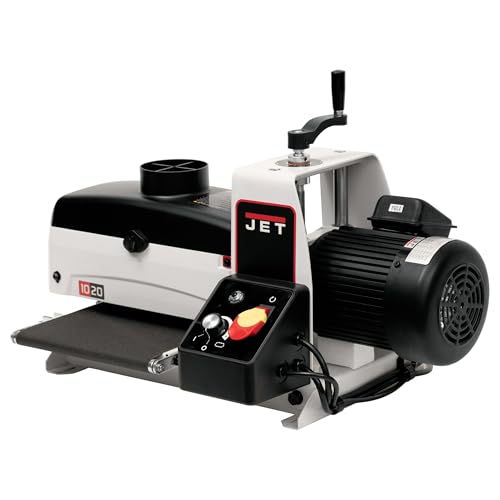
Performax drum sander models at a glance
Performax drum sanders are older, single-drum machines designed to thickness and smooth boards, glue-ups, and panels after milling. The model number generally indicates sanding width: a 16-32 can sand up to approximately 16 inches in one pass or 32 inches by turning the workpiece, while a 22-44 handles approximately 22 inches in one pass or 44 inches with two passes.
| Model or class | One-pass width | Two-pass width | Typical motor class | Best use |
|---|---|---|---|---|
| Performax 1632 | 16 inches | 32 inches | About 1-1/2 hp | Furniture parts, smaller glue-ups, hobby and occasional professional work |
| Performax 22-44 | 22 inches | 44 inches | About 3 hp | Wide tabletops, doors, cabinet panels, and regular shop production |
| Wider Performax-type machines | More than 22 inches | Depends on model | Often 3 hp or more | High-volume work where throughput justifies the footprint and electrical requirements |
Exact electrical configuration, stand arrangement, conveyor controls, and included accessories vary by production year. Check the data plate and manual for the individual machine rather than assuming that every machine with the same model number is identical.
Which Performax sander fits your shop?
| Your situation | Most sensible choice | Why |
|---|---|---|
| Limited budget and occasional use | Used 16-32 or Performax 1632 | Lower purchase price, smaller footprint, and ordinary household-voltage versions are common |
| Panels are usually 16 inches wide or less | Clean 16-32 | It avoids paying for capacity that rarely gets used |
| Frequent tabletops, doors, or cabinet panels | 22-44 | Its wider opening reduces turning, alignment, and repeat-pass work |
| New to drum sanding | Well-maintained 16-32 with working height adjustment | It is easier to learn feed-rate and depth-of-cut control on a smaller machine |
| Several hours of sanding each week | 22-44 or a newer equivalent | Greater capacity and a stronger conveyor system usually improve productivity |
| Very limited floor space | 16-32, provided it has room for infeed, outfeed, and dust hose | The machine itself is not the only space requirement; long stock needs clear travel |
A smaller machine can still sand a wide top, but the second pass must be carefully aligned. If the panel is 30 inches wide on a 16-32, each half is sanded separately. Any height mismatch, fence error, or uneven conveyor tracking can leave a visible ridge at the center.
Why the Performax 1632 remains attractive on the used market
The Performax 1632 is commonly considered a practical entry point because its 16-inch one-pass capacity covers many furniture components and its 32-inch two-pass capacity accommodates many dining-table sections and cabinet parts. It is also easier to move and place than a wider production sander.
Its limitations are equally important. A 16-32 removes material relatively slowly when the board is wide, hard, or heavily glued. A single-drum design also requires a sensible sequence: use a coarse abrasive for leveling, then change to a finer abrasive for surface preparation. Trying to make one aggressive pass often overloads the motor, burns the abrasive, and leaves ridges.
For a buyer choosing between a neglected 22-44 and a clean Performax 1632, the 1632 is usually the safer purchase. A worn wide machine can require an expensive conveyor rebuild, motor work, and alignment time before it produces usable results.
Abrasive wrapping and grit choices
Drum sanders do not use ordinary adhesive-backed sheets wrapped casually around the drum. The abrasive must be cut to the correct length, inserted or secured properly at the drum ends, and wrapped with enough tension to prevent lifting. Many Performax machines use purpose-made strips with ends that fit the drum’s retaining slots or clips, although the exact attachment method depends on the drum design.
- Coarse leveling: approximately 36 to 60 grit for removing milling marks, glue squeeze-out, or modest thickness variation.
- General smoothing: approximately 80 to 100 grit for routine stock preparation.
- Final preparation: approximately 120 to 150 grit when the next operation is finishing or hand sanding.
Open-coat aluminum-oxide abrasive is a common economical choice for wood. Zirconia or ceramic options can cut more aggressively, but they cost more and may be unnecessary for light work. Keep the abrasive clean with a crepe abrasive-cleaning stick, and replace it when cutting slows or burn marks appear. A dull strip increases heat and motor load rather than saving money.
Inspect the conveyor before negotiating
The conveyor is one of the most expensive and labor-intensive areas to correct. A belt may look acceptable while slipping, tracking sideways, or feeding inconsistently under load.
- Run the conveyor through its full speed range and listen for clicking, squealing, or rhythmic thumping.
- Check whether the belt tracks near the center instead of repeatedly rubbing one edge.
- Inspect for cracks, glazing, missing texture, stretched sections, and embedded resin.
- Place a straightedge across the conveyor table to find obvious low or high areas.
- Feed a flat scrap board and check whether thickness is consistent from left to right.
- Look for worn rollers, loose sprockets, damaged chain, and stripped adjustment hardware.
A replacement belt, bearings, or drive components can turn a bargain into an average-priced machine. General used-market ranges for a running Performax 1632 are often about $700 to $1,500, depending on condition, stand, accessories, and local demand. A working 22-44 commonly falls around $1,500 to $3,000. Machines needing substantial conveyor or motor work may be worth only parts value, even when the asking price is much higher.
Dust collection is a performance requirement
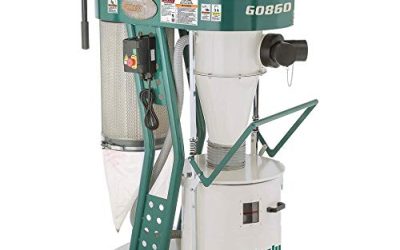
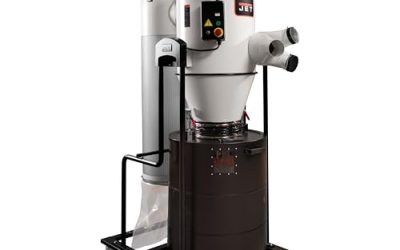
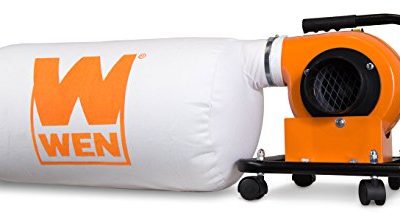
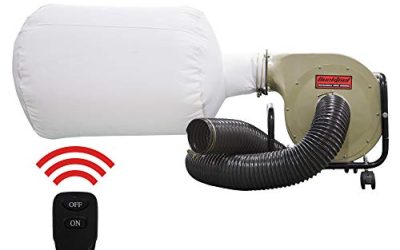
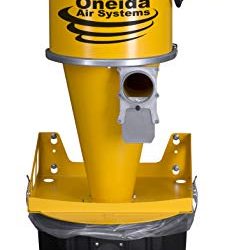
Fine sanding dust quickly loads abrasive and can settle on the conveyor, elevation screw, and motor. A dust collector with inadequate airflow leaves dust inside the machine and around the workpiece. For these machines, a collector capable of roughly 800 to 1,200 cubic feet per minute at the machine is a useful target, with the larger figure preferable for a wide 22-44 and long hose runs.
Use a short, smooth hose of the appropriate diameter, seal unnecessary blast-gate leaks, and verify that the hood is not blocked by packed dust. A shop vacuum is generally unsuitable for sustained drum-sander duty unless the machine is being used very lightly and the collector is specifically rated for the airflow and fine-dust load.
Common repairs and ownership costs
Older Performax sanders are mechanically understandable, but age changes the buying calculation. Common repairs include conveyor belt replacement, drive-chain or sprocket service, bearing replacement, worn height-adjustment components, failed switches, damaged power cords, and motor capacitor replacement. Dust-packed elevation screws may feel like a failed gearbox when they only need careful cleaning and lubrication; forcing the handwheel can create a more serious repair.
Budget approximately $100 to $300 per year for abrasive and routine maintenance in occasional use. A heavier user can spend considerably more because abrasive is a consumable, not a one-time accessory. Keep a few replacement belts, fuses or switches appropriate to the model, and the correct lubricant on hand where the manual permits it.
A simple used-machine cost calculation
Suppose a used Performax 1632 costs $1,100, needs $180 of conveyor-related parts, and includes no usable abrasive. Adding $70 for an initial assortment of abrasive and $50 for transport supplies produces an effective starting cost of:
$1,100 + $180 + $70 + $50 = $1,400.
If the machine is used 50 times per year for five years, the purchase and initial-repair cost is approximately $5.60 per use, before electricity, replacement abrasive, and labor. If inspection reveals a questionable motor, damaged height mechanism, and poor conveyor, the same calculation can exceed the price of a cleaner machine quickly.
Inspection checklist before buying
- Confirm the model number, voltage, phase, and motor data plate.
- Ask the seller to run the drum and conveyor under load, not only briefly with no stock.
- Check that the height adjustment moves smoothly through its range.
- Inspect the drum for scoring, resin buildup, dents, and uneven wear.
- Examine the abrasive-retaining slots, clips, or hooks for damage.
- Test the emergency stop and all switches.
- Measure a test board at several points to detect taper or inconsistent sanding.
- Confirm that the dust hood, conveyor table, stand, and guards are included.
- Price replacement parts before committing, especially for the conveyor and elevation system.
Choose the Performax 1632 when capacity, price, and shop space point toward a compact machine. Choose a 22-44 when wide panels and regular production justify its size and maintenance exposure. In either case, a straight conveyor, working height adjustment, sound drum, and effective dust hood matter more than a freshly painted cabinet or a low initial asking price.
Who a Performax Drum Sander Is For (and Who Should Skip It)
A drum sander like the Performax line earns its space in a shop when the work involves flattening and smoothing panels wider than a planer’s safe capacity for thin or delicate stock, such as glued-up tabletops, cutting boards, or veneered panels that a planer’s cutterhead could tear out. Woodworkers who batch-produce similar parts, like cabinet doors or small boxes, also benefit from the consistent, low-stock-removal passes a drum sander provides compared to hand sanding the same surface evenly. The trade-off is floor space and setup time: a drum sander is a large, heavy machine that needs a dedicated spot in the shop and a few minutes of warm-up and calibration before each session.
Hobbyists who sand occasionally, or who mostly work with narrow boards that a benchtop planer already handles well, often find a drum sander is more machine than they need. The ownership cost — replacement abrasive wraps, periodic conveyor belt maintenance, and dust collection upgrades — only pays off with regular use. For a shop doing one or two projects a year, a random orbital sander and patience may be the more sensible choice over a used Performax.
Specs That Matter When Comparing Performax Models
Performax drum sanders are named by their capacity: the 16-32 handles stock up to 16 inches wide in a single pass, or 32 inches wide by flipping the workpiece and sanding in two overlapping passes, while the 22-44 extends that same logic to 22 and 44 inches. Beyond the width rating, a few other specs separate a good used unit from a frustrating one.
- Drum count: single-drum machines are simpler and generally cheaper on the used market, while dual-drum models can run a coarser and finer grit back to back in one pass, cutting total sanding time roughly in half for production work.
- Conveyor belt material and tension: the rubberized conveyor belt feeds the workpiece under the drum at a controlled rate, and its condition affects both finish quality and how evenly stock feeds through.
- Dust port size and placement: drum sanders generate a very fine, high-volume dust load, and the port size relative to the drum’s width affects how completely that dust gets pulled away during a pass.
- Height adjustment mechanism: a sander with a reliable, repeatable height crank makes it far easier to dial in consistent light passes, which matters more for finish quality than almost any other adjustment on the machine.
Alternatives to Consider Before Buying a Performax
Open-end drum sanders, the category the Performax 16-32 and 22-44 belong to, are not the only path to a flat, sanded panel. A wide-belt sander is the step up in capability and price, using a continuous abrasive belt instead of a wrapped drum, which generally removes stock faster and handles production volume better, at a significantly higher price and footprint than most home shops can justify. On the lighter end, a handheld belt sander or a stationary disc sander paired with careful technique can flatten smaller panels without the investment in a dedicated drum machine, though consistency across a large panel is harder to achieve by hand.
For shops mainly flattening slabs or large glue-ups rather than finish-sanding smaller parts, a router sled setup is a common alternative that trades sanding for controlled routing, leaving a flat surface that still needs a sanding pass afterward but can handle widths no drum sander could fit in one pass. Which alternative makes sense depends on whether the shop’s actual bottleneck is stock removal, finish quality, or raw capacity.
Frequently Asked Questions
Is a Performax drum sander still a good buy on the used market?
A used Performax can be a strong value if the conveyor belt, drum bearings, and abrasive wrap are in good condition, since the core mechanical design has held up well across production years. Pricing should reflect the cost of replacing worn consumables like the conveyor belt or abrasive wrap if those parts show heavy wear.
What is the difference between the 16-32 and 22-44 models?
The numbers describe single-pass and double-pass width capacity: a 16-32 sands up to 16 inches in one pass or 32 inches by flipping the board, while a 22-44 extends that capacity to 22 and 44 inches respectively, making it the better fit for wider panels and production shops.
How often does the conveyor belt need to be replaced?
Replacement frequency depends on usage volume and how well the belt has been tracked and tensioned, since a belt running out of alignment wears unevenly and fails sooner than one that has been properly maintained.
Can a drum sander replace a planer?
A drum sander and a planer solve different problems: a planer removes stock quickly to establish thickness and flatness, while a drum sander removes a thin layer to refine the surface and even out thickness variation that a planer’s blades would tear out on delicate or figured grain.
What dust collection is needed for a Performax drum sander?
A dust collector sized to match the machine’s port diameter and rated for fine sanding dust is a requirement rather than an option, since drum sanding produces a large volume of very fine particulate that a shop vacuum alone typically cannot keep up with during continuous passes.
Related guides
More from Amazon
Programs that pair well with the guide above. Offers and eligibility are set by Amazon and may change.
A free business account with business pricing and bulk-buying tools for work, shop or home office.
Create a business accountFree shipping on eligible items, Prime Video and more. Eligible new members can start with a free trial.
Start a Prime free trialAudiobooks and podcasts to listen to on the go. Eligible new members can start with a free trial.
Try Audible freeAd-free music streaming. Eligible new subscribers can start with a free trial.
Try Music Unlimited freeAs an Amazon Associate we earn from qualifying purchases.