What's inside
As an Amazon Associate I earn from qualifying purchases. This post may contain affiliate links at no extra cost to you.
A shop vac with a cyclone separator and a high-flow dust collector solve different dust problems. The vac is compact and useful for cleanup and tool ports; the collector moves more air through larger ducts and works better with machines that produce chips. A cyclone helps either setup keep larger debris out of its filter, but it does not make a small vac perform like a dust collector.
As an Amazon Associate we earn from qualifying purchases at no extra cost to you.

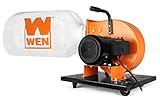
Start with your tools
Choose based on the machines you need to connect, not just the size of your shop. A random-orbit sander, track saw, or benchtop router typically has a small dust port and works reasonably well with a shop vac. A planer, jointer, or table saw can produce a much larger volume of chips and dust. Those machines generally benefit from a collector that can move more air through a 4-inch hose or duct.
Check the tool manual for its port size and dust-collection requirements. Port diameter alone is not enough: airflow falls when you use long hoses, small fittings, sharp bends, or a dirty filter. A vac that feels powerful at the nozzle may struggle through a long, restrictive run.
How the systems differ
A typical shop vac uses a narrow hose and high suction to pull debris through a small opening. That makes it handy for portable tools and floor cleanup. Add a cyclone separator between the tool and vac, and much of the heavy debris drops into a separate bucket before reaching the filter. The filter stays cleaner for longer, but the separator adds connections, takes up space, and can leak if the lid or fittings are poorly sealed.
A high-flow dust collector is built to move a larger volume of air at lower static pressure. It is better suited to wide machine ports and chip-heavy work. Its performance can fall off quickly if you connect it with undersized duct, restrictive adapters, or too many branches. A collector with a 4-inch inlet is not automatically effective at every machine; the duct layout and the machine hood matter.
Quick comparison
| Factor | Shop vac with cyclone | High-flow dust collector |
|---|---|---|
| Best fit | Sanders, routers, saws with small ports, cleanup | Planers, jointers, table saws, and chip-producing machines |
| Typical hose or duct | About 1¼ to 2½ inches | Often 4 inches or larger at the machine |
| Setup | Portable; simple to move between tools | Larger footprint; may need dedicated duct or hose |
| Main limitation | Limited airflow for broad hoods and heavy chips | Less convenient for small-port tools and quick cleanup |
| Filter maintenance | Cyclone reduces filter loading, but fine dust still reaches the filter | Depends on filter area, bag or cartridge quality, and cleaning system |
When a vac and cyclone make sense
For a small shop built around portable power tools, a vac with a cyclone is often the cheaper and more flexible starting point. It is especially useful if you have one tool running at a time, limited floor space, and no long duct runs. A separator can also reduce the number of times you empty the vac, particularly when cutting sheet goods or cleaning up heavier debris.
Expect trade-offs. Every hose, separator, and adapter adds resistance. A cyclone that works well with a short 2½-inch hose may disappoint after you add 15 feet of narrow hose and several elbows. Keep the run short, use smooth-bore hose where practical, and match fittings to the tool instead of necking down more than necessary. For a portable setup, compare shop vac cyclone separators and check that the inlet and outlet sizes match your hose.
The separator is not a substitute for a suitable filter. Fine dust can pass through the cyclone and into the vac, so use the filter type recommended for your material and keep it clean. If the vac’s airflow drops, check for a full bucket, a clogged filter, a kinked hose, or a leaking lid before assuming the motor has failed.
When a high-flow collector makes sense
Buy a high-flow collector when your main workload includes machines that throw chips quickly or have wide dust hoods. A planer can fill a vac container in minutes; a collector with an appropriately sized hose is less likely to choke on that volume. A collector is also the more practical choice if you want to connect several stationary machines, though a basic single-stage unit may not support an effective multi-branch system without careful duct sizing and blast-gate control.
Look beyond the advertised airflow number. Published figures may describe an open inlet rather than performance with a hose, filter, and machine connected. Ask about the filter’s fine-dust rating and how it is cleaned. A fabric bag can be inexpensive, but it may release fine dust back into the shop. A cartridge filter typically captures finer particles, but costs more and still needs maintenance. A high-flow dust collector with a cartridge filter can be a sensible upgrade if fine-dust control is a priority.
Dust is not just a cleanup issue
Neither system guarantees safe air. A collector can capture visible chips while fine particles escape through a poor filter, an unsealed connection, or the tool’s open side. Use a well-fitting machine hood, seal leaks, and consider room air filtration for fine airborne dust. Wear a suitable respirator when the task or material calls for it; collection equipment is not a replacement for personal protection.
Wood dust can irritate lungs, and some materials create additional hazards. Follow the tool and material guidance, empty containers before they overfill, and avoid collecting hot embers or liquids unless the equipment is rated for them. Keep hoses and cords routed so they do not become trip hazards, especially around a small workbench.
A practical buying rule
If your largest dust-producing tool has a small port and you mostly sand, rout, or make occasional cuts, start with a quality shop vac, a suitable filter, and a sealed cyclone. If you routinely run a planer, jointer, or table saw with a broad hood, choose a high-flow collector and size the hose and duct to the machine. A vac may still be useful for cleanup and portable tools even after you add a collector.
For a mixed shop on a tight budget, it is reasonable to buy the vac first and use it only where it can keep up. Do not expect a cyclone to solve a high-volume airflow problem. Upgrade when you see repeated chip buildup, clogged filters, weak capture at the hood, or dust escaping during normal operation—not just because a larger machine looks more impressive.