What's inside
As an Amazon Associate I earn from qualifying purchases. This post may contain affiliate links at no extra cost to you.
Leaky duct joints cost more than they appear to. A small gap can whistle, collect packed dust, and reduce airflow at the tool. In a typical one- or two-car shop, the best sealant is usually not the most expensive product. The right choice depends on whether you are sealing permanent metal ductwork, flexible hose, or a joint you expect to take apart later.
As an Amazon Associate we earn from qualifying purchases at no extra cost to you.


What Makes a Good Dust Collection Sealant
Dust collection ductwork operates under negative pressure. The blower pulls air through the system, so a poor joint tends to draw shop air inward rather than blow visible dust outward. That makes leaks easy to miss. A system can look clean while losing enough airflow to leave chips and fine dust at the tool.
A suitable sealant should adhere to galvanized steel, aluminum, or PVC; remain flexible enough to tolerate vibration; and survive temperature changes in an unheated shop. It should also be compatible with the amount of disassembly your system needs. A permanent seal around a blast gate is a mistake if you need to remove that gate next year.
Before sealing, clean the joint. Remove sawdust, oil, and loose rust with a brush or rag. Push the duct fully together, use sheet-metal screws or a proper clamp to hold it, and then seal the seam. Sealant is not a substitute for a mechanically secure connection.
Best Sealants Compared
| Sealant type | Best use | Advantages | Limitations |
|---|---|---|---|
| HVAC duct mastic | Permanent metal duct joints | Excellent seal, bridges small gaps, remains flexible | Messy, slow to cure, difficult to remove |
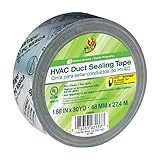
| Foil HVAC tape | Clean, accessible seams and temporary work | Fast, neat, easy to inspect | Needs clean surfaces; poor tape can peel |
| Polyurethane sealant | Vibrating joints and mixed materials | Strong adhesion and flexibility | Harder to tool and remove; messy cartridges |
| Silicone sealant | Small gaps and removable assemblies | Flexible, widely available, good on smooth surfaces | Some types adhere poorly to dirty galvanized metal |
| Threaded duct sealant | Threaded fittings and small penetrations | Easy to apply and reposition | Not intended for broad sheet-metal seams |
Best Choice for Permanent Metal Ducts: HVAC Mastic
For a fixed run of spiral pipe, snap-lock pipe, or metal fittings, water-based HVAC duct mastic is the most dependable general-purpose option. It is a thick paste designed to bridge irregular seams. Apply a continuous bead or brush a coat about 1/16 to 1/8 inch thick over the joint, extending at least 1 inch on both sides.
Mastic is especially useful on elbows, reducers, wyes, and crimped ends where the metal does not fit perfectly. Reinforcing mesh is helpful when a gap is wider than about 1/8 inch, but large gaps should first be corrected with a better-fitting connector. Allow the mastic to dry according to the label—often 24 hours or more in cool, damp conditions—before running the collector hard.
Search for HVAC duct mastic sealant if you are sealing a permanent metal system. The cheaper tubs are fine for most home shops. You do not need a specialized high-temperature product unless the duct carries unusually hot air, which a normal woodworking collector should not.
When Foil Tape Is Enough
Aluminum foil HVAC tape is the best low-mess option for smooth, accessible joints. It works well over a tightly fitted spiral duct coupling, especially when the connection is already held by screws or a clamp. Press the tape firmly around the complete circumference and overlap each wrap by at least half its width.
Use real foil HVAC tape, not ordinary cloth “duct tape.” Cloth tape dries out, loses adhesion, and leaves adhesive residue. Foil tape also fails when applied over dusty or damp metal. Wipe the surface with isopropyl alcohol if needed, let it dry, and smooth the tape with a plastic squeegee or the back of a spoon.
A UL 181 aluminum foil HVAC tape is a sensible purchase for most shops. The extra cost over generic foil tape is worthwhile when the duct is overhead or difficult to retape. For a small, low-pressure collector and an easily reached joint, a decent generic HVAC foil tape is often perfectly adequate.
Polyurethane and Silicone Options
Polyurethane sealant is useful when a joint vibrates or combines different materials, such as metal ducting connected to a plastic fitting. It grips well and stays flexible, but it cures into a tough bead that is difficult to remove. Wear gloves and use disposable tools; cured polyurethane is much easier to avoid than to clean up.
Neutral-cure silicone is a reasonable choice for small seams, inspection covers, and connections you may need to reopen. Avoid smearing it over oily metal, and do not count on a thin bead to bridge a poorly fitted joint. Silicone is also slippery under clamps, so let it skin or cure before putting the connection under strain.
For these applications, compare polyurethane construction sealant and neutral-cure silicone sealant. Do not use bathroom caulk simply because it is on hand; some formulas have weak adhesion to galvanized steel and may shrink noticeably.
Sealing Flex Hose and Blast Gates
Flexible hose should normally be secured with a hose clamp, not glued in place. Wrap the hose over the fitting with enough overlap to cover the fitting bead, tighten the clamp evenly, and inspect for crushed or distorted hose. If the hose still leaks, a narrow strip of foil tape under or over the clamp can help, but leave the connection serviceable.
Blast gates deserve special attention. A gate that slides through dusty air can accumulate buildup in its track and stop closing fully. Seal the stationary housing and nearby duct seams, but avoid getting mastic or silicone on the sliding plate. If the gate leaks around its shaft or body, replacement is usually more effective than adding layers of sealant.
Testing for Leaks
After the sealant cures, test the system with the collector running and every branch closed except the one being checked. Hold a thin strip of tissue near each joint. If it pulls toward the seam, air is entering through a leak. A smoke pencil can locate smaller leaks, but never use an open flame around accumulated wood dust.
Fix leaks in order of importance: the collector inlet, main trunk joints, reducers, blast gates, and finally tool connections. A 1/8-inch gap around a large trunk fitting can matter more than several pinholes at a small branch. Recheck joints after the first few hours of operation, because vibration can expose a connection that initially looked sound.