What's inside
As an Amazon Associate I earn from qualifying purchases. This post may contain affiliate links at no extra cost to you.
A HEPA dust extractor is useful when a tool makes fine dust at the point of cutting, sanding or routing. It can keep dust out of the shop air and reduce cleanup, but only if the extractor, hose and tool connection work as a system. A HEPA label alone does not make a mismatched or clogged setup effective.
As an Amazon Associate we earn from qualifying purchases at no extra cost to you.

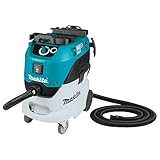

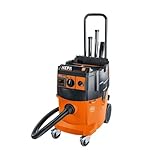
What to buy for the work you do
For a sander, track saw, router or other portable power tool, look for a shop-rated extractor with a sealed HEPA filter, automatic tool-start control and a hose that fits the tool’s dust port. A common hose diameter is 1¼ inches; some tools use smaller ports or need an adapter. Check compatibility before buying, because a loose connection leaks dust and an improvised reduction can choke airflow.
Compare HEPA dust extractors for power tools by filtration claims, airflow, filter-cleaning method, bag availability and hose options—not just motor power. If you mainly need cleanup or occasional use with a sander, a less expensive HEPA shop vacuum with tool-triggered start may be enough. For long sessions or frequent filter changes, a purpose-built extractor is usually easier to live with.
Compare the main options
| Type | Best fit | Trade-off |
|---|---|---|
| HEPA shop vacuum | Occasional sanding, cleanup and smaller tools | Often louder; filter cleaning and bag changes may be less convenient |
| Portable dust extractor | Regular use with saws, sanders and routers | Higher purchase and consumable costs |
| Large dust collector | Stationary machines that produce a high volume of chips | Not a substitute for a close-fitting tool hose or fine-dust control at a handheld tool |
Airflow numbers can be hard to compare: manufacturers may report free-air airflow, which does not show what the unit delivers through a hose and filter. For tool use, port fit, hose length and how well the extractor handles a loaded filter matter at least as much as a headline airflow figure.
Understand HEPA and filtration
A true HEPA filter is rated to capture at least 99.97% of particles at 0.3 microns under the test conditions for that standard. That describes the filter, not necessarily the entire vacuum. Dust can escape through an unsealed housing, a poorly seated filter, a damaged bag or a leaking hose connection. Look for a complete unit described as HEPA-rated or HEPA-certified, and follow its filter and bag instructions.
Fine dust can load a filter quickly, especially when sanding drywall, paint or dense hardwood. A filter-cleaning mechanism can help restore airflow, but it may briefly release dust inside the canister; use it as directed and keep the lid and seals clean. If suction falls, check for a full bag, blocked hose, stuck dust-port adapter and loaded filter before assuming the motor has failed.
Features worth paying for
Automatic tool start is convenient: plug a corded tool into the extractor’s outlet and the vacuum starts when the tool runs. Check the outlet’s maximum load and the tool’s current draw before using it. The extractor may continue running briefly after the tool stops, which clears dust from the hose. This feature is less useful with battery tools unless the extractor has a separate compatible control system.
Variable suction is valuable for smaller sanders. Too much vacuum can pull a sanding pad against the workpiece and make it harder to move evenly. A bypass or suction-control setting lets you reduce pull without disconnecting the hose. A compact body and tool tray are handy in a small shop, but a small canister fills faster and needs more frequent bag changes.
For a long hose run, use the shortest practical hose and avoid tight bends. Each bend and narrow adapter adds resistance. A heavy hose can drag on a lightweight sander, so a hose cuff, overhead support or simple hanger can make the setup easier to control.
Set it up to avoid common failures
Connect the extractor directly to the tool’s dust port when possible. Confirm that the adapter stays seated while the tool moves; tape can hold a temporary fit, but it is not a substitute for a proper adapter. Start with a clean filter and an empty or correctly installed dust bag. If the tool has a port damper or airflow control, open it enough to collect dust without restricting the tool’s movement.
Watch for visible dust escaping at the tool, especially during sanding and when cutting material that makes fine particles. That can indicate a poor seal, a blocked port or inadequate airflow. Stop and fix the cause rather than continuing with a mask as the only control. Wear suitable respiratory protection when the material or task requires it, and handle hazardous dust—such as lead paint or certain engineered materials—according to applicable safety guidance. Do not vacuum hot embers or liquids unless the manufacturer explicitly permits it.
When a cheaper extractor is fine
If you use a random-orbit sander for short jobs, have a sound HEPA-rated shop vacuum, and can connect it without a leaky adapter, you may not need a premium extractor. Put the budget toward a proper hose, sealed bags and a respirator appropriate to the work. Upgrade when recurring clogs, weak collection, awkward filter service or the lack of automatic start is costing time—not simply because a higher-priced unit has a larger number on the box.