What's inside
As an Amazon Associate I earn from qualifying purchases. This post may contain affiliate links at no extra cost to you.
Wood dust changes the fire-extinguisher decision. Fine dust can ignite quickly, and a dust collector or shop vacuum can spread a fire through ductwork if burning material gets pulled inside. Keep an extinguisher easy to reach, but don’t treat it as a substitute for dust control, housekeeping, or an exit plan.
As an Amazon Associate we earn from qualifying purchases at no extra cost to you.
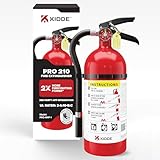

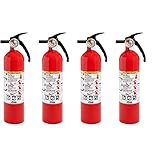

What to buy for a woodshop
For most small workshops, a listed ABC dry-chemical extinguisher is the practical first purchase. It covers ordinary combustibles such as wood, flammable liquids such as solvents, and energized electrical equipment. Check the label for the extinguisher’s rating and the standards recognized where you live; in the U.S., look for UL listing and an NFPA 10 rating.
A 5-pound ABC unit is a reasonable minimum for a compact shop where a person can reach it quickly. A 10-pound unit gives more agent and discharge time, but is heavier and harder to handle in a hurry. If the shop is large, split across levels, or has several separated work areas, multiple accessible extinguishers are more useful than one oversized unit.
Compare 5-pound ABC extinguishers by rating, listing, gauge, mounting bracket, and service instructions—not just price. A cheaper unit is fine if it is properly listed, undamaged, within its service life, and suitable for the hazards in your shop.
Compare common extinguisher types
| Type | Useful for | Trade-off in a woodshop |
|---|---|---|
| ABC dry chemical | Wood, many flammable liquids, energized electrical equipment | Good general coverage; powder is messy and can damage tools or electronics. |
| Water or water mist | Class A materials such as wood and paper, depending on the listing | Not suitable for energized electrical or flammable-liquid fires unless specifically rated for them. |
| CO₂ | Some electrical and flammable-liquid hazards | Leaves little residue, but has limited cooling of deep-seated wood and can allow re-ignition. |
| Class K wet chemical | Commercial cooking oils and fats | Usually unnecessary in a woodworking shop; it is not a general woodshop choice. |
Extinguisher classes and ratings differ by country, so follow the label and local fire-code guidance. Don’t buy a CO₂ extinguisher as the shop’s only unit just to avoid cleanup: it may knock down flames without cooling smoldering sawdust or wood effectively.
Why wood dust needs its own plan
Dust becomes more hazardous when it is fine, dry, suspended in air, or accumulated near an ignition source. A visible layer on a machine, ledge, or collector can also feed a fire. A dust explosion requires a particular combination of combustible dust, dispersion, confinement, and ignition; a typical small shop should not assume every dust cloud will explode, but it should prevent clouds and accumulations rather than testing the limits.
Keep collection equipment maintained, empty bags or bins before they become overfilled, and clean surfaces with a suitable dust collector or vacuum. Don’t use compressed air to blow dust off machines or into corners: it can make a combustible cloud. Avoid putting hot embers into a collector. If a cut produces smoke, burning smell, or a glowing chip, stop the machine and deal with the source only if it is safe to do so.
Never spray an extinguisher into a dust collector, duct, or enclosed bin just because smoke is coming from it. Opening or disturbing the system can feed oxygen or disperse dust. If a fire is inside collection equipment, evacuate and call emergency services unless it is a very small, accessible fire and you have a clear escape route.
Placement matters more than size
Mount extinguishers where they are visible and reachable on the way out, not behind a lathe, lumber stack, or collector. Put one near an exit and consider another near a separate high-risk area such as a finishing bench, while keeping it away from the most likely fire location so you do not have to pass flames to reach it. Follow the mounting-height and spacing rules in your area; NFPA 10 gives placement and travel-distance guidance that depends on hazard and extinguisher rating.
For a small, single-room shop, one 5-pound ABC unit may be adequate if local rules allow it and it is close to the work area without being blocked. A 10-pound unit or additional extinguishers make sense for a larger shop, but only if people can lift and operate them. A unit that is too heavy to grab is not an upgrade.
Shop for a compatible wall bracket if the extinguisher does not include one. Mount it securely, protect it from impact and corrosive dust, and keep the label and pressure gauge visible.
Inspection, use, and replacement
Check the gauge monthly: the needle should be in the operable range marked on the unit. Confirm the pin and tamper seal are present, the hose is clear, and the cylinder has no dents, corrosion, leakage, or caked-on dust. Follow the manufacturer’s maintenance schedule and local requirements; some units need professional servicing or replacement after discharge, damage, or a failed inspection.
Learn the PASS method before an emergency: pull the pin, aim at the base of the fire, squeeze the handle, and sweep side to side. Keep your back toward a clear exit and stay several feet away, following the extinguisher’s label for its effective range. A small extinguisher empties quickly, often in roughly 10 to 20 seconds. If the fire is spreading, producing heavy smoke, or blocking the exit, leave immediately and call emergency services. Do not stay to save equipment.
A sensible buying checklist
Choose a listed ABC extinguisher with a rating appropriate to your shop, a size you can operate, and a bracket you can mount securely. Add a second unit when the layout or local code calls for it, rather than relying on a single extinguisher at the far end of the room. Compare 10-pound ABC options if you need more capacity and can handle the weight.
Finally, keep the exit clear, control dust at the source, and make sure everyone in the shop knows where the extinguisher is. The best unit is the one that matches the hazard, is maintained, and can be reached without crossing the fire.