What's inside
As an Amazon Associate I earn from qualifying purchases. This post may contain affiliate links at no extra cost to you.
Why GFCI Placement Matters in a Garage Workshop
A garage combines several conditions that make ground-fault protection especially important: concrete floors, damp vehicles, metal tools, dust, extension cords, and equipment with motors. A GFCI can disconnect power when it detects a small current leaking through a person to ground. It does not replace a circuit breaker, which protects wiring from overloads and short circuits.
For most residential garages, 120-volt, 15- and 20-amp receptacles require GFCI protection under the National Electrical Code. Local rules can be stricter, and older garages may not meet current requirements. Have a licensed electrician verify the circuit plan if you are adding wiring, especially in a finished garage or detached shop.
As an Amazon Associate we earn from qualifying purchases at no extra cost to you.


The Best Location for GFCI Protection
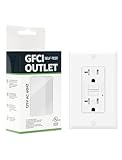
For a typical workshop circuit, install a GFCI receptacle as the first device in the circuit, then connect the remaining receptacles to its protected “load” terminals. This protects the downstream outlets while keeping the cost lower than installing a GFCI at every location.
Place the GFCI where you can reach and see the TEST and RESET buttons without moving a vehicle, bench, cabinet, dust collector, or stack of lumber. A practical height is about 42 to 48 inches above the finished floor in a work area. That is higher than the usual 15-inch minimum and helps keep the device above puddles, snowmelt, and floor-level debris.
Do not hide the only reset button behind a tool-storage cabinet. If a dust collector trips the circuit while you are working, you should be able to restore power without unplugging equipment and shifting heavy items. A clearly labeled cover or a small open electrical box above the bench is preferable to an inaccessible outlet.
Plan GFCI-Protected Outlets Around the Workshop
Use more receptacles than you think you need. A garage shop commonly has a bench grinder, drill press, battery chargers, task lighting, a shop vacuum, and a dust collector competing for the same wall space. Put receptacles at the workbench backsplash, along the main tool wall, and near the dust-collection connection points.
Keep outlets away from areas where hoses or cords will regularly cross the floor. For a bench, receptacles mounted 42 to 48 inches high are convenient. For wall-mounted tools, mount the outlet near the machine’s cord rather than forcing the cord over a sharp bench edge. Use listed, gasketed covers in locations exposed to moisture or blowing dust.
A garage receptacle must be readily accessible. An outlet buried behind permanent shelving is not a good installation, even if it is technically reachable with effort. Leave enough clearance to operate the plug and reset the device, and label which outlets are controlled by each GFCI.
Separate Circuits for Dust Collection and Large Tools
GFCI protection does not prevent nuisance trips caused by overloaded circuits or motor startup. A 15-amp circuit can run a small shop vacuum, but a large dust collector, table saw, and bench tools may exceed its capacity when motors start together. Put high-draw equipment on its own correctly sized circuit, with GFCI protection where required by local code.
Motors can also create leakage current as they age. Fine dust, damp sawdust, worn insulation, and long extension cords increase the chance of a trip. If a GFCI trips repeatedly, do not simply replace it with a standard receptacle. Unplug tools one at a time, inspect cords and plugs, and test the equipment on a known-good circuit. Persistent trips call for an electrician or qualified repair technician.
| Arrangement | Advantages | Drawbacks | Best use |
|---|---|---|---|
| GFCI receptacle protecting downstream outlets | Lower cost; one reset point; protects multiple receptacles | One fault can shut off several tools; wiring must be identified correctly | Most general-purpose garage wall and bench circuits |
| GFCI circuit breaker | Protects the entire circuit; no wall device to damage or bury | Costs more; reset is at the electrical panel; panel compatibility matters | Long circuits, finished walls, or circuits with inaccessible first outlets |
| Separate GFCI receptacles | Faults are isolated; each work area can be reset locally | Highest cost; more boxes and devices | Large shops with independent bench, tool, and utility zones |
What to Buy
For a normal indoor garage, a 15- or 20-amp tamper-resistant GFCI receptacle rated for the circuit is usually the economical choice. The receptacle must match the circuit rating: do not install a 20-amp receptacle on a 15-amp circuit unless the installation meets the applicable code rules. Buy a reputable, UL- or ETL-listed device rather than the absolute cheapest unlisted option.
Where the outlet may get spray, condensation, or outdoor exposure, use a weather-resistant receptacle and an appropriate in-use cover. A standard decorator wall plate is not adequate protection from wet conditions. You can compare suitable weather-resistant GFCI receptacles and covers when the location is exposed.
Use a GFCI breaker when the first outlet would be behind cabinets, when you want the entire branch circuit protected, or when the shop layout makes a single reset point inconvenient. Confirm that the breaker fits your panel and that the panel’s neutral arrangement is compatible. This is generally electrician territory.
Keep Lighting Independent
Do not put all workshop lighting on the same GFCI-protected circuit as the tools if you can avoid it. A tripped tool circuit should not leave you standing in a dark garage with a spinning blade or a running dust collector. A separate lighting circuit, preferably with a wall switch near each entry, gives you a safer failure mode.
If code or the existing wiring places lighting on a GFCI circuit, use battery lighting as backup and keep a flashlight by the entry door. Shop lights and LED drivers can occasionally contribute to nuisance tripping, particularly when several fixtures share a circuit.
Test the Installation
Press the TEST button monthly. Power should shut off at the protected outlet and at any downstream receptacles. Press RESET to restore power. A plug-in receptacle tester can help identify a missing ground or incorrect line/load connection, but it cannot replace the built-in TEST button or professional testing.
If RESET will not stay engaged, unplug everything downstream and try again. A wet outlet, damaged extension cord, failed tool, reversed line/load connection, or a defective GFCI can all cause the symptom. Never defeat the protection with an adapter, taped button, or replacement by a standard receptacle. For a garage workshop, the best GFCI is one that is easy to reach, protects the right outlets, and can be reset without entering the hazard that caused the trip.