What's inside
As an Amazon Associate I earn from qualifying purchases. This post may contain affiliate links at no extra cost to you.
Sanding creates finer, more persistent dust than most cutting operations. A hood that works well for a saw may leave a sanding station covered in powder. The best sanding hood captures dust close to the abrasive, keeps the work visible, and does not make it difficult to reach or rotate the workpiece.
For most home workshops, the right setup is a hood connected to a shop vacuum or dust extractor, with a short hose and a properly sized inlet. A large dust collector can move more air, but it will not automatically capture fine sanding dust unless the hood seals reasonably well around the work.
As an Amazon Associate we earn from qualifying purchases at no extra cost to you.
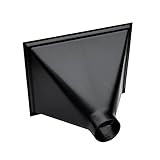
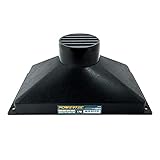


What to Look for in a Sanding Hood
Capture distance matters more than the stated size of the hood. Dust collection becomes much less effective as the gap between the abrasive and the opening increases. Aim to keep the capture point within 2 to 4 inches of the sanding action whenever possible. A hood that sits 10 inches away may collect some airborne dust, but it will miss the plume created at the contact surface.
Look for a hood with a broad opening, a 2-1/2-inch dust port, and a shape that lets air enter from several directions. A narrow opening can produce strong airflow at one point but leave dead spots around a sanding block or random-orbit sander. A transparent panel is useful for small parts, while an open-front hood is usually better for large panels and cabinet doors.
Adjustability is also important. The hood should move vertically or tilt without requiring a complete rebuild of the station. Magnets, clamps, slotted brackets, and threaded knobs are all practical mounting methods. Avoid a permanent enclosure unless you sand the same size parts every time.
Main Hood Types Compared
| Hood type | Best use | Strengths | Limitations |
|---|---|---|---|
| Open-front hood | General bench sanding and large panels | Good access, simple to build, handles different work sizes | Needs close positioning; can miss dust at the sides |
| Three-sided sanding box | Small parts and detail sanding | Strong containment and easy hose connection | Restricts hand movement and workpiece size |
| Downdraft sanding table | Flat panels, edge work, and repeated sanding | Work surface doubles as the capture area | Uses more floor or bench space and needs a strong extractor |
| Flexible extraction arm | Occasional sanding in a shared work area | Quickly repositioned and useful for several tools | Easy to knock out of position; limited capture area |
The Best General-Purpose Choice
An open-front hood is the best starting point for most sanding stations. Build or buy one roughly 18 to 24 inches wide and 12 to 18 inches deep, then mount it so the workpiece can sit 2 to 6 inches from the rear or upper opening. Plywood, sheet metal, and clear polycarbonate can all work. A 1/4-inch plywood hood is inexpensive and rigid; clear plastic improves visibility but can scratch and develop static that attracts dust.
For a ready-made option, compare dust collection hoods with 2-1/2-inch ports. These are often marketed for saws or routers, but the useful features are the adjustable mounting, wide opening, and standard hose connection—not the tool named on the package.
Add a short flexible skirt if dust escapes around the bottom. Brush strip, vinyl flap material, or a strip of clear shower curtain can work. Do not seal the opening completely around the workpiece. A small amount of make-up air is necessary for the extractor to pull effectively, and a tight seal can make positioning awkward.
When a Downdraft Table Is Better
A downdraft table makes sense when you regularly sand flat panels, drawer fronts, or cabinet parts. Holes or slots in the work surface pull dust downward instead of relying on a hood positioned behind the work. A practical small table may be 24 by 36 inches, with a perforated top above a sealed plenum and a 2-1/2- or 4-inch outlet.
The common failure is making too many holes for the available airflow. If the table leaks around its lid, joints, or unused sections, suction at the work surface drops sharply. Seal the box with glue and caulk, and use removable covers over areas that are not being used. A small shop vacuum can work for a compact table, but a larger table usually needs an extractor capable of roughly 300 to 500 CFM at the tool.
For a budget station, a downdraft sanding table can be cheaper than fabricating the plenum, but check the port size and table dimensions. A tiny tabletop unit will not replace a full-size bench for doors or large boards.
Match the Hood to the Extractor
Use a shop vacuum or dust extractor for fine sanding dust, preferably with a pleated cartridge filter and a bag. The bag protects the filter and makes cleanup easier. A cyclone pre-separator is worthwhile if you sand wood frequently, but it will not replace the final filter.
Do not reduce a 2-1/2-inch hose to a narrow 1-inch adapter unless the tool requires it. The restriction may increase velocity locally while reducing total airflow. Keep the hose under about 6 feet where practical, avoid sharp bends, and ground or use anti-static hose if static shocks become frequent. Check the extractor’s filter during the first few sanding sessions; a rapidly loaded filter is evidence that the hood or pre-separator is not doing enough.
A fine-dust shop vacuum setup is enough for hand sanding and a compact hood. The cheaper option is fine if you sand occasionally, work in small batches, and clean the filter regularly. Spend more on a dust extractor with automatic filter cleaning when you sand for hours, use an electric sander continuously, or cannot tolerate dust in the rest of the shop.
Station Layout and Safety
Put the extractor where its noise and exhaust will not interfere with the work, but leave enough clearance to remove the filter and empty the container. Keep the hose from crossing the operator’s feet. A wall-mounted hood can save bench space, while a rolling hood or cart is better if the station must serve several tools.
Dust collection is not a substitute for respiratory protection. Wear a properly fitted N95 or better respirator when emptying the collector, cleaning filters, or sanding materials that produce hazardous dust. Never sand unknown coatings, lead paint, or composite materials without checking the material and using the required controls. Keep the station’s light aimed across the work surface rather than directly into the hood; side lighting reveals swirl marks without being blocked by the extractor opening.
A Practical Buying Decision
Choose an open-front hood for varied work, a three-sided box for small parts, and a downdraft table for repeated flat-panel sanding. Prioritize a short capture distance, a standard hose port, easy adjustment, and a filter system designed for fine dust. If the hood requires you to fight it every time you move a board, you will eventually sand without using it—which is a design failure, regardless of its airflow rating.