What's inside
As an Amazon Associate I earn from qualifying purchases. This post may contain affiliate links at no extra cost to you.
Effective dust collection does not require a $1,000 cyclone or a professionally ducted shop. In a small workshop, the best improvements usually come from capturing dust closer to the tool, sealing leaks, and making cleanup easy enough that you actually do it. A few inexpensive changes can reduce airborne dust, protect your tools, and make the shop more comfortable without sacrificing your entire setup budget.
As an Amazon Associate we earn from qualifying purchases at no extra cost to you.

Start With Source Capture
A shop vacuum connected directly to a tool is usually more useful than a large collector sitting across the room. Fine dust spreads quickly once it escapes, while chips and shavings are easier to control. Connect the hose as close to the cutting or sanding point as possible.
For a portable setup, a 1-1/4-inch or 1-1/2-inch hose works well with sanders, routers, track saws, and many benchtop tools. A 2-1/2-inch hose is a better general-purpose size for table saws, miter saws, and planers. Avoid reducing a tool’s outlet unnecessarily; a narrow adapter can become a major restriction.
If your vacuum lacks a filter-cleaning feature, add a shop vacuum cyclone dust separator. A separator catches heavier chips before they reach the vacuum filter. It will not remove all fine dust, but it can keep the filter from clogging after one large routing or planing session.
Seal Leaks Before Upgrading Equipment
Air leaks are one of the cheapest problems to fix and one of the most commonly ignored. Check the vacuum hose, tool port, separator lid, collection bag, and every duct joint. If you can feel air escaping, the system is losing suction where it is needed.
Use foil HVAC tape or quality duct sealing tape on rigid connections. For removable joints, rubber couplers and hose clamps are better than wrapping everything in tape. Do not use ordinary cloth-backed duct tape as a permanent solution; its adhesive dries out and leaves a sticky mess.
A lid gasket on a separator is particularly important. Even a small gap around the lid can reduce the pressure available at the tool. Replace compressed foam weather-stripping and make sure the clamps pull the lid down evenly.
Choose the Right Upgrade for the Tool
| Workshop problem | Best budget improvement | What it will not solve |
|---|---|---|
| Dusty sanding and routing | Shop vacuum, short hose, tight tool connection | Dust escaping from open-bottom tools |
| Large chips from a planer | Cyclone separator and 2-1/2-inch hose | Fine dust that bypasses the filter |
| Dust at a table saw | Blade guard collection plus a sealed lower cabinet | All dust from a poorly enclosed blade area |
| Fine dust lingering in the room | Air cleaner with a fine-particle filter | Dust already settled on surfaces |
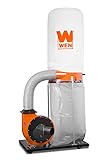
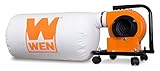
A vacuum is generally the better first purchase for sanding, handheld tools, and small benchtop machines. A dedicated dust collector becomes more useful when you run a planer, jointer, or multiple stationary machines. Those tools produce high volumes of chips and often need more airflow than a compact vacuum can maintain.
For a small shop, a 2.5-inch dust collection hose kit is often a practical middle ground. Buy the shortest length that allows comfortable tool movement. Excess hose adds resistance and gives chips more places to collect.
Improve Table Saw Collection
Table saws are difficult because the blade throws dust both below and above the table. If your saw has a blade guard with a dust port, connect it. A top guard will not catch everything, but it can collect a surprising amount of fine dust generated above the table.
Seal large gaps in the lower cabinet with removable magnetic sheets, thin plywood panels, or closed-cell foam. Leave access for blade changes and motor ventilation. Do not seal cooling openings that the motor needs. If your saw has an open stand, a simple plywood or plastic shroud around the lower blade area can improve collection, but it will work best when paired with a top guard.
Do not expect perfect results from a contractor-style saw connected to a small vacuum. Some dust will still fall to the floor. The goal is to reduce the airborne cloud and keep the cleanup concentrated under the saw.
Add Air Filtration After Source Capture
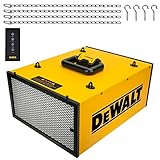
An overhead air cleaner is useful for fine particles that escape at the tool, but it is not a substitute for collection at the source. Run it during dusty work and for 30 to 60 minutes afterward. Position it so air moves across the shop rather than blasting dust from one corner into another.
A basic box-fan filter is a cheap alternative. Secure a furnace filter to the intake side of a box fan with a frame or straps, and make sure the filter does not collapse into the fan. A filter with a MERV rating around 11 to 13 is a sensible budget choice. Higher ratings can capture more fine dust but may reduce airflow on a fan that was not designed for heavy filter resistance.
Replace loaded filters instead of washing disposable ones. A clogged filter reduces airflow and can overheat a fan or vacuum motor.
Make Cleanup Fast and Safe
Keep a dedicated HEPA shop vacuum for fine dust if your budget allows, particularly when sanding paint, MDF, plywood, or hardwood. A standard vacuum with a good cartridge filter is acceptable for occasional work, but the filter must be installed correctly and kept clean.
Use a floor nozzle or soft-bristle attachment rather than sweeping fine dust with a broom. Sweeping puts settled particles back into the air. Never blow dust off a bench or machine with compressed air unless you are outside and wearing suitable respiratory protection.
For MDF, hardwood sanding, and other fine-dust work, wear a properly fitted N95 or better respirator. Eye protection is still necessary even when collection is connected. Keep cords and hoses routed away from walkways, and empty the separator before it becomes so full that chips block the inlet.
Spend the Budget in Order
With limited funds, start with a good filter, a short correctly sized hose, and adapters that fit tightly. Next, add a cyclone separator if you generate chips. Seal the worst leaks after the first test, then improve table saw enclosure or add top collection. Only after these steps should you buy an overhead air cleaner.
The cheaper option is fine when the shop is small, tools are used one at a time, and you mainly sand or route. Upgrade to a larger collector when airflow collapses under load, the separator fills rapidly, or chips remain inside a planer and clog its outlet. Buy based on the tools you actually use—not the largest machine listed in a catalog.