What's inside
As an Amazon Associate I earn from qualifying purchases. This post may contain affiliate links at no extra cost to you.
The Basic Difference
Workshop ventilation removes contaminated air from the room and replaces it with outdoor air. Air filtration cleans the shop air and sends it back into the room. Neither system replaces dust collection at the tool, which should be your first line of defense.
A properly sized dust collector connected to a table saw, planer, router table, or sander captures dust before it spreads. Ventilation and filtration deal with what escapes. That distinction matters: a ceiling-mounted air cleaner may eventually reduce airborne dust, but it will not stop a planer from filling the shop with chips or prevent a sander from blowing fine dust across your workbench.
As an Amazon Associate we earn from qualifying purchases at no extra cost to you.

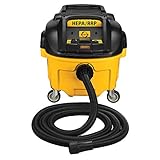
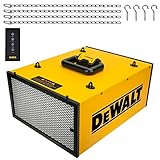
For most home shops, the practical arrangement is source collection at the tool, an air cleaner for residual fine dust, and ventilation used selectively when outdoor conditions and heating costs allow.
Source Capture Comes First
Buy or improve a cyclone dust collector before buying an overhead air filtration unit. A collector with a 4-inch hose may deliver roughly 400 to 800 CFM at a tool, but the useful airflow can drop sharply with a long hose, tight bends, undersized ducting, or a clogged filter.
Use the shortest practical hose and open blast gates only for the machine in use. A 2-1/2-inch shop vacuum hose is suitable for a router, random-orbit sander, or track saw, but it is usually a poor match for a planer or table saw hood. A fine-dust cartridge filter and a separator help preserve suction; a basic shop vacuum with a paper bag alone is not a complete solution for heavy woodworking dust.
Check every connection for leaks. A small gap at a hose cuff can reduce collection more than a modest upgrade in motor size. Enclose the lower portion of a table saw, use a blade guard with dust pickup when practical, and position a sander’s port so the hose does not kink as you work.
Ventilation Versus Filtration
| System | Strengths | Weaknesses | Best use |
|---|---|---|---|
| Outdoor ventilation | Removes dust, odors, and fumes from the building | Loses heated or cooled air; can pull in humidity, insects, and unfiltered outdoor dust | Finishing, occasional dusty work, and mild-weather shops |
| Recirculating air cleaner | Works in any weather; lowers fine airborne dust over time | Does not capture dust at the tool; filter replacement and noise add cost | Regular woodworking in an enclosed shop |
| Portable air purifier | Cheap, flexible, and useful in a small room | Often has limited airflow and a small filter surface | Small shops or temporary improvement |
| Dust collector | Captures chips and dust at the source | Needs ducting, machine-specific hoods, and filter maintenance | Primary control for cutting, routing, planing, and sanding |
When Ventilation Makes Sense
Exhaust ventilation is attractive because it physically removes contaminants instead of storing them in a filter. A wall fan or window exhaust can clear a small shop quickly, especially during short sanding sessions or when using finishes with noticeable solvent odors. Provide a deliberate makeup-air opening on the opposite side of the room. Without one, the fan may struggle, backdraft a gas water heater, or draw dusty air through cracks.
Do not exhaust into an attic, crawlspace, attached garage, or neighboring property. Discharge outdoors away from doors, windows, and HVAC intakes. If the shop is heated, a high-flow exhaust fan can waste substantial energy. A 1,000-CFM fan running for an hour removes 1,000 cubic feet of conditioned air every minute it operates; in a small, insulated shop, that loss is noticeable.
Ventilation also depends on weather. Open windows are not a dependable dust-control plan during cold, wet, or smoky conditions. Outdoor air may contain pollen or fine particulate pollution, and a strong cross-draft can move dust through the work area before it leaves.
Sizing an Air Cleaner
Air cleaners are most useful for particles that escape the tool hood and remain suspended after the machine stops. Look for a unit with a large pleated filter, a sealed cabinet, and a published airflow or clean-air delivery rating. Avoid judging performance by motor wattage alone.
For a rough target, calculate the room volume and multiply by six air changes per hour. A 20-by-20-foot shop with an 8-foot ceiling contains 3,200 cubic feet. Six changes require about 320 CFM of effective clean airflow: 3,200 × 6 ÷ 60. This is a planning estimate, not a guarantee, because manufacturers measure airflow differently and filters load with dust.
A ceiling-mounted woodworking air filtration system should run during dusty work and for at least 30 to 60 minutes afterward. Place it so air circulates around the room rather than short-circuiting directly from an exhaust outlet to the intake. Keep the intake away from a wall or stacked lumber.
Filters, Respirators, and Failure Modes
A filter that looks clean may be leaking around its frame. Inspect the gasket and cabinet seams, and replace or clean filters according to the manufacturer’s instructions. Never use compressed air indoors to blow out a loaded filter; it simply redistributes the dust.
Fine wood dust can irritate the lungs and some species can cause sensitization. Wear a properly fitted NIOSH-approved P100 respirator during dusty operations, particularly when emptying collectors or cleaning surfaces. A dust mask with a loose fit is not an equivalent substitute. Keep doors between the shop and living areas closed, and use a vacuum rather than sweeping. Sweeping or blowing with compressed air turns settled dust back into airborne dust.
Choosing the Cheaper Option
If you only build projects occasionally in a garage with a roll-up door, a good shop vacuum, tool hoods, and careful cleanup may be enough. Add a box-fan filter only as a temporary measure; ordinary furnace filters taped to a fan can work, but they leak and the fan motor is not designed as a sealed filtration appliance.
For weekly woodworking, spend money on source collection first, then add recirculating filtration if fine dust remains visible in a flashlight beam or settles on horizontal surfaces. Use ventilation when finishing or when weather permits, but do not treat an open door as a substitute for collection. The safest setup is the one that captures dust before it enters your breathing zone, keeps the floor clear, and still works when the shop is closed up in winter.