What's inside
As an Amazon Associate I earn from qualifying purchases. This post may contain affiliate links at no extra cost to you.
Why Woodworkers Need Rolling Storage
A stationary lumber rack against the wall works until you need to break down sheet goods, park a car in a garage shop, or get to the electrical panel behind the wood pile. Rolling carts solve that by letting you move 200 to 400 pounds of material out of the way in ten seconds. They also keep material off the concrete, which matters for wood movement and for not dulling blades on grit picked up from the floor.
The trade-off is stability. Any cart tall enough to hold 8-foot boards vertically will be top-heavy when empty, and any cart loaded with plywood flat will be hard to push through a doorway if the casters are too small. The best cart for you depends on what you store most: long solid stock, sheet goods, cutoffs, or hardware and small parts.
As an Amazon Associate we earn from qualifying purchases at no extra cost to you.

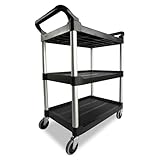

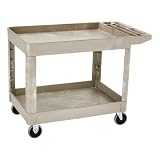
The 4 Types That Actually Get Used
1. Vertical lumber cart (A-frame or single-sided rack). This is the most common for shops storing 6 to 12-foot hardwood and construction lumber. Boards stand upright, leaning at 10 to 15 degrees, which saves 60% of floor space versus stacking flat. Look for a footprint around 30″ x 20″ and a height under 60″ so you can see over it. Capacity is usually 300 to 500 pounds total. These carts are terrible for plywood and MDF – a full sheet at 50 to 90 pounds will bow if stored vertically without full support, and it will make the cart tip-prone.
2. Sheet goods cart (flat or angled bin). Built like a low, heavy dolly with dividers, these hold plywood, MDF, and melamine either flat or at a steep 75 to 80-degree angle with a wide base. A flat cart at 24″ x 48″ can hold 5 to 6 sheets without sagging if it has a center support and 4″ casters. Angled carts are easier to load alone, but they need a 32″ to 36″ wide base to stay stable. If you buy sheet goods once a month or more, this is the cart that saves your back.
3. Cutoff and scrap cart. Usually an open bin on casters, 24″ x 36″ x 24″ high, often with removable dividers for short, medium, and kindling. Weight adds up fast – a bin full of hardwood offcuts can easily hit 250 pounds. Cheap plastic bins crack under that load in a year. Welded steel or 3/4″ plywood bins with 3″ locking casters last. The failure mode here is overfilling above the sides, which makes it impossible to move without spilling.
4. Multi-drawer hardware carts. For fasteners, sandpaper, finishes, and hand tools. Think 5 to 9 shallow drawers on a 26″ wide rolling cabinet, rated for 40 to 60 pounds per drawer. They do not replace a lumber rack, but they keep the small stuff from ending up in buckets around the saw. A rolling tool cart with drawers with ball-bearing slides is worth the upgrade over friction slides if you open it with dusty hands all day.
What to Look For Before You Buy
Casters matter more than the frame. For a shop with a smooth concrete floor, 3″ casters are fine up to 300 pounds. If you have cracks, extension cords, or you need to roll over a threshold into a garage, get 4″ or 5″ casters, at least two with total locks (brake on wheel and swivel). Hard rubber or polyurethane wheels roll easier and quieter than cheap gray plastic, which develops flat spots under static load after a few months.
Weight rating is for even distribution. A cart rated for 500 pounds will fail if you put all 500 pounds on one side. Check how the rating is tested. Welded 1″ square tube steel is stiffer than bolt-together sheet metal, but bolt-together is lighter and cheaper to ship. For wood shop carts, deflection is the real test: load it and see if the middle sags more than 1/8″ over 48″. If it does, your plywood will take that shape.
Size and doorways. Measure your narrowest doorway and your table saw outfeed path. Most shop doors are 30″ to 32″ wide. A cart that is 30″ wide loaded will not fit. Aim for 24″ to 28″ wide for anything you plan to move often. Height also matters for dust collection and lighting – a 60″ tall lumber cart will cast a shadow over your workbench if parked next to it.
Assembly and floor protection. Cheap carts use thin bolts through slotted holes that loosen with vibration. Add nylon lock nuts or a drop of threadlocker. If you have epoxy floors, get non-marking casters and avoid steel casters that will chip the coating.
Comparison: Which Cart Fits Your Shop?
| Cart Type | Best For | Typical Footprint | Capacity | Price Range |
|---|---|---|---|---|
| Vertical Lumber Cart | Hardwood, 2x4s, trim, 6-8 ft boards | 30″ x 20″ | 300-500 lbs | $90-$220 |
| Sheet Goods Cart (Angled) | Plywood, MDF, 4×8 sheets | 36″ x 24″ | 400-600 lbs | $150-$300 |
| Flat Sheet Dolly | Flat storage, moving full sheets to saw | 48″ x 24″ | 500-800 lbs | $80-$180 |
| Scrap Bin Cart | Offcuts under 3 ft | 36″ x 24″ | 250-350 lbs | $60-$160 |
| Drawer Hardware Cart | Fasteners, finishes, hand tools | 26″ x 18″ | 300-400 lbs total | $120-$350 |
If you only buy one cart for a one-car garage shop, make it a vertical lumber cart with 4″ casters. It handles 80% of what most hobbyists store and rolls out of the way for cuts. Add a second cart for sheet goods only if you regularly buy full sheets and have space to keep them flat or steeply angled.
Buy vs. Build: When the Cheaper Option Is Fine
You can build a perfectly good lumber or scrap cart in an afternoon from two sheets of 3/4″ plywood, a dozen 2″ screws, and four casters. A DIY plywood cart costs $50 to $80 in materials, holds as much as a $200 steel cart, and you can customize the dividers to your stock lengths. The downside is weight and moisture: plywood carts are heavier and will swell if they sit on damp concrete without a bottom seal.
Buying makes sense for sheet goods and drawer carts. A welded rolling lumber cart heavy duty with proper bracing is hard to replicate without welding, and drawer slides and locks are not worth fabricating. For scrap, the cheapest option is often the best: a simple rolling scrap wood storage cart or even a contractor-grade open bin on a furniture dolly does the job if you keep the load below the rim.
Do not buy a thin-gauge sheet metal cart rated for 800 pounds for $99. The rating is often for static load on a perfectly level floor. Push it with 400 pounds of oak and the casters will bend at the plate or the sidewalls will oil-can. If a deal looks too good, check caster plate thickness and whether the shelves have a center rib underneath.
Safety and Shop Integration
Lock the casters every time you load or unload. A cart that rolls while you pull a 70-pound sheet of plywood off it will take your hand into the next cart or wall. Keep vertical carts away from the table saw outfeed and jointer infeed – a tall board that slides off the top can fall across a running blade.
For dust collection, avoid carts with solid backs that block airflow if you store them near your dust collector or air filtration intake. Open frames let dust pass through and are easier to blow out with compressed air.
Finally, label your bins by length. A scrap cart divided into 0-18″, 18-36″, and 36″+ sections prevents digging and keeps you from saving every 4″ cutoff “just in case.” If you have not used a cutoff in three months, it is kindling.
Picks by Shop Size
Small garage shop (under 200 sq ft): One vertical lumber cart plus a low scrap bin that tucks under your workbench. Keep sheet goods leaned against the wall only when you have a project, not permanently.
Two-car garage or basement shop (200-400 sq ft): Add an angled sheet goods cart. Store plywood at 75 degrees with the good face in. This lets you flip through sheets without unloading everything.
Dedicated shop (400+ sq ft): Separate carts for lumber, sheet goods, and hardware. Consider a dedicated 30″ x 60″ flat cart for breaking down sheets with a track saw, then rolling the parts to the assembly table.
You do not need matching carts. Mix bought steel for heavy loads and shop-built plywood for light bins. Put your money into larger, locking casters and a frame that will not rack when you push from the corner instead of the center.