
What's inside
- SKILSAW Table Saw Lineup at a Glance
- Head-to-Head Spec Comparison
- Rip Capacity and Real-World Fit
- Portability, Setup, and Fence Accuracy
- Decision Matrix: Which SKILSAW Table Saw Fits Your Situation
- Ownership Realities: What Wears and What to Maintain
- Cost Per Use Consideration
- Which Should You Buy?
- Related Guides
As an Amazon Associate I earn from qualifying purchases. This post may contain affiliate links at no extra cost to you.
The best SKILSAW table saw for most home shops is the SPT99-11 10-inch Heavy Duty Worm Drive, while the best for jobsite portability is the SPT99T-01 8-1/4-inch Portable Worm Drive — the choice comes down to rip capacity, weight, and whether you need full-size 10-inch blade capability or compact transport.
As an Amazon Associate we earn from qualifying purchases at no extra cost to you.

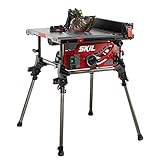
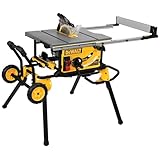

SKILSAW Table Saw Lineup at a Glance
SKILSAW keeps its table saw range deliberately narrow. Unlike brands with six or seven overlapping models, SKILSAW focuses on worm-drive power and rack-and-pinion fence accuracy. In 2026, there are two current, widely available models sold under the SKILSAW name in North America:
- SKILSAW SPT99-11 10″ Heavy Duty Worm Drive Table Saw: Full-size contractor saw with 10-inch blade, maximum rip capacity, and integrated rolling stand.
- SKILSAW SPT99T-01 8-1/4″ Portable Worm Drive Table Saw: Compact jobsite saw designed for one-person carry, smaller footprint, and lighter weight.
Both use SKILSAW’s worm drive gearing and Dual-Field motor design, but they serve very different users. The related brand SKIL (without the SAW) sells separate jobsite saws like the TS6307-00, which are not SKILSAW worm-drive models and are not compared here.
Head-to-Head Spec Comparison
This table uses manufacturer-published specifications for the two current SKILSAW worm-drive table saws. Numbers are what matters for fit in your shop or truck bed.
| Feature | SPT99-11 (10″ Heavy Duty) | SPT99T-01 (8-1/4″ Portable) |
|---|---|---|
| Blade Diameter | 10 in. | 8-1/4 in. |
| Motor / Drive | 15-amp Dual-Field, worm drive | 15-amp Dual-Field, worm drive |
| Max Rip Capacity (Right) | 30-1/2 in. | 25 in. |
| Max Rip Capacity (Left) | 11 in. | 9-1/2 in. |
| Depth of Cut at 90° | 3-5/8 in. | 2-5/8 in. |
| Depth of Cut at 45° | 2-1/2 in. | 1-11/16 in. |
| Table Size (W x D) | 26 in. x 22 in. cast aluminum + extensions | 23 in. x 19 in. cast aluminum |
| Fence System | Rack-and-pinion, self-aligning | Rack-and-pinion, self-aligning |
| Weight (Saw Only) | ~94 lbs (tool only) | ~51 lbs (tool only) |
| Weight with Rolling Stand | ~149 lbs total, 16-in. wheels | Stand not included (compatible with optional folding stand) |
| Dado Capacity | 13/16 in. with dado insert (requires dado set) | Not rated for dado stack |
| Dust Port | 2-1/2 in. | 1-3/4 in. |
The critical difference is not power — both are 15-amp — but working envelope. The SPT99-11 cuts a standard 4×8 sheet lengthwise with room to spare and handles 3-1/2-inch thick material at 90 degrees. The SPT99T-01 loses about 5-1/2 inches of right-side rip, one inch of cut depth, and dado capability in exchange for cutting nearly 45 pounds of weight.
Rip Capacity and Real-World Fit
When 30-1/2 Inches Matters
The SPT99-11’s 30-1/2-inch rip is the dividing line for cabinet work. If you regularly rip plywood to 24-inch cabinet sides, 30-inch shelves, or 28-inch door panels, the extra capacity lets you keep the factory edge against the fence without having to flip the sheet and cut from both sides. It also allows cross-ripping 30-inch wide bookcase sides without a track saw.
For trim and framing crews, that capacity is less critical. Most jobsite rips are 14-1/2-inch headers, 11-1/4-inch fascia from 1×12, or ripping 2x material to width — all well within the SPT99T-01’s 25-inch limit.
Depth of Cut Limits
The 8-1/4-inch blade on the SPT99T-01 maxes at 2-5/8 inches deep. That will sever a 2×4 on edge (3-1/2 inches actual requires a flip) and a doubled 2x top plate, but not a 4×4 post in one pass. The 10-inch SPT99-11 clears a 4×4 at 3-5/8 inches and cuts 2-1/2 inches at 45 degrees, which is enough to bevel 2x stock for deck stringers. If you cut 2-3/4-inch thick butcher block or 3-inch beams, the 10-inch saw is the only SKILSAW option.
Portability, Setup, and Fence Accuracy
Weight and Transport
The SPT99-11 ships with an integrated rolling stand with 16-inch pneumatic-style wheels. It folds for storage but still occupies roughly 38 x 28 x 34 inches when folded and requires a ramp or two-person lift to load into a pickup bed at 149 pounds combined. It rolls well across jobsite gravel and shop floors.
The SPT99T-01 at 51 pounds is a true one-hand carry from truck to sawhorse. It has no integrated stand, which many finish carpenters prefer because they already use a compact folding stand or place the saw directly on a jobsite table. The trade-off is you supply your own support and leveling.
Fence Setup on Both Models
Both SKILSAW table saws use the same rack-and-pinion fence concept as SKIL’s jobsite saws. The fence locks square without tapping the far end. Setup steps that prevent drift:
- Unlock the fence, run it full travel left to right once to clear sawdust from the rack gears.
- Lock at 10 inches and measure front and rear of blade to fence with a tape. Both should be within 1/64 inch. If not, loosen the four fence face screws and adjust the alignment plate under the fence head.
- Wax the aluminum table top and the fence glide rails with paste wax, not silicone spray, to keep the rack teeth clean.
- Check the fence pointer after any blade change — the worm-drive arbor can shift the zero by 1/32 inch if the washer is reinstalled differently.
Rack-and-pinion is faster and more repeatable than a traditional T-square clamp on this class of saw, but it is sensitive to pitch buildup. A quick brush of the gear teeth before locking prevents the fence from seating 1/16-inch off.
Decision Matrix: Which SKILSAW Table Saw Fits Your Situation
Use your shop space, material, and frequency of use — not just budget — to pick:
| Your Situation | Best Fit | Why |
|---|---|---|
| Home shop / garage, building cabinets, plywood furniture, 110V stationary use | SPT99-11 | Full rip capacity, dado capability, stable table for sheet goods |
| Two-car garage shop with limited floor space, need to roll saw against wall | SPT99-11 | Folding rolling stand stores vertical; heavier weight aids vibration damping |
| Remodeling, punch list, or finish carpentry from a van or SUV | SPT99T-01 | 51-lb carry weight, fits behind seat, 25-in. rip covers trim sizes |
| Framing, decking, second-fix on uneven ground | SPT99T-01 | Compact base levels easily on planks; worm drive torque handles wet lumber |
| Need dadoes for shelves, rabbets, tenons | SPT99-11 | Only SKILSAW model rated for 13/16-in. dado stack with proper throat plate |
| Budget-sensitive, occasional use under 2 days per month | SPT99T-01 | Generally lower street price by general market range of $100-$180 less than 10-in. model; lower cost per use if not cutting thick stock daily |
Ownership Realities: What Wears and What to Maintain
Both saws share the SKILSAW Dual-Field motor, which runs cooler than conventional brushed motors because the windings move with the field. That extends brush life, but it does not eliminate maintenance.
- First wear point: throat plate. Aluminum throat plates on both models widen at the blade slot after a few kickback events. Replace the insert when you can see light between plate and blade, otherwise small offcuts wedge and burn.
- Second: fence face. The aluminum fence face dents if a board kicks. File burrs flat immediately; a burr acts as a pivot that pushes stock away from the fence mid-cut.
- Third: worm drive oil. SKILSAW worm drive housings are sealed and do not require user oil changes like the classic SKILSAW circular saws, but sawdust packed around the motor housing restricts cooling. Blow out the vents with low-pressure air (<30 PSI) after each large plywood session and vacuum the bottom tray.
- Common mistake: using a full-kerf 10-inch blade on the SPT99T-01. It cannot physically mount a 10-inch blade. Using an 8-1/4-inch thin-kerf blade (0.071-inch) reduces motor load and prevents tripping a 15-amp breaker on long rips in hard maple.
- Blade guard and anti-kickback pawls. Both models include a modular guard with pawls. Pawls dull after cutting reclaimed lumber with hidden grit. If pawls no longer bite when you pull stock backward, replace the assembly rather than sharpening — the spring angle is critical.
Consumables to stock: extra 40-tooth ATB general-purpose blade (thin-kerf for 8-1/4 inch, standard kerf for 10 inch), zero-clearance tape for the throat plate, and a 2-1/2-inch to 4-inch dust hose adapter if you connect to a shop dust collector. Both saws have small ports that clog with large chips from dado cuts unless stepped up.
Cost Per Use Consideration
General market ranges in 2026 place the SPT99T-01 in the mid-$300 to low-$400 range and the SPT99-11 with stand in the high-$500 to mid-$600 range — a spread of roughly $200. If you use a saw 100 days per year for three years, the price difference is about $0.66 per day. If you only need 25-inch rip and never cut dadoes, the lighter saw pays back in saved load-in time and reduced truck fuel from lower payload. If you need even one project per quarter that requires a dado or 3-inch depth (e.g., entry doors, thick workbench tops), the SPT99-11 eliminates the need to rent or borrow a second saw, which quickly exceeds the initial spread.
Which Should You Buy?
Choose the SKILSAW SPT99-11 if your work involves sheet goods, dado joinery, or material thicker than 2-5/8 inches, and you have space to store a rolling stand. Choose the SKILSAW SPT99T-01 if you prioritize carrying weight, truck space, and quick setup for trim, flooring, and framing, and you can accept the smaller blade and no dado stack. Both deliver the same worm-drive torque and rack-and-pinion fence accuracy — the difference is working envelope versus portability.