
What's inside
As an Amazon Associate I earn from qualifying purchases. This post may contain affiliate links at no extra cost to you.
The best Longer laser engraver for most woodworkers in 2026 is the Longer Ray5 10W — it balances cutting power, bed size, and price better than the cheaper 5W version or the higher-end 20W models — but the right pick depends on what you’re cutting, how much space you have, and whether you’ll enclose it.
Longer is a Chinese manufacturer known mostly for 3D printers that moved into diode lasers with the Ray5 line. The Ray5 family (sometimes searched as “longer ray 5 laser engraver” or “longer laser engraver ray5” — same machines) has become a popular budget alternative to xTool and Ortur. Here’s how the current lineup actually compares for woodworking use.
As an Amazon Associate we earn from qualifying purchases at no extra cost to you.
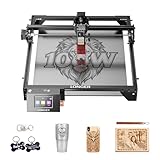
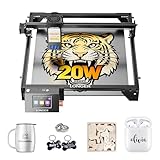


Longer Ray5 Lineup at a Glance
| Model | Optical Power | Work Area | Max Wood Cut (single/multi-pass) | Air Assist | Typical Price Range |
|---|---|---|---|---|---|
| Ray5 5W | ~5W | 400 × 400 mm | ~4 mm pine, multi-pass | Optional add-on | $180–$260 |
| Ray5 10W | ~10W | 400 × 400 mm | ~8–10 mm pine, ~12 mm multi-pass | Optional add-on | $300–$450 |
| Ray5 20W | ~20W | 375 × 375 mm | ~15 mm pine, ~20 mm multi-pass | Included | $550–$750 |
| Ray5 Pro (newer revisions) | ~10W dual-beam | 400 × 400 mm | ~10 mm pine | Included | $400–$550 |
Note the counterintuitive spec: the 20W version has a slightly smaller work area because the heavier laser head uses a different gantry mount. If you mostly engrave signs and cutting boards rather than cut parts, that 25 mm loss is irrelevant — but it matters if you’re tiling large panels.
Assembly and Setup
Every Longer Ray5 ships as a kit. Expect 30–60 minutes of assembly: four frame rails, two Y-axis assemblies, the X gantry, belt tensioning, and wiring. A few ownership realities worth knowing:
- Belt tension is the #1 accuracy killer. If circles come out oval, it’s almost always uneven X or Y belt tension, not a software problem.
- Square the frame on a flat surface before tightening. The aluminum extrusions can rack slightly; measure diagonals before final torquing.
- The touchscreen controller is genuinely useful. All Ray5 models include an offline screen that runs jobs from a microSD card — no tethered laptop required, which is rare at this price.
Focusing and Daily Use
The Ray5 10W and 20W use a flip-down focus spacer: flip it down, lower the head until it touches the spacer, lock the thumbscrew. It takes about five seconds and is more repeatable than measuring with a ruler. The tradeoff is that warped boards or stacked material need manual height checks — there’s no autofocus.
One quirk: the fixed-focus lens means the stated focus height is calibrated for the lens to material distance, not the top of the gantry. If you add material risers for engraving mugs or thick blocks, recalculate rather than trusting the spacer.
Software Workflow
All Longer engravers work with two options:
- LaserGRBL (free, Windows only) — fine for quick engraving jobs, limited for layout work.
- LightBurn (paid license, ~$60–$120) — the de facto standard. Camera support, material libraries, and proper job queuing. Budget for it; most Ray5 owners end up here within a month.
Workflow is standard GRBL: import SVG/PNG, set layers to cut or engrave, frame the job, run. The Ray5’s offline mode means you can export .gc files to the card and run repeat jobs without a computer — handy in a dusty shop.
Enclosure and Ventilation: Do Not Skip This
Diode lasers produce serious smoke and the 10W+ units will discolor your workshop walls and lungs over time. Longer sells a folding enclosure (roughly $60–$100) sized for the Ray5, but it has no integrated exhaust — you’ll still need a duct fan and window vent, or a fume extractor. Budget $40–$150 for ventilation on top of the machine price, or plan to run it outdoors/garage-only. Many buyers treat the enclosure as optional; it isn’t, for indoor use.
Which Longer Engraver Should You Buy?
| Your Situation | Recommended | Why |
|---|---|---|
| Engraving only: signs, coasters, leather patches, photos on wood | Ray5 5W | Cheapest entry; cutting power is wasted if you never cut |
| Mixed work: engraving plus cutting plywood parts, boxes, templates up to ~8 mm | Ray5 10W | The sweet spot; roughly halves cutting time vs. 5W |
| Small business, batch cutting, 12–15 mm hardwoods | Ray5 20W | Included air assist and speed pay for themselves in throughput |
| Tight workspace or portability matters | Any Ray5, but factor the ~700 × 650 mm footprint plus enclosure | Open-frame design stores flat-ish; enclosure doubles footprint height |
| Cutting mostly 18 mm+ stock | None — consider a CO2 laser (40W+ class) | Diode lasers max out around 15–20 mm regardless of wattage |
Long-Term Durability and Ownership Costs
This is where listings tell you nothing. Realistic wear items on a Ray5 in regular woodworking use:
- Laser module: rated ~10,000 hours but realistically degrades sooner with dust exposure. Clean the lens weekly with isopropyl alcohol on a lens wipe — smoke residue is the main killer, not hours.
- Belts: expect to replace or re-tension around 12–18 months of regular use. Cheap consumable (~$10), keep a spare.
- Rails and wheels: the V-wheels accumulate sawdust fast. A dry brush-down after each session prevents the gritty wear that causes wobble lines in engravings.
- Air assist nozzle: wood resin builds up and restricts airflow; soak it in alcohol monthly or cuts get progressively more charred.
Common mistakes to avoid: running without air assist on cuts (scorched edges and a dirty lens), engraving MDF without extra ventilation (the fine dust coats everything), and leaving the machine framed to an old job when you swap material thickness — a defocused beam is the most common cause of “it stopped cutting well.”
Verdict
For a woodworking shop, the Longer Ray5 10W is the model to buy: enough power to cut the plywood and solid stock most hobbyists actually use, a 400 × 400 mm bed that handles sign blanks and furniture templates, offline control, and a street price in the $300–$450 range. Step down to the 5W only if you’re certain you’ll never cut. Step up to the 20W only if batch production justifies it — and budget for an enclosure and ventilation whichever model you choose.
FAQ
Can a Longer Ray5 cut hardwood?
Yes, but thickness matters more than species. The 10W handles ~8 mm oak with air assist in 2–3 passes; dense hardwoods like maple cut slower than the same thickness of pine. Beyond ~15 mm, even the 20W struggles.
Is the Longer Ray5 10W good for beginners?
It’s one of the more beginner-friendly diode lasers thanks to the flip-down focus, touchscreen, and offline mode — but diode lasers are not plug-and-play appliances. Plan a weekend for assembly, LightBurn setup, and ventilation before your first real job.
Ray5 vs. xTool D1 or Ortur — is Longer worth it?
Spec-for-spec, the Ray5 typically undercuts competitors by $100–$200 at the same wattage, with the tradeoff of a smaller community and thinner documentation. If you’re comfortable troubleshooting with forum help rather than official support, the savings are real.