
What's inside
- Ryobi corded vs. ONE+ 18V planer at a glance
- Cut depth: the corded model wins for door fitting
- Runtime per board: what an 18V battery can realistically do
- Blade replacement and ownership cost
- Which Ryobi hand planer fits your situation?
- Using either planer for a clean door-edge fit
- Durability, maintenance, and common mistakes
- Final recommendation
- Related Guides
As an Amazon Associate I earn from qualifying purchases. This post may contain affiliate links at no extra cost to you.
For repeated door trimming and maximum stock removal, choose Ryobi’s corded 6-amp planer; for quick edge work, stair adjustments, and jobs away from an outlet, the Ryobi ONE+ 18V cordless planer is the more convenient hand planer. Both machines use a 3-1/4-inch planning width and reversible carbide blades, but the corded model generally offers greater cut depth per pass and unlimited runtime, while the cordless model trades some endurance for portability.
As an Amazon Associate we earn from qualifying purchases at no extra cost to you.

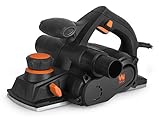
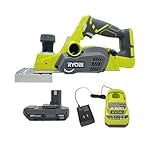

Ryobi corded vs. ONE+ 18V planer at a glance
The relevant comparison is between Ryobi’s corded 3-1/4-inch electric planer, commonly sold as the HPL52K-type model, and the ONE+ 18V planer, commonly identified as the P610. Exact kit contents and regional specifications can change, so check the label and manual before buying. The figures below are the useful working specifications for choosing between them.
| Feature | Ryobi corded planer | Ryobi ONE+ 18V cordless planer |
|---|---|---|
| Planning width | 3-1/4 inches | 3-1/4 inches |
| Maximum cut depth per pass | Up to 1/8 inch | Up to 1/16 inch |
| Power source | 120V corded motor, about 6 amps | One 18V ONE+ battery |
| No-load speed | About 16,000 revolutions per minute | About 11,000 revolutions per minute |
| Blades | Two reversible carbide blades | Two reversible carbide blades |
| Typical bare-tool or tool weight | About 6 to 7 pounds | About 6 to 7 pounds without the battery |
| Typical street price | Roughly $60–$100, depending on kit and promotion | Roughly $100–$150 as a bare tool or kit variation |
The 3-1/4-inch width is important: it covers a standard 3-1/2-inch door edge only with multiple passes, and it is narrower than many wide boards. On a door edge, keep the planer’s base fully supported and make overlapping passes rather than trying to remove the entire width at once.
Cut depth: the corded model wins for door fitting
A corded Ryobi electric hand planer can remove up to approximately 1/8 inch per pass, while the ONE+ 18V model is generally limited to about 1/16 inch. That does not mean the cordless planer is weak for ordinary work. It means that removing 1/8 inch from a door edge may require two controlled passes with the cordless tool instead of one maximum-depth pass with the corded tool.
In practice, maximum depth should be treated as a roughing setting, not the default. Start around 1/32 inch, check the fit, and take another pass if necessary. A shallow cut reduces tear-out and makes it easier to stop at a clean, accurate line. This matters particularly on paint-grade doors, veneered stock, and end grain near the bottom corner.
For a badly swollen or oversized solid-wood door, the corded planer is the better choice because it maintains power continuously and removes material more quickly. For trimming a small amount from one or two doors, the cordless planer is usually fast enough and avoids running an extension cord through the house.
Runtime per board: what an 18V battery can realistically do
Ryobi does not normally rate the cordless planer by “boards per battery,” because runtime depends on cut depth, wood species, feed speed, battery capacity, and how much time the motor spends actually cutting. A practical planning estimate is more useful than a single advertised number.
With a healthy 4.0Ah ONE+ battery, a 3-1/4-inch-wide softwood board planed in shallow passes may provide roughly 150–250 linear feet of cutting. Dense hardwood, deeper cuts, or repeated starts and stops can reduce that to approximately 75–150 linear feet. These are planning estimates, not guaranteed ratings.
For a typical 80-inch door edge, one continuous pass consumes relatively little of a 4.0Ah battery. Even allowing for several passes and checking the fit, a single door normally falls comfortably within that range. A 2.0Ah battery can handle occasional edge work, but a 4.0Ah or 6.0Ah pack is more practical for several doors or long boards. The larger battery adds weight at the rear of the tool, which can make overhead work tiring.
A simple way to estimate a job is:
- Measure the total linear feet that will actually be planed.
- Multiply by the number of passes required.
- Compare that figure with an estimated 75–250 cutting feet per 4.0Ah battery, reducing the estimate for hardwood or deep cuts.
For example, four 80-inch door edges equal about 26.7 linear feet. Three passes on each edge equal roughly 80 cutting feet, before allowing for test cuts. That is normally a comfortable job for a 4.0Ah battery, but a spare pack avoids waiting if the doors require additional fitting.
Blade replacement and ownership cost
Both versions use two-sided carbide blades. When one edge becomes dull or damaged, the blade can usually be reversed once; after both edges are worn, replace the pair. General replacement pricing is commonly about $10–$20 for a compatible two-blade set, with genuine branded parts sometimes toward the upper end of that range. Confirm the exact blade dimensions and screw pattern for your model.
Carbide blades last much longer on clean softwood than on reclaimed lumber. A hidden nail, drywall screw, staple, or patch of grit can nick an edge immediately. For door work, inspect the edge for fasteners before planing and remove hardware that could contact the sole or cutter head.
On a cost-per-use basis, blades are usually a minor expense. If a $15 blade set lasts through 20 moderate door-trimming jobs, its blade cost is about 75 cents per job. That calculation excludes damage from metal, which is why finding fasteners is more valuable than trying to save a pass by cutting aggressively.
Which Ryobi hand planer fits your situation?
| Your situation | Better choice | Reason |
|---|---|---|
| Fitting several solid-wood doors | Corded | Deeper maximum cut and unlimited runtime |
| Trimming one interior door at a distant room or jobsite | ONE+ 18V | No cord management and quick setup |
| Already own several ONE+ batteries and chargers | ONE+ 18V | The bare tool can reduce the entry cost |
| Occasional workshop use near an outlet | Corded | Lower tool price and no battery charging |
| Long boards or frequent stock removal | Corded | Continuous power is more predictable |
| Overhead or ladder work | ONE+ 18V with a smaller battery | Less cord interference, although balance and battery weight still matter |
Using either planer for a clean door-edge fit
1. Mark the amount to remove
Measure the opening at several points and mark the door edge with a pencil or marking gauge. If the door rubs only at one location, mark that area rather than automatically planing the entire edge. Protect the opposite face and keep the door securely supported.
2. Set a shallow first cut
Begin at about 1/32 inch. Make sure the front and rear sections of the sole remain flat on the workpiece before the cutter reaches the edge. A common mistake is rocking the tool at the beginning or end, which creates a hollow or rounded section.
3. Plane with the grain where possible
Feed at a steady pace without forcing the machine. If the grain direction changes, reduce the depth and take shorter passes. On a door’s end grain or near a corner, scoring the cut line with a sharp knife can help limit splintering.
4. Check the fit before increasing depth
Rehang the door or use a straightedge and measurements to verify progress. The corded model’s 1/8-inch setting is useful for rough removal, but a final pass of 1/32 inch or less gives better control. The cordless planer may require more passes, but its smaller maximum cut encourages a safer finishing process.
Durability, maintenance, and common mistakes
The blades and drive belt are the main wear items. Keep the cutter area clear of chips, check that the blade screws remain tight, and clean dust from the ventilation openings after use. Do not store the tool with a battery attached. On the cordless version, remove the battery before clearing a jam or inspecting the blade head.
Replace or reverse blades when the tool leaves ridges, requires excessive force, produces repeated tear-out, or leaves a glossy burnished strip. Continuing with dull blades places more load on the motor and can encourage users to push too quickly.
Do not use either Ryobi planer as a jointer or assume the 3-1/4-inch width will flatten a wide board in one pass. The tool is best for reducing thickness, chamfering edges with the adjustable front shoe, and fitting doors or boards. For long, precise edge straightening, a router guide, jointer, or hand plane with a properly prepared sole may produce a more controlled result.
Final recommendation
Buy the corded Ryobi hand planer if your priority is cutting depth, repeated door fitting, long boards, or the lowest initial tool cost. Choose the Ryobi cordless hand planer if you already use the ONE+ battery system and value fast, untethered edge work more than maximum material removal. Since both versions share the useful 3-1/4-inch width and reversible carbide-blade format, the deciding factors are the cord, battery capacity, and whether taking two shallow passes is acceptable in your work.